
By Patricia Cedeño.
Living in Galicia isn't for everyone, and that's exactly why this may be the most useful article you'll read before deciding whether to move here.
Most content about relocating to a new region is written to sell you on it. This one isn't. The goal here is to give you an honest, specific picture of what living in Galicia actually involves, the parts that make people fall in love with it, and the parts that send some people back home within a year. By the end, you should have a clearer sense of which category you're likely to fall into.
This matters more than it might seem. Choosing the wrong place to relocate doesn't just cost money. It costs time, momentum, and often the confidence to try again somewhere else. Getting this decision right the first time is worth the discomfort of reading something that won't simply confirm what you already hoped to hear.
The goal isn't to convince you to move to Galicia. It's to help you make a better decision, even if that decision is somewhere else.
Why Most Relocation Content Won't Tell You This
Type “living in Galicia” into Google and you'll find dozens of guides describing green landscapes, dramatic coastlines, Celtic heritage, and a warm, welcoming way of life. All of that is accurate. None of it is the full picture.
The reason most content stops there is structural. Relocation companies, real estate agencies, and tourism boards have an incentive to emphasize the positive and minimize the friction. That's not dishonest exactly; it's just incomplete. And incomplete information is exactly what leads people to arrive somewhere with the wrong expectations, which is the single biggest predictor of an international move that doesn't work out.
Living in Galicia involves genuine tradeoffs, and the people who thrive here tend to be the ones who understood those tradeoffs clearly before they signed a lease, not the ones who discovered them in month four.
The Honest Case For Living in Galicia
Before getting to who shouldn't move here, it's worth being precise about who absolutely should because the case is genuinely strong for the right person.
The cost of living is real, not marketing. A one-bedroom apartment in Vigo's city center runs €650 to €750 per month. A single person can live comfortably on €1,500 per month, including rent, food, transport, and utilities. Compared to Madrid, Barcelona, or most major cities in the US, UK, or Canada, that's not a marginal improvement. It's a different financial architecture for your entire life.
The infrastructure is real. Spain ranks second in the EU for fiber to the home coverage, and that connectivity reaches Galicia, including rural areas. Vigo has a modern hospital, a university, and the commercial infrastructure of a genuine city, not a sleepy regional outpost.
The quality of life is structural, not performative. The two-hour lunch culture isn't a tourist experience; it's how the region actually operates. Markets are local and seasonal. Walkability is real. Nature isn't something you plan your weekends around. It's woven into everyday life. This rhythm is part of why Galicia keeps appearing in longevity research that has nothing to do with relocation marketing and everything to do with how daily life here is actually structured.
The healthcare is genuinely strong. Galicia's public healthcare system, run by Sergas, is highly regarded, and Vigo's Álvaro Cunqueiro Hospital is one of the most modern facilities in northern Spain.
The safety is real. Galicia consistently registers among the lowest crime rates in Spain and in Europe.
None of these advantages are unique on their own. What makes Galicia different is that they exist together. Affordability, access to nature, strong public healthcare, safety, and a slower rhythm reinforce one another. That's the real value proposition, and it's difficult to replicate in larger, more expensive cities. A contrast worth seeing in full in the Vigo vs Lisbon, Valencia and Porto comparison.
For people moving away from burnout, expensive cities, and a constant low-grade urgency that never quite resolves, living in Galicia genuinely delivers something different. That's not a sales pitch. It's the part of this story that's been thoroughly documented, including in the Complete Guide to Moving to Galicia.
What gets less attention is everything that follows.
Reason 1: The Climate Will Test You
If your relationship with sunshine is non-negotiable, living in Galicia will be a daily source of friction.
One pattern I've noticed is that the people who struggle most here aren't necessarily the ones who underestimate the paperwork. They're the ones who underestimate how much their ideal lifestyle depends on things they never questioned before: sunshine, convenience, or having a large international community already in place.
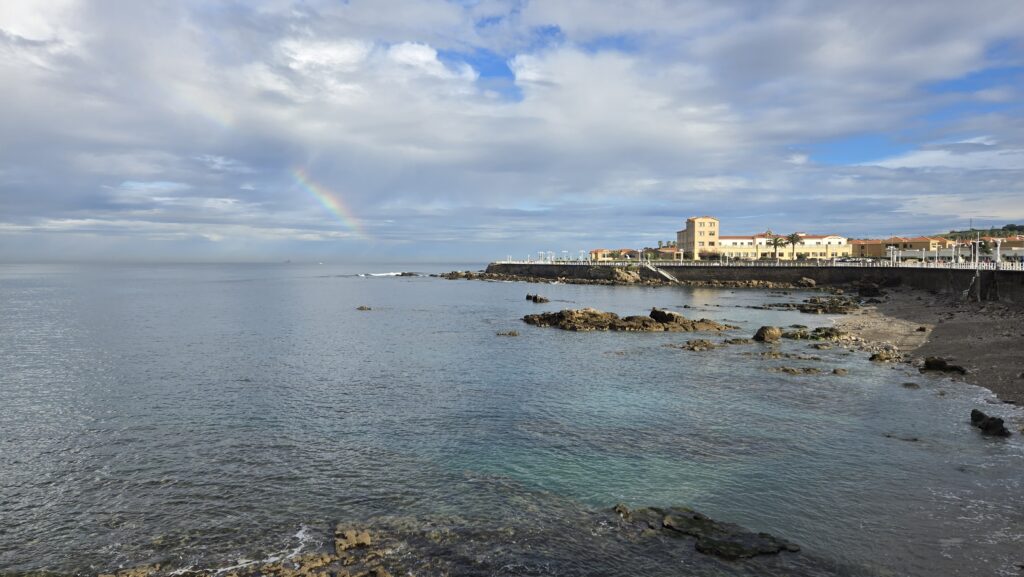
This is not the Spain of 300 days of sun. Galicia gets around 1,600 to 1,800 hours of annual sunshine, significantly less than Valencia or Málaga. The Atlantic weather is genuinely variable: green and mild in summer, grey and wet for long stretches in winter. The rain here doesn't behave like London's persistent drizzle. It arrives horizontally, dramatically, and then often clears within the hour. Some people find this exhilarating. Others find it genuinely difficult to adjust to, particularly between November and February when daylight is limited and the grey stretches feel long.
People who relocate to southern Spain for the climate and then visit Galicia sometimes describe a kind of culture shock: the realization that “Spain” doesn't mean what they assumed it meant. Living in Galicia means accepting a Celtic, Atlantic climate more similar to Ireland or Brittany than to Andalusia.
Reason 2: The Language Barrier Is More Real Than You're Told
English is widely spoken in Spain's tourist areas and larger cities, but it is markedly less common in smaller towns and rural regions, and Galicia has its own co-official language layered on top of Castilian Spanish.
Galician is spoken widely, particularly in rural areas, and while locals are generally accommodating toward non-Galician speakers, daily administration, healthcare conversations, and neighbor relationships happen mostly in Spanish. The international community in Vigo and across Galicia is real but considerably smaller than in Valencia, Alicante, or Málaga. That means you cannot coast on English in the way some other parts of Spain allow.
This isn't a small inconvenience. Bureaucratic processes in Spain are often slow and complicated, and navigating residence permits, town hall registration, or tax matters without functional Spanish adds real friction to an already demanding process. Living in Galicia successfully over the long term usually requires a genuine commitment to learning the language within the first year or two. Not fluency immediately, but enough to navigate everyday life with increasing confidence. Until then, having trusted local support for appointments, paperwork, or conversations with institutions can make the transition significantly less overwhelming while you focus on settling into your new life.
Reason 3: Building a Community Takes Intention
One of the biggest misconceptions about living in Galicia is that because people are known for being warm and welcoming, friendships happen quickly. In reality, the opposite is often true.
The international community exists, but it's smaller and more dispersed than in places like Valencia, Alicante, or Málaga. You won't find the same density of English-speaking events, networking meetups, or large expat circles that make it easy to meet people within your first few weeks. If you're expecting instant social momentum simply because you've moved abroad, Galicia can feel quieter than anticipated.
That doesn't mean it's difficult to build meaningful relationships. It means the process looks different.
People here tend to connect through everyday life rather than organized social scenes. You become a familiar face at the neighborhood café, the local market, your gym, a hiking group, a language exchange by showing up consistently at the same places over time. Relationships often grow through repeated encounters instead of a single introduction.
I've noticed that the people who integrate most successfully aren't necessarily the most outgoing. They're the ones who embrace the slower rhythm of building trust, stay curious about the local culture, and make an effort to participate in the life already happening around them instead of waiting for it to come to them.
For some people, that slower pace becomes one of Galicia's greatest strengths. For others, especially those hoping for an immediate international social circle, it can be one of the biggest adjustments during the first year.
Thinking seriously about Galicia?
The conversation doesn't end with this article.
Join The Galicia Life Community to continue the conversation, connect with people building their lives here, ask questions, exchange local recommendations, and build relationships beyond the blog.
Reason 4: Convenience Culture Doesn't Exist Here
If you're accustomed to 24-hour everything and a baseline expectation of fast, frictionless service, this region will recalibrate your expectations whether you want it to or not.
Very little about life in Galicia, or Spain more broadly, is built around convenience. Customer service moves at a different pace. Appointments for essential paperwork like NIE numbers, padrón registration, bank account setup often require patience that doesn't come naturally to people used to having same-day resolution. Endless paperwork and slow administrative processes are a consistent friction point cited by people who've actually made this move, not a footnote.
This isn't unique to Galicia within Spain, but it's worth naming directly because it surprises people who expected the “slower pace of life” marketing to apply only to leisure, not to logistics. Living in Galicia means your errands will take longer, your bureaucracy will test your patience, and your expectations around efficiency will need to shift permanently, not temporarily.
Reason 5: Smaller Towns Have a Real Off-Season
This is one of the least discussed realities of relocating to coastal Galicia, and it matters enormously depending on where specifically you choose to land.
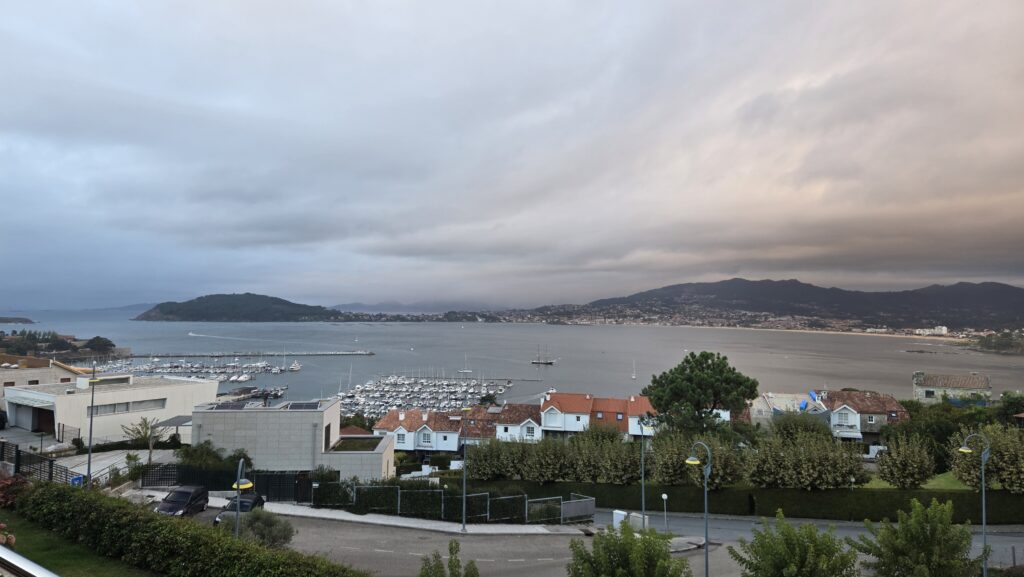
Towns like Baiona, Cangas, and Moaña look genuinely idyllic in summer: Atlantic views, a real harbor, a relaxed pace. What the photographs don't capture is what happens after September. Restaurants reduce hours or close entirely. Social life contracts sharply. The ferry schedule that felt charming in August becomes a real logistical limitation in November. For families, school and healthcare infrastructure thins out considerably outside the larger cities. For remote professionals, isolation can set in faster than expected once the seasonal energy disappears.
Living in Galicia year round in one of the smaller coastal towns is a meaningfully different experience than living in Vigo, A Coruña, or Santiago de Compostela. The cities maintain their infrastructure and social rhythm through the winter. The smaller towns largely don't. Choosing where within Galicia to land is arguably a bigger decision than choosing Galicia itself, and it's part of why Vigo specifically keeps emerging as the answer for people who've compared the full range of options.
For some people, that's precisely the appeal. Others discover after one winter that they miss the energy of a larger city.
Reason 6: The Job Market Is Limited If You Need Local Employment
Salaries in Spain are often lower than in other European countries, and this is especially true outside Madrid and Barcelona. If your plan involves finding local employment rather than working remotely, bringing foreign income, or building a business serving international clients, living in Galicia will be financially constraining.
The regional economy is real… Fishing, manufacturing, tourism, a growing hospitality sector, but it does not offer the salary levels or sheer volume of opportunity that Spain's largest cities provide. This region works exceptionally well for remote professionals, retirees with passive income, and founders building location-independent businesses. It works considerably less well for someone hoping to walk into a competitive local salary in a specialized field.
Knowing which category you fall into before you commit changes everything about whether this move makes financial sense.
Reason 7: Integration Takes Longer Than Many People Expect
This connects directly to the social fabric point above, but it deserves its own space because it shapes the entire first year more than almost anything else on this list.
Galicia's international community is smaller and more spread out than in Madrid, Barcelona, or Spain's more internationally saturated coastal regions. There's no large, instantly visible expat infrastructure to plug into. Relationships here, both with locals and with other international residents, tend to build through consistency rather than through a single event or app. Becoming a familiar face at the market, the café, or the gym takes repetition, not a one-time introduction.
This isn't unique to any particular background, but it does mean that anyone arriving without an existing local connection, a structured community to join, or significant patience for slow-building relationships will feel the absence more here than in a city with a larger, more visible international layer already in place. The reward for that patience tends to be real relationships that go deeper and last longer than the ones built quickly in more transient expat scenes, but the reward arrives later than most people expect.
Living in Galicia as someone starting from zero socially is a meaningfully different experience than arriving with even a small existing network. People considering this move deserve to know that going in, rather than discovering it as an unexpected layer of adjustment three months in.
Who Living in Galicia Is Actually Right For
After all of that, here's the honest summary of who tends to thrive here.
Living in Galicia works well for remote professionals and founders who don't need physical proximity to a major job market and want significantly more financial margin than Spain's larger cities allow. It works well for retirees who want a real city with strong healthcare, genuine community, and property that still makes financial sense, rather than a tourist enclave. It works well for families who prioritize safety, outdoor access, and a slower daily rhythm over an instant, ready-made international social circle. And it works well for anyone whose relationship with rain, patience, and gradual integration is genuinely flexible rather than a hard requirement.
It tends to work less well for people who need year-round sunshine as a baseline, who require immediate large-scale social access in English, who are seeking competitive local employment in a specialized field, or who have a low tolerance for bureaucratic friction and slow-moving administration.
Neither profile is wrong. They're just different people solving different problems, and living in Galicia only solves one of them well.
A Smaller Decision Inside The Bigger One
If, having read all of this, living in Galicia still feels like the right fit, you've probably already noticed that the bigger question isn't whether to move here. It's how to make the move in a way that aligns with the life you're trying to build.
That's where the practical decisions begin: choosing the right city, understanding the housing market, building a local network, and navigating the realities of starting over in a new country. Approaching those decisions with realistic expectations is often what separates a relocation that feels intentional from one that feels overwhelming.
The honesty of this post isn't meant to talk you out of anything. It's meant to make sure that if you do come, you come with your eyes open, prepared for the parts that are genuinely difficult and not just the parts that photograph well.
That's usually the difference between someone who lasts here and someone who doesn't.
If you're serious about building your next chapter in Galicia, a Discovery Consultation is the place to turn research into a practical plan. Together, we'll look at your goals, timeline, lifestyle, and priorities so you can move forward with confidence and a strategy tailored to your situation.
And if you want to hear directly from people who've made this decision and are living with the results, the community is where that conversation is already happening.
Is living in Galicia hard for foreigners?
It's more demanding than the typical relocation marketing suggests, primarily due to the language barrier, slower bureaucracy, and a social scene that takes longer to enter than in Spain's more internationally saturated regions. It's manageable with realistic expectations and a genuine commitment to integration, but it isn't effortless.
Is living in Galicia good for retirees?
Yes, for the right profile. Strong public healthcare, low crime, genuine affordability, and a real city in Vigo rather than a tourist enclave make Galicia a strong option for retirees who don't need a large English-speaking community immediately and are comfortable with a slower bureaucratic pace.
What is the biggest downside of living in Galicia?
For most people, it's the climate since it’s significantly less sunshine and more rain than the Spain they imagined, combined with a smaller, more spread-out international community than cities like Valencia or Alicante. Both are manageable but worth knowing in advance.
Do I need to speak Spanish for living in Galicia?
Not on day one, but functionally yes within the first year or two. English coverage is thinner here than in Spain's more touristic regions, and daily administration, healthcare, and neighbor relationships happen mostly in Spanish, with Galician layered on top in rural areas.
Is Vigo better than the smaller towns in Galicia?
For most profiles, yes, particularly for year-round living. Smaller coastal towns like Baiona, Cangas, and Moaña are beautiful but contract significantly after the summer season, with reduced services and a quieter social scene through the winter. Vigo maintains its full infrastructure and rhythm throughout the year.
Is the cost of living in Galicia really lower than the rest of Spain?
Yes, significantly. A one-bedroom apartment in Vigo's city center runs €700 to €850 per month, well below Madrid, Barcelona, or Valencia, and a single person can live comfortably on around €1,500 per month, including rent and daily expenses.
The Galicia Life is a community and relocation ecosystem based in Vigo, Spain, working at the intersection of intentional living, cultural integration, and relocation support for internationally minded people building real lives in Galicia.
