By Patricia Cedeño.
If you're picturing retirement in Spain, there's a good chance the image in your head involves a beach town somewhere south, a straw hat, and a very long lunch. That version exists, and it's not wrong. But it's also not the only way to retire well in this country, and for a specific kind of person, it isn't even the better one.
A retirement lifestyle in Vigo doesn't get pitched the way life on the Costa del Sol or Costa Blanca does. There's no glossy retirement brochure for it, no long-established English-speaking retiree colony with its own golf calendar. What's here instead is a working Atlantic port city where daily life still runs on its own rhythm rather than a tourist season and where the practical questions, cost, healthcare, and paperwork matter just as much as the emotional ones.
This is a long, honest look at what actually answering those questions involves.
Why “Somewhere Sunny and Cheap” Is the Wrong Starting Question
Retiring abroad is one of the few opportunities you get to redesign the structure of your everyday life. Yet the search often begins with the easiest things to compare: warmer weather, lower taxes, affordable housing, and how far your pension will stretch.
Those factors matter, but they tell you very little about whether you'll actually enjoy living somewhere five years after the novelty of moving abroad has worn off.
The questions that shape a successful retirement are often less obvious. Can you manage daily life without depending on a car? Will you have enough cultural activity, social connection, and access to healthcare to feel independent as you get older? Does the pace of the place suit you year-round, including in winter? And perhaps most importantly, can you imagine building routines and relationships there rather than simply enjoying it as a destination?
That's where a retirement lifestyle in Vigo becomes an interesting alternative. The city won't give you year-round sunshine or a ready-made international retiree bubble. What it offers instead is the possibility of building an everyday life around walkability, access to the coast and nature, local culture, healthcare infrastructure, and a city that continues to function for the people who live there long after the tourist season ends.
The question isn't whether Vigo looks like the retirement you imagined. It's whether the life you could build here fits the person you want to become in the years ahead.
What This Actually Looks Like Day to Day
The appeal of retiring in Vigo becomes clearer when you stop looking at the city as a destination and start looking at how everyday life actually works here.
The covered markets open early, fresh fish and produce remain part of everyday shopping, and many errands can be folded naturally into the rhythm of the city. In the city center, Casco Vello, and several well-connected neighborhoods, many everyday errands can be handled on foot or by public transport, which makes car-free living realistic if you choose your location carefully.
Meals tend to stretch longer here, not because anyone is being indulgent about it, but because the culture never fully industrialized the act of eating into something to get through quickly.
There's also a specific kind of relief that comes from a place that isn't performing for you. Nobody is trying to sell you an “experience.” That absence of hustle, after decades inside cities engineered around constant output, is usually the part of a retirement lifestyle in Vigo that takes the longest to trust and the hardest to imagine giving up once you actually have it.
What It Costs to Live This Way
Now the numbers, because vague promises about “affordable Europe” have burned enough people already.
Rental prices in Vigo remain below those of many major North American and British cities, although rising demand and limited long-term supply are putting upward pressure on the local market, particularly in the center and along the coast. Housing costs vary significantly by neighborhood, building condition, and proximity to the waterfront, so treat any single figure as a starting point for research rather than a promise.
Zoomed out to the national level, where the data is more reliable, a comfortable retirement in Spain generally runs €1,500 to €2,500 a month depending on lifestyle and location. Vigo remains less expensive on several major living costs than some of Spain's most internationally known coastal retirement markets, although rising housing demand means the gap shouldn't be treated as permanent or guaranteed.
For someone arriving from an expensive North American or UK city, the difference isn't only visible in monthly expenses. A lower cost base can create more room for meals out, cultural activities, travel, and everyday choices without requiring the same level of spending you were used to before.
Thinking seriously about retiring in Galicia?
The conversation doesn't end with this article.
Join The Galicia Life Community to continue the conversation with international and local people building lives in Galicia, ask thoughtful questions about retirement and relocation, exchange local recommendations, and begin making connections before and after your move.
Healthcare for Retirees Choosing Vigo Over a Bigger Expat Hub
This is usually the first real question underneath the cost question, and it deserves a precise answer rather than a reassuring one.
Access to Spain's public healthcare system generally comes through entitlement based on Spanish Social Security coverage, an S1 form for eligible pensioners from certain countries, or, for some legal residents, the Convenio Especial. This voluntary healthcare agreement generally requires at least one year of effective residence in Spain immediately before applying, along with registration on the padrón at the time of application and fulfillment of the other eligibility requirements. If you're arriving from the US, UK, or Canada, private health insurance is typically required as part of the residence application. Premiums, coverage, exclusions, and access to providers vary significantly by age, medical history, and insurer, so individual quotes and policy conditions matter more than a single average figure.
For retirees who meet the eligibility requirements, the Convenio Especial can provide access to Spain's public healthcare system for a monthly fee. It's separate from the five-year residence period associated with long-term residence status, and it doesn't provide exactly the same coverage as ordinary entitlement to the public healthcare system, so the conditions and exclusions should be reviewed carefully before you rely on it as a long-term healthcare plan.
Vigo's public hospital infrastructure is anchored by Hospital Álvaro Cunqueiro, part of the University Hospital Complex of Vigo (CHUVI), which serves the metropolitan area's population of around 600,000. Private clinics operate alongside it. Spanish is more useful here than in Spain's larger, more anglicized retiree hubs, where English-speaking specialists are easier to find. That's one of the honest tradeoffs of a retirement lifestyle in Vigo instead of a heavily international coastal enclave: strong care, on the condition that you meet the language halfway, at least in the beginning.
Where to Live: Vigo Neighborhoods and Nearby Towns
Vigo isn't one experience, and where you land shapes daily life more than almost any other decision you'll make here.
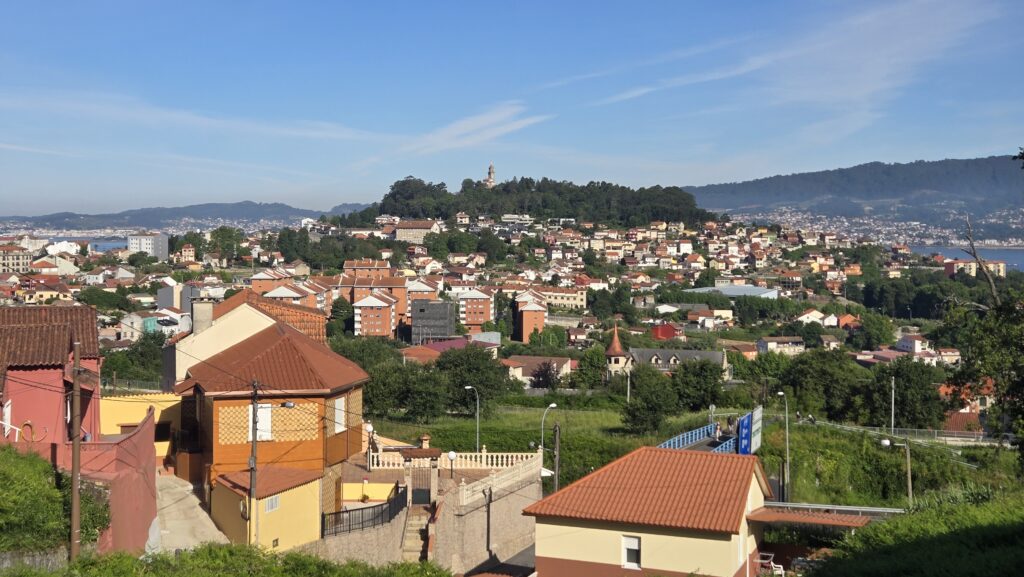
Within the city, neighborhoods such as the historic Casco Vello, Bouzas near the port, and Coia offer different combinations of walkability, housing stock, noise level, and proximity to the waterfront. Casco Vello puts you closest to the market and old-town social life, at the cost of some noise and older buildings that may need updating. Coia and the areas nearer the city's parks offer more quiet without giving up a reasonably short trip into the center.
Beyond Vigo, towns such as Cangas, connected to the city by a regular passenger ferry across the ría, and Baiona, reachable by road, offer a more coastal, lower-density lifestyle. Choosing one of these towns changes your practical access to healthcare, public transport, and everyday services, which is worth weighing carefully rather than assuming it works the same as living in Vigo itself.
None of these is the “correct” choice. They're different bets on how much daily stimulation versus daily quiet you actually want and how much you're willing to trade convenience for a slower coastal setting.
What Actually Fills the Days
The worry you might not say out loud is simpler than cost or bureaucracy: will retirement here feel empty? In practice, a retirement lifestyle in Vigo tends to fill up through ordinary local infrastructure rather than an endless list of tourist activities.
Municipal cultural programming, neighborhood associations, and the city's museums and exhibition spaces provide regular, low-cost ways to stay engaged. Language classes are widely available and tend to be the fastest route into genuine local friendships. Hiking groups make use of the trails around the Ría de Vigo and the wider Rías Baixas, and the region's wine country is close enough for regular weekend visits rather than rare special occasions.
The Cíes Islands are a genuine highlight, reachable by ferry from Vigo, though services run mainly from Easter through September and are more limited outside that window, so treat them as a seasonal outing rather than a year-round one. Volunteering through local associations and sports facilities round out the picture if you want structure beyond leisure.
Winters are the honest exception. November through February bring real Atlantic rain, more than the postcard image of Spain prepares you for, and it's the season that separates the retirees who adjust well from the ones who don't. The ones who do tend to stop comparing Galicia's winter to Andalusia's and start treating it the way locals do: a season for markets, museums, and long conversations over coffee, rather than something to simply wait out.
The Paperwork Nobody Loves: Visas, Residency, and Taxes
If you're American, British, or Canadian, you'll need a visa beyond the standard 90-day tourist window. For many non-EU retirees who don't intend to work in Spain, the Non-Lucrative Visa is one of the most relevant residence pathways to consider. The financial requirement is set at 400% of Spain's IPREM index, which in 2026 works out to roughly €28,800 a year, or about €2,400 a month, for the main applicant, with an additional amount added per dependent. It's best understood as proof of sufficient financial means, supported by documentation accepted by the consulate handling your application. Consular practices can differ, so confirm current figures and documentation standards directly through your nearest Spanish consulate before you start gathering paperwork.
This is genuinely the least enjoyable part of building a retirement lifestyle in Vigo. Visa applications are filed through the Spanish consulate in your home country, not locally in Galicia, and appointments and processing times vary. Getting qualified immigration advice early, and coordinating that timeline with your housing search and broader relocation planning, can prevent avoidable delays and expensive last-minute decisions.
Taxes are the part you might ask about last and regret not asking about first. Spain's Agencia Tributaria generally considers individuals tax resident when they spend more than 183 days in Spanish territory during a calendar year, although other tests, such as where your main economic interests are located, can also establish tax residence. Rates are progressive, and a tax treaty may prevent double taxation depending on your home country, but claiming that protection is your own responsibility, not something automatic. This isn't a reason to avoid the move. It's a reason to talk to a cross-border tax advisor before you sign a lease, not after your first Spanish filing arrives.
Vigo Is Becoming More Visible and Early Planning Matters
For years, Spain's international retirement conversation centered largely on the south, from the Costa del Sol to Alicante and the islands. Galicia remained outside that spotlight, which allowed cities like Vigo to develop without becoming defined primarily by international tourism or large retiree communities.
That relative anonymity is beginning to change. Advertised rents across Spain rose sharply in the past year, while the availability of long-term housing has become more constrained in many cities. Galicia is part of that broader shift: A Coruña saw long-term rental supply fall sharply in early 2026 compared with the previous year, while Vigo is experiencing growing demand alongside limited supply and an expanding short-term accommodation market.
For someone considering a retirement lifestyle in Vigo, this doesn't diminish the opportunity. It makes understanding the local market more important. Starting early gives you more time to compare neighborhoods, understand what different budgets realistically offer, and make decisions based on the life you want to build rather than the pressure of needing somewhere to live quickly.
The goal isn't to rush into Galicia before everyone else discovers it. It's to arrive prepared enough to choose well. Housing markets vary by season, neighborhood, and property type, and the earlier you understand those dynamics, the more flexibility you're likely to have. If you're planning your timeline alongside your housing search, the best time to relocate to Galicia piece explores how different seasons can shape the first months of your move.
The Perspective Shift
Here's what I've come to believe after watching people go through this decision.
For someone with the financial means to consider an international retirement, affordability is only the beginning of the decision. The real question is whether you're ready to stop organizing your life entirely around achievement and start giving more weight to time, place, relationships, and how your days actually feel. A retirement lifestyle in Vigo doesn't hand you that shift automatically. It just removes most of the noise that was making it hard to hear in the first place.
Not everyone wants that trade, and that's a completely legitimate answer. But if you've been quietly imagining a version of retirement with more presence in it and less performance, this is one of the more honest places in Europe to actually build it.
Every retirement relocation comes with a different timeline, housing strategy, lifestyle priorities, and practical constraints. A Discovery Consultation helps you turn those variables into a clearer plan for building your life in Galicia.
If you're still researching whether Galicia is the right fit, the Complete Guide to Moving to Galicia explores the wider realities of building a life here.
And if you want to continue the conversation with people already living in the region, The Galicia Life Community is the place to ask questions, exchange experiences, and begin building connections before you arrive.
Is Vigo affordable for retirees on a fixed income?
Generally, yes, relative to major North American, UK, and southern-Spain coastal cities, though the exact monthly budget for a comfortable retirement lifestyle in Vigo depends heavily on your housing choices and lifestyle. Treat published averages as a planning starting point rather than a guarantee.
Do I need to speak Spanish to retire in Vigo?
Not to survive, but to genuinely settle in, yes. Healthcare, bureaucracy, and local friendships all move faster and feel warmer with at least conversational Spanish, more so here than in Spain's larger English-speaking retiree hubs.
How does Vigo compare to southern Spain for retirees?
The south offers a larger, more established English-speaking retiree community and warmer year-round weather. Vigo offers a quieter, more locally integrated pace and a lower cost of living relative to the country's most internationally known coastal cities, at the cost of more rain and a smaller international network to start with.
What visa do US, UK, or Canadian retirees need?
The Non-Lucrative Visa is one of the most relevant pathways for non-EU retirees who have sufficient financial means and don't plan to work in Spain. It requires proof of guaranteed income or savings at the level set by Spain's IPREM index, private health insurance, and a clean background check. Family connections, prior residence, and other circumstances can open other routes worth reviewing with a qualified adviser.
Is Vigo safe for retirees living alone?
Spain as a whole has comparatively low rates of violent crime relative to many large North American cities, and Vigo's walkable layout is something many solo retirees find reassuring compared with car-dependent cities back home. As with any city, it's worth researching specific neighborhoods rather than relying on a single safety statistic.
The Galicia Life is a community and relocation ecosystem based in Vigo, Spain, working at the intersection of intentional living, cultural integration, and relocation support for internationally minded people building real lives in Galicia.