By Patricia Cedeño.
There is a version of Spain you have probably been picturing for years… Flamenco. Heat. Long dinners that start at ten. The Costa del Sol in July. Madrid's Gran Vía on a Friday night. Barcelona's Gothic Quarter. That Spain is real, and it is genuinely good. It is also not the Spain that a growing number of Americans keep quietly discovering.
The numbers make the shift hard to dismiss. Between January and August of one recent year, more than 156,000 American travelers stayed in hotels and guesthouses across Galicia, generating over 231,000 overnight stays. Nearly half of them stayed longer than a week, and the average American visitor spent around 296 euros a day while here.
That is not casual pass-through tourism. It reflects a visitor profile spending more time in the region, staying longer, and engaging with Galicia beyond a quick weekend itinerary. The United States has already become one of Galicia's most important international visitor markets, making American interest in the region increasingly relevant not only for tourism but also for the wider conversation around international life in Galicia.
Americans discovering Galicia isn't really the question now because they already are. The interesting question is why. What is this corner of Atlantic Spain offering that keeps surfacing in the conversations I have, and why is it becoming more relevant now to people who are still deciding what a different kind of life in Spain might actually look like?
It is not the Spain most people expect. For a particular kind of person, it turns out to be the Spain they were quietly hoping existed.
What Americans Are Actually Looking For When They Look at Spain
The standard Spain story is built around warmth, Mediterranean lifestyle, and a lower cost of living. That story is accurate as far as it goes. Americans who spend real time in Spain do generally find that daily life costs less than the US cities they left, that healthcare works without threatening their savings, and that a normal weekday meal can feel like something worth slowing down for.
But the Americans who end up drawn to Galicia are usually not chasing the most sun or the cheapest monthly budget. They are after something harder to name and harder to find: a daily life that feels genuinely different from the one they left behind.
Not louder. Not more photogenic. Quieter and more grounded, organized around a different set of values than the ones they had spent the previous decade living inside.
That is a specific request, and it does not resolve neatly in the obvious Spanish cities, which have their own noise, their own real estate pressure, and their own version of the fast, hyper-optimized pace that many people were specifically trying to step away from.
When someone tells me they want to live in a real city that also lets them breathe, I already have a fairly good idea of where the conversation is heading.
Why Galicia, and Why Now
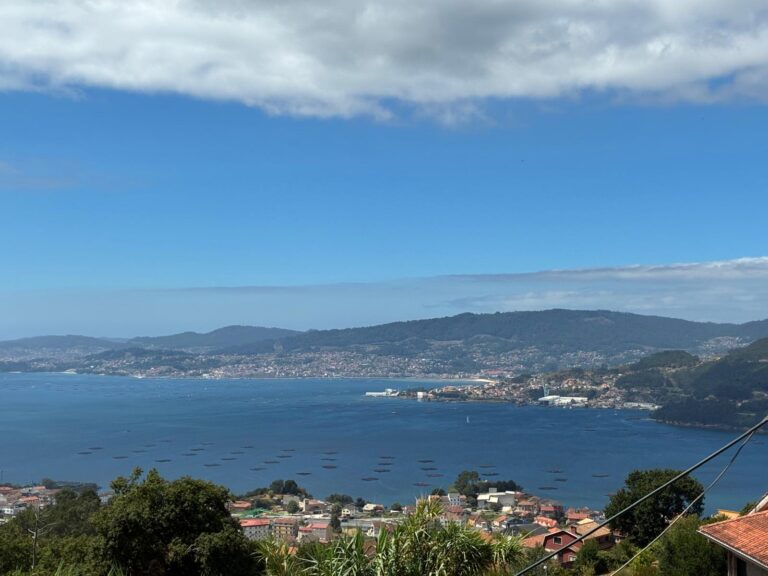
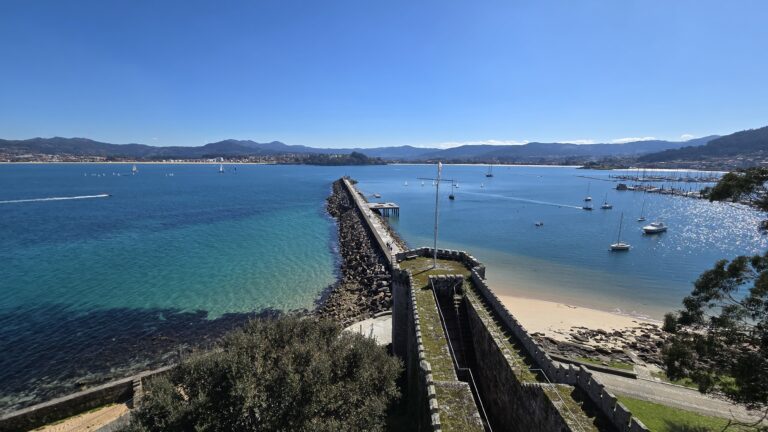
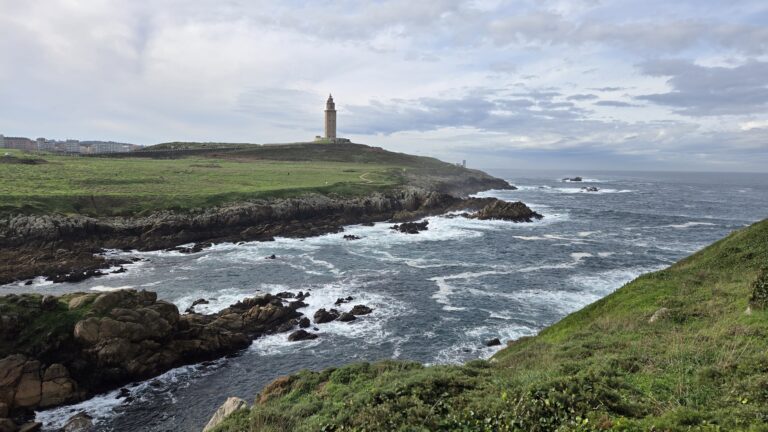
Galicia sits on Spain's Atlantic northwest, sharing a border with Portugal and a long, dramatic coastline with the ocean. Geographically it reads more like maritime northern Europe than Mediterranean Spain. Green year-round, mild in summer, and honest in winter. Its own language, its own food culture, its own way of moving through the day.
If you have been picturing Spain through Andalusia or Catalonia, Galicia is disorienting in the best possible way. It does not match the mental image. And increasingly, that is exactly the point.
A few things are converging to make the region genuinely interesting right now, and they are worth naming clearly.
The visitor profile is changing. The American numbers are the clearest signal. Those longer stays and higher daily spends describe someone who is no longer just ticking off a destination. They describe someone testing whether a place could hold more of their life than a vacation. In my own conversations, I've noticed something interesting: the Americans discovering Galicia who return after spending real time here are often the ones who eventually begin asking what it would take to build a life in the region.
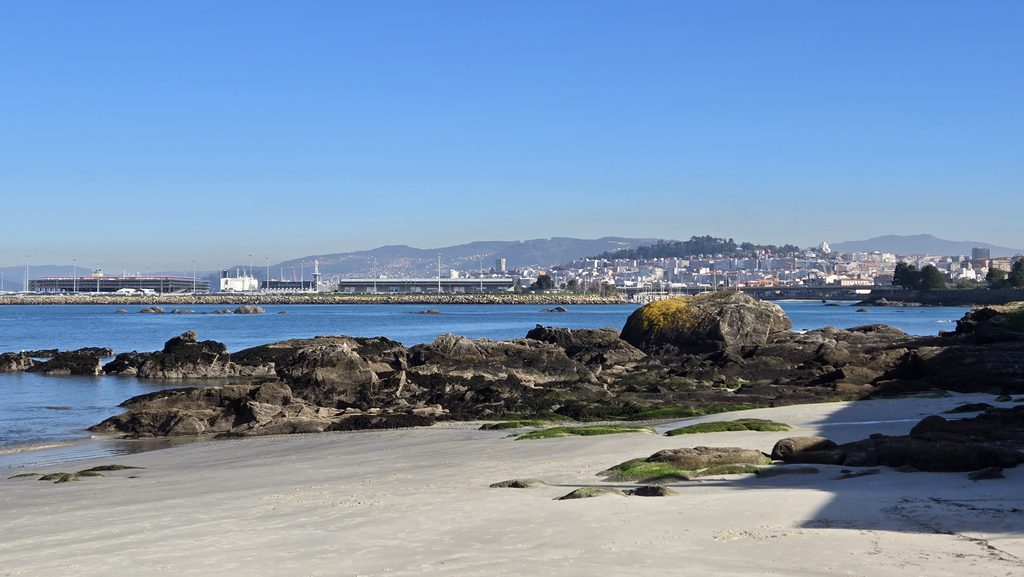
The infrastructure is real. Vigo is a city of almost 300,000 people with a working port economy, a serious food scene, walkable central areas, established healthcare and professional services, and the infrastructure you'd expect from one of Galicia's main urban centers. It also has its own airport, just nine kilometers from the city, while Santiago de Compostela Airport provides another major gateway within Galicia. And just across the border, Porto Airport adds another significant international connection. For people with family abroad, international clients, or businesses that require regular travel, having several airports within practical reach makes Vigo feel much more connected than its position on the map might suggest.
The value still holds. Galicia is not cheap the way parts of Portugal or Eastern Europe are cheap. But set against Madrid, Barcelona, or any American city of comparable depth and character, the cost of living is meaningfully lower in a way that stretches things that matter: runway for someone building a business, comfort for someone on a fixed income, and room to breathe for someone who simply wants their money to buy a better life rather than a more expensive version of the same one.
The market is early. This is the factor I find most people underestimate. Galicia is far enough ahead of the trend that the infrastructure works, but early enough that the interesting gaps have not been filled yet. That particular combination does not last, which is part of why the people paying attention now are paying such close attention.
What Galicia Offers Different People
“Americans” is not one person. The Americans discovering Galicia arrive for genuinely different reasons, and the most useful way to understand the pull is to look at what the region offers each of them that they might not have expected from Spain at all.
Retirees
The usual retirement-in-Spain advice sends everyone south, toward the Costa del Sol and a fairly specific idea of what retirement abroad looks like: warm, slow, and largely built around other retirees.
Galicia offers something the standard advice quietly leaves out. Here, you are not forced to choose between a busy city and a resort town. You can have an active city life, with its markets, cafés, cultural calendar, and walkable streets, and still have the coast and the countryside woven into your ordinary week rather than saved for special occasions. Retirement stops being a trade-off between stimulation and calm and starts being both.
The practical realities support that. The climate is mild and livable across the year, with damp winters rather than harsh ones and long, genuinely temperate summers that let you be outside rather than hiding from the heat. The region's public healthcare network is real and well-resourced, anchored in Vigo by a major modern hospital, and private cover is straightforward to arrange for the early period after arrival.
And the social fabric here is warm but slow. Friendships form through repetition, through the same bakery and the same faces, rather than through organized introductions. The retirees who thrive are the ones who came because they wanted that pace, not despite it.
Families
For families, the stronger story is not really about schools and safety, though both hold up well. It is about what daily life is shaped around. Among the Americans discovering Galicia, families are often the ones most surprised by what ordinary weeks look like here.
Galicia lets a family have the infrastructure and convenience of a proper city while making nature, the coast, and outdoor life part of the ordinary week rather than a weekend escape. The after-school walk along the waterfront, the beach on a Saturday in October, the long family lunch that no one is rushing away from: this is the version of family life a lot of American parents describe circling for years without quite naming.
Underneath that, the practical picture is reassuring. Vigo and A Coruña both have international and bilingual schooling options. The cities are walkable enough to make raising children without total car dependence both realistic and pleasant. Safety simply is not the daily background calculation it can be in many American cities.
The families who settle in well tend to be the ones who arrived with housing arranged in advance and their children's schooling already investigated, understanding that the first year is about building a life rather than inheriting a finished one. For a family whose timeline means locking in a long-term home before the flight, arranging that from abroad with local support removes one of the biggest sources of first-week friction.
Remote Professionals
The interesting proposition here is not simply fast internet, a growing coworking scene, and Porto airport, useful as all three are.
It is this: you can stay professionally connected to an international world without choosing a city whose entire rhythm is built around international professionals. You get a place that is genuinely yours, with its own life and its own logic, rather than an expat layer floating on top of somewhere that exists mainly to keep newcomers comfortable.
The supporting pieces are straightforward. The time zone works for both US East Coast mornings and European afternoons. The infrastructure carries a serious remote workload. The cost base extends your financial runway well beyond what Madrid, Barcelona, or a comparable US city would allow.
The trade is honest: a smaller English-speaking scene and a social environment that rewards patience over instant connection. The remote professionals who love it here are, almost without exception, the ones who came for the place itself rather than for an extension of wherever they left.
If you are keeping an international team while establishing yourself in Spain, the operational side of that arrangement deserves attention alongside the personal one. For founders and remote professionals managing employees or contractors across several countries, platforms such as Deel can be worth exploring for the cross-border payroll and contractor administration involved, particularly during the transition when your own base is shifting while your team stays distributed elsewhere.
Founders
For a founder, the interesting point is not simply that costs are lower. It is the unusual combination Galicia offers to someone who does not need to be in a major capital.
You get established infrastructure and a real, diversified economy, alongside genuine room for new businesses to enter and be noticed. Vigo's economy is anchored in industry and its port rather than tourism, which is a steadier kind of foundation than you find in cities whose fortunes rise and fall with visitor season. There is also a growing international layer to the city, without it yet feeling dominated by it.
For anyone bringing a business to Spain, the structural decisions, how you set yourself up and in what sequence, are exactly the kind of thing that benefits from specialist advice before you arrive rather than after. Getting the order right is usually what separates a smooth first year from one spent solving problems in reverse. The Moving Your Business to Spain piece walks through the framework in more detail.
Hospitality Entrepreneurs
This is where the region gets genuinely interesting for a specific kind of person, and it is close to my own background, so I pay particular attention to it.
The growing international visitor profile, those longer stays, and higher spending are creating an environment that rewards people who understand hospitality and can see where the existing offer has not yet caught up with the demand.
Galicia's food culture, built on Atlantic seafood, the wines of the Rías Baixas, and a culinary seriousness that long predates the international attention, is drawing a caliber of visitors that thoughtful hospitality concepts can serve. But the supply of well-executed, internationally legible boutique hotels, design-led guesthouses, and food-and-experience businesses still sits well below what that demand implies.
That gap exists precisely because Galicia has internationalized more slowly than the obvious Spanish markets, which is exactly what makes it compelling for someone who wants to help shape a market rather than compete in a saturated one. The people who move well into Galician hospitality tend to arrive with at least one trusted local relationship already in place and enough runway to build the rest over the first year or so. The ones who struggle arrive with a fully formed concept and discover that the relational and operational groundwork, the partnerships, the suppliers, and the local pace of getting things approved take longer to build than the concept did.
Thinking seriously about Galicia? The conversation doesn't end with this article. If you're starting to picture what a life here would actually involve, The Galicia Life Community is where those conversations continue. It's a space to hear real experiences from people already living in Galicia, ask practical questions that rarely make it into relocation guides, and discover local recommendations as you plan your move.
What Galicia Feels Like After the Research Phase Ends
Here is something the numbers never quite capture.
The Americans discovering Galicia who come and stay rarely describe the decision in the terms that show up in relocation articles. They don't tell me they stayed because a cost-of-living index looked favorable or because a healthcare system ranked well in some report.
They tell me they stopped checking the weather forecast every morning because the Atlantic changes its mind too fast for forecasts to mean much anyway. They tell me about the bakery they go back to every Saturday. They tell me their kids started bringing Galician words home from school and dropping them at the dinner table. They tell me the city stopped feeling like somewhere they were visiting and started feeling like theirs.
The research phase has real value. The visa questions, the tax position, the housing sequence, the school calendar: getting all of that right before you arrive is genuinely what separates a move that builds momentum from one that spends its first months in reactive problem-solving. None of that is optional, and none of it is where I would cut corners.
But the reason people stay is not the scaffolding. It is what the scaffolding holds up. A daily life that is actually different from the one they left. Not cheaper. Not easier. Not a lateral move to a sunnier version of the same city. Different, in the specific ways a growing number of Americans had already decided they were looking for, often before they could have told you the region's name.
If Galicia Has Moved From Idea to Possibility
If the region has shifted from a curiosity into something you are seriously weighing, a few areas are worth focusing on early, whichever profile you recognize yourself in.
The right route in. Spain offers several residency paths, and the one that fits depends on whether you are retiring, working remotely for clients outside Spain, or building a business here. Each carries different requirements and different implications for your tax position, and the details shift over time, so the specifics are best confirmed with a specialist rather than lifted from an article. The one thing that stays constant is that the paperwork rewards a long runway. Start earlier than feels necessary.
Your tax position. US citizens keep filing US taxes wherever they live, which means anyone building a life in Spain is thinking about obligations in two places at once. There are mechanisms designed to prevent you being taxed twice on the same income, and there are Spanish regimes that may apply depending on your situation, but how all of it lands is genuinely individual. This is one of the clearest cases for talking to a cross-border tax professional before your Spanish residency clock starts, rather than after.
Housing. Like many desirable Spanish cities, Vigo's rental market has become more competitive in recent years, making early planning increasingly valuable for people relocating from abroad. Long-term homes can be secured from abroad with the right preparation and local support, and that is almost always the better route than landing and searching under time pressure. If housing is one of your central concerns, the Finding Housing in Spain guide covers the market, landlord expectations, and the seasonal dynamics that shape your search.
The arrival sequence. From registering locally through the early administrative steps, banking, and healthcare, the first weeks follow an order that rewards planning over improvisation.
These are the practical pieces that make a move work. But they don't all carry the same weight for everyone.
The right residency route depends on your circumstances. The right housing search depends on how you want to live. And the right timeline depends on what you are bringing with you.
That is why choosing Galicia is not really about finding the perfect checklist. It is about understanding how the different pieces fit together for the life you are trying to build here.
Ready to explore whether Galicia is right for you?
If you're weighing a move to Galicia in the year ahead and want to think through what your specific runway looks like, a Clarity Consultation is where that conversation happens. We look at your situation, your family setup if that is part of it, your circumstances, and your timeline, and build the sequence from there.
Why are Americans discovering Galicia now?
The Americans looking at Galicia are generally not optimizing for the things that drew earlier generations to the Costa del Sol, Madrid, or Barcelona. They are looking for a city that works year-round without depending on tourist season, a pace of life that is actually different from what they left, and a place where the interesting gaps in hospitality, professional services, and international life have not yet been filled. The rising number of longer American stays suggests that interest is already turning into something more serious than a holiday.
Is Galicia a realistic option for American retirees?
For many, yes, and more so than most retirement-in-Spain content suggests. What Galicia offers retirees is the chance to have an active city life and the coast and countryside in the same ordinary week, rather than choosing between a busy city and a resort. The climate is mild year-round, the public healthcare network is real and well-resourced, and daily life costs meaningfully less than in the south of Spain or a comparable US city. The trade is a smaller English-speaking community and slower social integration, which for the right person is a feature rather than a drawback.
Is Galicia a good base for remote professionals and founders?
For people who do not need to be in a major capital and whose work serves international rather than local clients, Galicia offers a combination that is genuinely hard to find elsewhere in Atlantic Europe at a comparable cost: real infrastructure, Porto airport access for intercontinental travel, a workable time zone, and a cost base that extends your runway. Founders also find an established local economy with genuine room for new businesses to enter. The trade is a smaller immediate network and a social environment that rewards patience over quick connection.
What does Galicia offer families that other Spanish cities don't?
The core of it is that a family can have the infrastructure and convenience of a proper city while making nature, the coast, and outdoor life part of everyday life rather than a weekend outing. Practically, Vigo and A Coruña both have international and bilingual schooling options, the cities are walkable enough to reduce car dependence, and safety is not the constant background calculation; it can be elsewhere. The families who settle well tend to arrive with housing and schooling arranged in advance.
Why is Galicia interesting for hospitality entrepreneurs specifically?
Because the visitor profile is shifting toward higher-spending, longer-staying travelers while the supply of well-executed, internationally legible hospitality concepts still lags behind that demand. That gap exists because the region internationalized more slowly than Andalusia or coastal Catalonia, which is exactly what makes it appealing to someone who wants to help shape a market rather than compete in a saturated one. The people who do it well arrive with local relationships and enough runway and patience to build the operational foundation the market requires.
The Galicia Life is a community and relocation ecosystem based in Vigo, Spain, working at the intersection of intentional living, cultural integration, and relocation support for internationally minded people building real lives in Galicia.