By Patricia Cedeño.
I arrived in Vigo in 2020, in the middle of COVID, and the city I found is not the one I describe today. Many shops were closed. There was not much happening. For a while, Vigo felt like a city holding its breath.
Then, over the following year or two, it started to exhale. New cafés opened. Brunch places appeared, along with restaurants, the Work Café, the shopping center, and a steady stream of small businesses that gave the city a social life it had been missing. I watched that change happen while I was still figuring out how to live here.
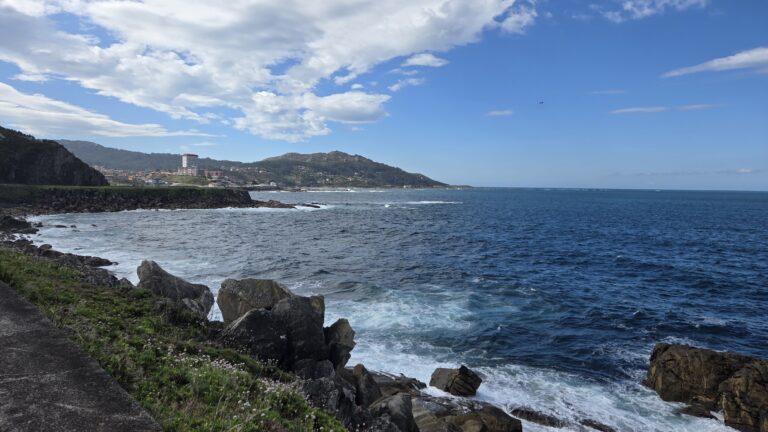
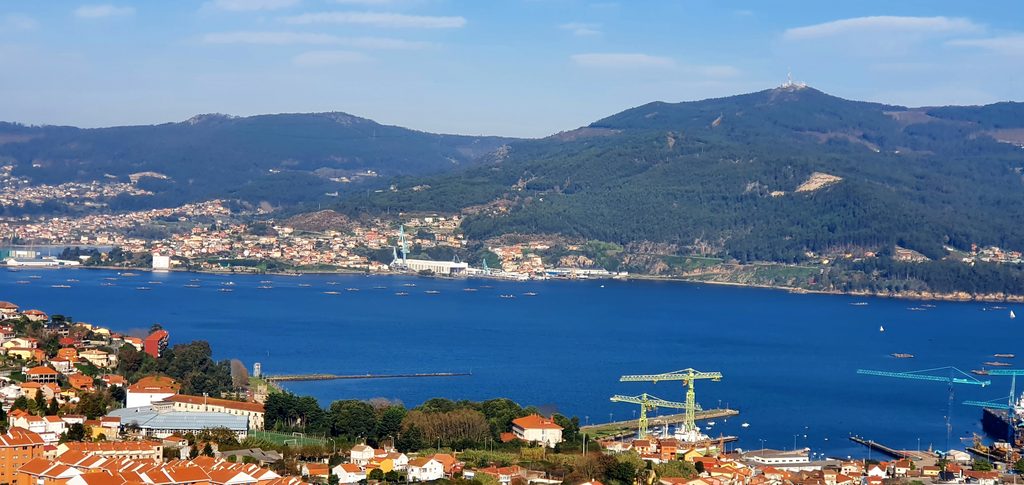
If Vigo and Ourense are new names for you, here is the short version. Vigo is the largest city in Galicia, set on the Atlantic coast of northwest Spain, with hills behind it and the ría, the estuary, in front of it. Ourense is a province inland, away from the coast, with a different climate and a very different pace. I have lived in both: first in the city and later for almost a year in a village in the province of Ourense, including one full winter.
That experience taught me that the difference between city vs rural life in Galicia is not simply noise versus quiet. It is a different arrangement of almost everything: who you see, how you get around, what you can do on a free evening, and what you have to organize in advance.
This is not an article about which one is better. It is about what living in both showed me about what I need from the place I call home. I am a millennial, and what I look for in a place is social connection, independence, professional opportunities, cultural life, nature, and everyday convenience.
Not every millennial weighs those the same way. But if you are thinking about living in Northern Spain and wondering whether you are a city person, a small-town person, or someone who would thrive in the countryside, this is an honest account of two ways of living in Galicia.
The Part Nobody Warned Me About: Adapting to Spain
I am Latina, and I speak Spanish, so I assumed Spain would be the easy chapter. I had lived in Vancouver, I had travelled internationally, and I expected to settle in quickly.
I was wrong. Spain turned out to be one of the most challenging countries I have ever had to adapt to.
The language was never the obstacle. What took time was everything around it: social customs, the way people communicate, how professional relationships work, and the rhythm of an ordinary day. After Vancouver, and after a way of working and living that was closer to the American pace, I had to slow down and relearn how things are done here.
I mention this because it shaped how I experienced everything that came next. Before I ever thought about village life, I was still learning what everyday life in Spain asks of you, and that matters more than you might expect when you choose where to live.
Why Vigo Eventually Felt Like Home
Living in Vigo did not click on day one. It clicked gradually, as the city filled in and I built my own routines inside it.
Here is what I appreciate most about it today.
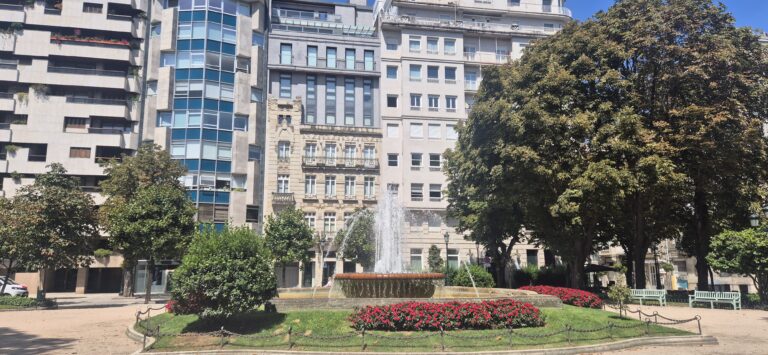
It feels more like a big town than a city. Although Vigo is a city, it doesn't have the overwhelming feeling of a major metropolis. It isn't particularly crowded, it hasn't been built around tourism, and it has managed to retain a strong local identity. There are moments when you can be right in the city center during the day and still find pockets of quiet. That was something I didn't realize how much I valued until I experienced it.
Coming from an international background and having lived in different places, I could have imagined myself in Madrid or Barcelona. But I eventually realized that I didn't want the constant movement, crowds, and intensity that come with bigger cities. Vigo gave me access to urban life without making me feel like I was constantly surrounded by it. That was one of the main reasons I chose to stay.
You can walk almost everywhere. Vigo has hills, and you will feel them, but a walkable city changes how a day works. Beaches, nature, and the city itself are all within roughly 20 minutes of each other, so a morning of work and an afternoon by the water do not require a complicated plan.
There is always somewhere to be. Cafés, restaurants, and different places to spend time, depending on your mood and the kind of day you are having. Social activities that do not need a special occasion.
The people are part of it. Language exchanges gave me a way to meet international people. I could also connect with other entrepreneurs and professionals, which matters more than you might expect when you work for yourself or run a business and no one is down the corridor.
There is culture on offer. Different entertainment and cultural options mean there is usually something to do if you want it and nothing you have to do if you do not.
That is the combination I keep coming back to, and it became the benchmark I later used to measure other places. Vigo offers urban convenience and proximity to nature without feeling like an overwhelming metropolis. It has enough going on to keep life interesting, but enough breathing room to actually enjoy it.
For me, that is what city life in Galicia means: having the advantages of a city while still enjoying a pace and scale that feel manageable.
It is also the context for the next chapter. I had always been a city person, and I had never lived in a small village. Then an opportunity arrived that let me find out what village life was actually like.
Why I Decided to Try Rural Life in Galicia
The opportunity was to help launch a rural speakeasy in the province of Ourense. It meant moving to the village where it would operate, and I stayed for almost a year, which included one winter.
I want to describe the village accurately, because “village” means very different things in different countries. This one had around 100 permanent residents. It had a bank, a small supermarket, a pharmacy, a health center, and the speakeasy. I was the youngest adult living there.
In summer, the village changed. Families returned from cities such as Madrid and Vigo; there were local festivities, and the place had a stronger sense of activity. It did not become a tourist destination. It became somewhere people came back to.
I noticed quickly that the village I saw in August was not the village I would be living in for the rest of the year. The number of residents on paper and the number of people I actually saw in a given week changed with the seasons.
I will say plainly that I loved parts of it.
The Beautiful Side of Village Life
Let me be specific, because “peaceful countryside” tells you very little.
There were rivers and waterfalls nearby. There were woods just 300 meters from my home, which meant I could walk out of the door and be in nature within minutes. Not a drive, not a plan, not a weekend trip. A walk.
The rhythm was slower, and there were fewer distractions. That sounds like a cliché until you live it, and then it becomes quite practical. With less competing for my attention, I learned to be present and to appreciate what was actually available to me, instead of thinking about what I could be doing somewhere else.
I also experienced a different kind of community and a different kind of year. Seasons organized village life in a way I had never noticed in a city: the quiet months, the summer return, and the festivities. This was village life at its best, and I do not want to undersell it.
If that is what draws you, it is real. The nature is real, and so is the slower rhythm.
Thinking about where in Galicia you would actually live?
If you are weighing city vs rural life in Galicia, it helps to see your own priorities written down next to the realities. The Your Move to Galicia Planner walks you through your priorities, possible locations, money picture, and timeline in one place, so the question shifts from “Where would I like to live?” to “Where would my everyday life actually work?”
City vs Rural Life in Galicia: What I Didn't Expect
The difference between city vs rural life in Galicia is something I only truly understood after experiencing both.
Living in a village gave me a completely different perspective on Galicia. Some things were exactly what I expected. Others were things I hadn't considered until I experienced them myself.
One of the biggest lessons was that summer and winter in the same village can feel like two completely different places. But the differences between urban and rural living in Galicia go much further than the seasons.
The Quiet After the Afternoon
In winter, I sometimes went days without any real social interaction beyond the three people I knew. After the afternoon, the village became almost completely empty. There were very few activities and very few entertainment options.
The things I took for granted when living in Vigo, like a spontaneous coffee, an unplanned conversation, an evening that turns into something, were simply not available.
Quiet can be wonderful. It can also be a lot of quiet, and that is the side of rural life in Galicia that rarely makes it into photographs.
When comparing city vs rural life in Galicia, this is one of the biggest lifestyle differences to consider. Having more space and living closer to nature can be wonderful, but it also means giving up some of the spontaneity that comes with city life.
The International Community and Language Barrier
Something else I missed was having an international community around me.
There were very few foreigners living in the village, and finding people who spoke English was rare. Even though I speak Spanish, I noticed how much I missed being around people from different backgrounds and having the option to socialize in English.
For someone who doesn't speak Spanish, this can become an even bigger consideration. Everyday interactions, making friends, accessing local services, and feeling part of the community can all require more effort when you don't speak the language.
This doesn't mean rural Galicia isn't welcoming. It simply means that the experience of integrating into a small village can be very different from moving to a city like Vigo, where there are more opportunities to meet international residents and connect with people from different backgrounds.
If you're considering rural living in Galicia, think beyond the property and the surroundings. Ask yourself what kind of social environment you want to live in and how important having an international community is to you.
Getting Anywhere Without a Car
The village had a bus to the nearby larger town twice a day. From there, I could connect to Ourense and other destinations. BlaBlaCar was another option for longer journeys, but it depended on availability and on schedules that were not mine.
I did not drive, which made all of this far more noticeable. If you drive, your version of this story will probably look different, and that is worth saying clearly.
But if you are picturing a countryside life where you can come and go freely, ask yourself honestly how you would get around.
This is another important distinction when comparing city vs rural life in Galicia. In a city, you generally have more transport options, services, and places within walking distance. In a village, having a car can make a significant difference to your independence.
Two Climates in One Village
Summer temperatures could exceed 35°C. Winters were very cold and sometimes snowy.
Vigo's milder Atlantic climate is a very different proposition, and it is easy to forget that Galicia is not one climate when you look at it from the coast.
The region has considerable geographical and climatic diversity. Where you choose to live within Galicia can make a significant difference to your everyday experience.
You can explore these differences in more detail through MeteoGalicia's Climate Atlas of Galicia, which illustrates the region's temperature patterns throughout the year.
What a Pharmacy and a Health Center Do Not Guarantee
This was the lesson that stayed with me.
On paper, the village had what you need: a bank, a small supermarket, a pharmacy, and a health center. But having essential services nearby does not automatically give you independence, variety, or the lifestyle you imagined when you pictured the countryside.
Living in rural Galicia can be well served and still feel limited, depending on what you need from your days.
Services solve for logistics. They do not solve for how an evening feels.
So, City or Rural Life in Galicia?
I don't think one is necessarily better than the other. They simply offer very different experiences, and understanding those differences is important before deciding where to settle.
City life in Galicia can give you more social opportunities, greater convenience, better access to services, and a more varied everyday routine. Rural life can offer more space, a closer connection to nature, quieter surroundings, and a different relationship with the local community.
But neither experience is automatically what you imagine it will be.
My time in the village taught me that choosing where to live isn't just about the house, the views, or how beautiful the surroundings are. It's about the kind of everyday life you want to build around them.
And sometimes, understanding what you would miss is just as important as knowing what you're looking forward to.
Why I Came Back to Vigo
I enjoyed the experience, and I want to be clear about that. But by the end of it, I understood that this was not the right permanent environment for me.
What I missed after months in the village was specific:
- Spontaneous social interactions
- Language exchanges and international connections
- Different entertainment and cultural options
- Access to particular products, services, and activities without needing a car
- Meeting and connecting with other entrepreneurs
- A more varied social and professional environment
None of this makes the countryside lesser. It makes it different. I came back to Vigo because it matched the way I wanted to live and because it gave me those things back without my having to plan around them.
I did not leave because village life failed. I left because I had learned what I need. The village did what a good experience should do: it showed me my own preferences more clearly than any amount of thinking about it would have.
You Don't Have to Live Where You Go to Recharge
Here is what I realized afterwards. I do not particularly miss living in the countryside. When I want peace, nature, or a break from the city, I can spend a few days in a rural place and then return to Vigo. The countryside is still there for me, a short trip away, without being the place where I have to organize my whole life.
Sometimes you do not need to live surrounded by everything you love. You just need to have access to it.
Vigo feels like home. Not because it has everything, but because it has enough of what I need within reach, and the rest is close enough to visit.
At this stage of my life, I realized that having access to people, opportunities, experiences, and nature mattered more to me than having complete peace and quiet every day. That might change in another stage of life, but it is what makes Vigo the right place for me now.
Choosing Where to Live Is Not the Same as Choosing a Place You Love
I think this is the real lesson of city vs rural life in Galicia, and it applies far beyond my own story. Choosing where to live is not just about finding a beautiful property or an attractive destination. It is about whether the everyday lifestyle of a place matches your needs, your priorities, and your stage of life.
A stone house with woods at the end of the lane is easy to fall in love with. Whether you want that life in January, with a bus twice a day, is a different question. The same goes for a city apartment: the café on the corner is a pleasure until you realize you wanted more silence than the street allows.
Neither answer is wrong. But the question has to be asked before the decision, not after. That is the question we help people work through at The Galicia Life, whether they are moving to Galicia for the first time, looking at property in the countryside, or weighing city vs rural life in Galicia before they commit to anywhere.
So here is what I would leave with you. What do you need within walking distance, and what is perfectly fine to have a short trip away?
Still unsure whether the city, a smaller town, or the countryside fits?
If you are considering a move to Galicia but are not sure whether city life, a smaller town, or the countryside would suit you best, a Clarity Consultation is where we work through it together.
We look at your priorities, your stage of life, and how you want your days to feel, and we help you understand the differences between locations so you can make a more informed decision about where to build your life. And if the answer is somewhere else in Spain, I will tell you that too.
What is rural life in Galicia really like?
It depends on the village, the season, and what you need from your days. In my experience in a village of around 100 permanent residents in the province of Ourense, it meant woods 300 meters from my door, rivers and waterfalls nearby, a slower rhythm, and a strong seasonal pattern. It also meant very quiet winters, few activities after the afternoon, and limited public transport.
What is the main difference between city vs rural life in Galicia?
In my experience, it comes down to how much of your daily life you can reach on your own. Neither is better in general. It depends on what you value. For me, living in Vigo offers walkability, social variety, language exchanges, cultural options, and access to other entrepreneurs, with beaches and nature within about 20 minutes. A village offers a different kind of quiet and a closer connection to nature. The right choice depends on the life you want to have on an ordinary week.
Can you live in rural Galicia without a car?
It can be difficult, and it depends on the village. In my case, the village had a bus to the nearby larger town twice a day, with connections to Ourense and other destinations from there. BlaBlaCar helped with longer journeys, but it depended on availability and timing. I did not drive, and I noticed the limits of that every week. If you do drive, the experience may feel quite different.
How different is the climate between Vigo and inland Galicia?
In my experience, quite different. Vigo has a mild Atlantic climate. In the village in Ourense, summer temperatures could exceed 35°C, while winters were very cold and sometimes snowy. If you are thinking about the countryside, it is worth finding out how a specific area feels in each season rather than assuming the climate you know from the coast applies everywhere.
Do millennials prefer city or rural life in Galicia?
I can only speak for myself, and not every millennial weighs things the same way. For me, social connection, independence, professional opportunities, cultural options, nature, and everyday convenience all mattered, and Vigo gave me more of them in the same week. Someone who works independently and values quiet above everything else may land somewhere different.
Is living in rural Galicia a good fit for entrepreneurs and professionals?
It can be, but it depends on how much your work relies on being around other people. In my case, I found it easier to meet and connect with other entrepreneurs and professionals in Vigo, where there are more places, events, and exchanges that bring people together. If your work is mostly independent, a village may suit you better than it suited me.
The Galicia Life is a community and relocation ecosystem based in Vigo, Spain, working at the intersection of intentional living, cultural integration, and relocation support for internationally minded people building real lives in Galicia.