By Patricia Cedeño
A new pattern is emerging among entrepreneurs moving to Galicia, and it started showing up a few years ago.
A founder closes her laptop in Berlin and books a one-way flight. A creative director in Toronto finishes his last in-person meeting and starts researching fiber speeds on the Atlantic coast. A couple from London, both working remotely, one sitting on a hospitality idea for three years, starts looking seriously at northern Spain.
They are not looking for the next Lisbon.
They are looking for something that doesn’t feel like Lisbon did five years ago.
They are looking for Galicia.
What's Actually Drawing Entrepreneurs to Galicia Right Now
For most of the last decade, the entrepreneurial relocation playbook was simple: go where the scene already is.
Lisbon. Barcelona. Berlin.
Find the cluster. Plug in.
But clusters become markets. Markets attract capital. Capital inflates rent. And somewhere in that cycle, the thing that made the city interesting quietly exits through the same door the next wave is trying to enter.
In Lisbon, average rents in central neighborhoods like Alfama crossed €1,800 per month in 2024. Areas once known for independent cafés, artists, and creative energy are increasingly dominated by short-term rentals and hospitality expansion.
The signal isn’t that Lisbon failed.
It's that the kind of person who moved to Lisbon in 2016 is now one of the entrepreneurs moving to Galicia in 2026. And they know exactly what they're doing.
The Economic Case Is Becoming Hard to Ignore
The conversation around Galicia often stays at the level of atmosphere.
The rain.
The seafood.
The granite.
The slower pace.
Those things matter. But what’s happening here is also, quietly, an economic story.
Spain was ranked the number one digital nomad destination in the world on the 2026 Global Digital Nomad Visa Index, ahead of Portugal and Malta. The current income threshold for Spain’s Digital Nomad Visa sits at €2,849 per month, filtering for a more established international profile than the early “backpacker remote work” era.
What’s arriving now are:
- experienced remote professionals
- consultants with long-term clients
- founders building sustainable businesses
- families reconsidering quality of life
- people looking for permanence, not novelty
Within that national shift, Galicia occupies a very specific position.
Tourism now represents more than 10% of Galicia’s GDP, while international tourism continues growing faster than domestic tourism for the third consecutive year. Even winter months like January and December registered over 4% growth in hotel stays last year.
This is no longer only a seasonal destination.
At the same time, Vigo’s urban transformation is accelerating. Projects like Barrio do Cura are reshaping the relationship between the city center and the waterfront, while premium restoration developments in the historic center are attracting international buyers looking for alternatives to Lisbon, Barcelona, or coastal France.
For entrepreneurs moving to Galicia, the economic case is rarely the whole story, but it's almost always where the conversation starts.
Why Entrepreneurs Are Choosing Galicia Right Now
- Lower cost of living than Lisbon, Barcelona, or any comparable Atlantic city in Western Europe
In Vigo, it’s still possible to rent a modern apartment for under €1,000 per month or buy property near the coast at prices that would be unthinkable in larger European hubs.
- Spain's Digital Nomad Visa with a flat 24% tax rate for five years under the Startup Law
- Fiber internet reaching even rural areas — Spain ranks 2nd in the EU for fiber-to-the-home coverage
- A hospitality and creative scene with real gaps still to fill
- A pace of life that is genuinely different, not just aesthetically different
These are the practical reasons entrepreneurs moving to Galicia keep citing when asked what finally made them decide.
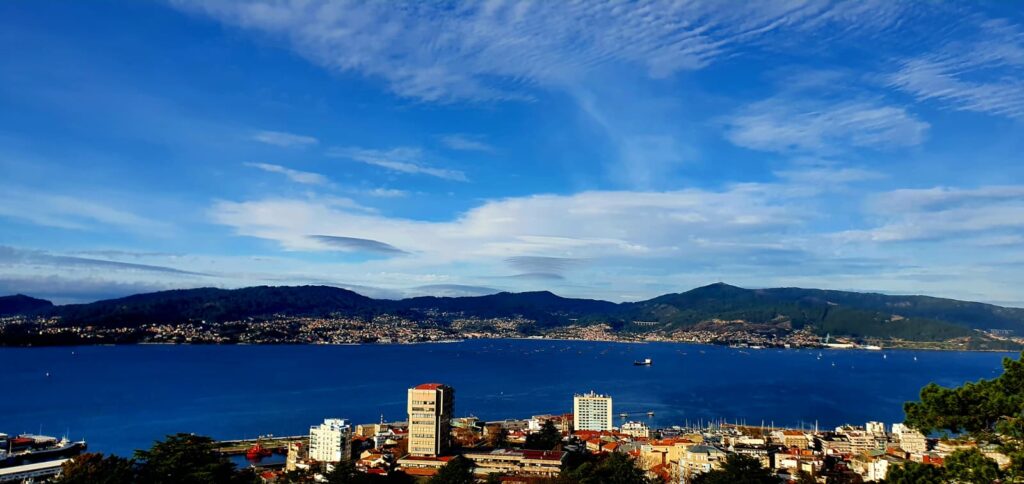
Galicia's Infrastructure Has Quietly Caught Up
One of the persistent myths about this region, especially among people who haven't been here, is that it's beautiful but slow in the wrong ways. Remote in a way that compromises serious work.
This hasn't been accurate for years.
Spain ranks second in the EU for fiber-to-the-home coverage. The stone farmhouse in the hills outside Pontevedra with the slate roof and interior courtyard? It often has symmetrical gigabit fiber. Coliving spaces along the Costa da Morte are structured around exactly that reality: focused desk work in the morning, Atlantic access in the afternoon. Not as a compromise. As the design.
The question is no longer whether Galicia can support serious work. It's whether you're ready to structure your day around it.
Infrastructure is rarely the reason entrepreneurs moving to Galicia hesitate. It's usually the last thing they worried about.
Who Actually Benefits From Building a Business in Galicia?
Galicia is not the right base for every entrepreneur, and that's part of what makes the decision worth examining carefully.
The entrepreneurs moving to Galicia who stand to benefit most are often those whose businesses give them some freedom over where revenue is generated. Consultants with international clients, founders managing distributed teams, independent professionals, and owners of digital businesses can build their companies from Galicia without depending entirely on the size of the local market. For them, the region offers something increasingly difficult to find in Europe's established business hubs: the ability to maintain an international career while choosing a smaller, more manageable environment for everyday life.
There is also a different kind of opportunity for entrepreneurs whose businesses are directly connected to the region.
Galicia's hospitality, tourism, food, property, wellness, and creative industries are evolving as the profile of people discovering the region changes. Growing international visibility creates demand for businesses that understand local culture but can also communicate with an international audience. Better hospitality concepts, bilingual professional services, thoughtful experiences, design-led projects, property services, and businesses capable of helping newcomers navigate the region are all part of a market that is becoming more sophisticated.
Creative and knowledge-based businesses can also find the environment attractive for a different reason. Designers, architects, writers, developers, boutique agencies, and other professionals whose work depends on concentration rather than constant physical proximity to clients may value the lower operating costs, access to nature, and quieter professional rhythm. Galicia doesn't replace the networks of a global capital, but for entrepreneurs who no longer need to be physically present inside those networks every day, that trade can make sense.
There are limits.
If your company depends on frequent access to venture capital, a large local market of international consumers, dense industry-specific networking, or recruiting large numbers of specialized English-speaking employees, Galicia may create more friction than opportunity. The ecosystem is growing, but it is not a smaller version of Lisbon, Barcelona, or Berlin.
And that's precisely the point.
The question isn't whether Galicia is a good place for entrepreneurs. It's whether the business you're building benefits from the kind of environment Galicia offers.
A Different Relationship With Time
Many entrepreneurs aren't relocating because they've become less ambitious. They're relocating because they've started questioning the assumption that building something meaningful should require sacrificing the rest of their lives.
For years, the places associated with entrepreneurship were the places with the highest concentration of capital, talent, events, and opportunity. Being close to the action mattered. For some businesses, it still does. But remote work, distributed teams, and the ability to build companies across borders have given a growing number of founders more freedom to separate where they build their business from where they build their life.
That's where Galicia becomes interesting.
The appeal isn't simply lower living costs or access to nature. It's the possibility of organizing everyday life around a different rhythm without abandoning professional ambition. In Vigo, you can run a company, work with clients internationally, and remain connected to major European cities while living in a place where walking to lunch is normal, the coast is part of everyday life, and your social calendar doesn't have to double as a business development strategy.
Quality of life can sound abstract until you look at what it's actually made of. It's how much of your income disappears into housing. How long you spend commuting. Whether access to nature requires planning an entire weekend. Whether every new relationship begins with the question of what you do for work. Whether success gives you more freedom or simply increases the cost of maintaining the life you've built around it.
Galicia doesn't remove pressure, guarantee balance, or make entrepreneurship easier. Building a business is demanding anywhere. What it can offer is a different environment in which to do that work, one where professional ambition doesn't have to occupy every available part of your identity.
That shift can be surprisingly disorienting at first. When you've spent years equating urgency with progress and visibility with relevance, a place that doesn't constantly reinforce those signals can feel almost too quiet. But for the entrepreneurs who discover that their business continues to grow without their entire life being organized around it, returning to the old rhythm can become increasingly difficult to imagine.
Why Vigo Feels Different Right Now
I moved to Vigo in 2020 after years of working in tourism and hospitality across several countries. I'd spent time in places where the interesting gaps had already closed, where the project I wanted to build had already been built by someone who arrived five years earlier.
Galicia was one of the few places I encountered where the gaps were still real.
Not because nothing was happening. But because what was happening hadn't yet been translated into something accessible to international entrepreneurs. The local knowledge, the right contacts, the understanding of how this specific city works. It all existed inside the region, largely invisible to someone arriving from London or São Paulo or Toronto.
That translation gap is still largely where the opportunity lives, and it's what entrepreneurs moving to Galicia consistently tell us they wish they'd understood earlier.
Premium restoration projects in Vigo's historic center are attracting a new class of international buyer, priced out of comparable Atlantic cities and looking for entry points that still make financial sense. The Barrio do Cura urban regeneration project has broken ground. Coastal neighborhoods like Alcabre and Canido are seeing sustained demand at price points that would look like a bargain in any other Western European city with a comparable quality of life.
This is a market moving toward premium while still being early enough to enter.
That transition affects more than property investment. As the profile of people arriving changes, so does demand for the businesses and services around them. Better hospitality concepts, bilingual professional services, design-led spaces, thoughtful cultural experiences, international education, property services, and businesses capable of translating Galicia to a wider audience without stripping away what makes the region distinctive all respond to needs that become more visible as a place evolves.
Not every gap represents a viable business opportunity, and international demand alone is not enough to sustain a company. But changing demographics, new investment, urban development, and growing visibility create new problems to solve. Entrepreneurs are often among the first to recognize those shifts, particularly when they understand both the international customer and the local context.
For entrepreneurs moving to Galicia, the opportunity isn't simply to benefit from the region's growth. It's to identify where that growth is creating genuine needs and build something useful enough to remain relevant after the novelty of international attention fades.
The Opportunity Is Still Early
Galicia is becoming more visible internationally, but it hasn't yet developed the dense ecosystem that exists in places such as Lisbon, Barcelona, or Berlin. That distinction matters because arriving early in an emerging environment creates both opportunity and responsibility.
There are fewer established international networks to enter, fewer English-language resources explaining how the region actually works, and less infrastructure designed specifically around internationally mobile founders. You may need to make more effort to find collaborators, understand the local business culture, build relationships, and identify the professionals you can trust. For someone expecting a ready-made startup ecosystem, that can feel frustrating.
For someone willing to participate in building connections rather than simply consuming an existing network, it's also where much of the opportunity lies.
The practical questions are usually the easiest to research. You can compare taxes, study Spain's Startup Law, calculate housing costs, examine flight connections, and understand the available residence pathways long before you arrive. What is much harder to understand from abroad is the social and cultural infrastructure that determines whether you can actually build a sustainable life here.
Which neighborhoods attract the kind of people you want around you? Where do meaningful professional relationships form when traditional networking events aren't the center of the business culture? Which local professionals understand the needs of international clients? How long does trust take to build? How do you become part of the region rather than remaining permanently adjacent to it?
These questions matter because moving to Galicia and building something in Galicia are not the same thing.
The region doesn't need to become the next Lisbon for entrepreneurs to find opportunity here. In fact, part of Galicia's advantage is precisely that it hasn't been fully shaped around an international startup identity. There is still room to build relationships across local and international communities, create services for emerging needs, contribute to industries already rooted in the region, and participate in an ecosystem that is still taking shape.
The opportunity isn't simply to arrive before Galicia becomes more visible. It's to understand the region well enough to contribute to what it becomes.
The Entrepreneurs Who Do Well Here Understand One Thing
Arriving in Galicia is relatively easy. Becoming part of the place takes longer.
That distinction matters because Galicia rewards participation more than extraction. Entrepreneurs who arrive looking only at lower operating costs, cheaper property, or an underserved international market may identify opportunities, but those advantages alone rarely create the relationships and local understanding required to build something durable.
The entrepreneurs moving to Galicia who build sustainable lives here tend to approach the region with curiosity before certainty. They spend time understanding how business relationships form, which local industries already have deep roots, who the trusted professionals are, and where genuine needs exist before deciding what the market should become.
Language is part of that process. You don't need perfect Spanish or Galician before arriving, and many internationally oriented businesses can operate across borders in English. But learning Spanish changes your access to everyday life, professional relationships, suppliers, institutions, and opportunities. Understanding the presence and importance of the Galician language adds another layer of cultural context that is easy to miss when you experience the region only through international circles.
Relationships matter too.
In larger business hubs, professional networks can be built quickly through events, introductions, and constant movement between projects. Galicia can require more patience. Trust develops through repeated contact, reliability, and showing that you're interested in the place beyond what you can extract from it. The person you meet through a local project, neighborhood association, supplier, or mutual connection may become far more important to your business than someone you meet at a formal networking event.
This doesn't mean international entrepreneurs need to abandon their existing networks or become completely absorbed into local business culture. The most interesting opportunities may come from connecting the two: bringing international experience, capital, ideas, or customers into conversation with local knowledge, talent, and industries that already exist.
But that requires understanding that Galicia is not a blank canvas waiting for international entrepreneurs to improve it.
It is a region with established industries, deep professional networks, its own language and cultural identity, and relationships that often predate the businesses entering them. The opportunity comes from learning how to participate in that environment, identifying where genuine gaps exist, and building something that adds value rather than simply importing a model that worked somewhere else.
For entrepreneurs moving to Galicia, arriving early can create an advantage.
Becoming part of the place is what determines whether that advantage lasts.
Choose Boring Deliberately
There’s a phrase that circulates quietly among long-term remote professionals:
Choose boring deliberately.
It sounds ironic, but it contains something real.
The move that looks least impressive on paper is often the one that creates the best life.
Because it's the one where the market hasn't priced in the interest yet. Where your rent is €900 instead of €2,200. Where you can build a coffee shop or a boutique stay or a creative space with a genuine point of view because nobody has filled that particular gap yet.
Galicia is that place right now. Not forever. These things have a window.
But it's open. For entrepreneurs moving to Galicia right now, that window is part of what makes the decision feel urgent rather than casual.
FAQ
Is Galicia a good place for entrepreneurs?
Yes. Galicia offers lower living costs than many Western European cities, strong internet infrastructure, increasing international connectivity, and growing opportunities in hospitality, tourism, creative industries, and remote work.
It's one of the reasons entrepreneurs moving to Galicia are increasingly choosing it over more saturated alternatives.
Is Vigo good for remote workers?
Vigo combines urban infrastructure, Atlantic lifestyle, walkability, reliable fiber internet, and access to nature while remaining significantly more affordable than cities like Lisbon or Barcelona. For entrepreneurs moving to Galicia, Vigo is increasingly the first city they consider.
Can foreigners relocate to Galicia easily?
Spain’s Digital Nomad Visa and Startup Law have made relocation significantly easier for qualifying remote workers, founders, and international professionals.
Why are more people moving to northern Spain?
Many people are prioritizing quality of life, affordability, safety, slower living, and more sustainable daily rhythms over large-city status and hypercompetitive environments.
Why are entrepreneurs moving to Galicia instead of Lisbon or Barcelona?
The short answer is timing. Lisbon and Barcelona offered similar advantages a decade ago: lower costs, real culture, and emerging international communities. Entrepreneurs moving to Galicia in 2026 are recognizing the same pattern early, before the market catches up with the interest.
Galicia Is Becoming Part of a Bigger Conversation
More people are quietly reconsidering what kind of environment allows them to do their best work and build their best lives. Not just where is cheaper or where is prettier, but where a different rhythm is actually possible.
Galicia is becoming part of that conversation, and entrepreneurs moving to Galicia are increasingly shaping it.
The Galicia Life is a community and ecosystem built for entrepreneurs moving to Galicia and internationally minded people exploring the region in a more meaningful way, before, during, and after the move.
If this feels aligned with the direction you’re moving toward, you’re welcome inside.