By Patricia Cedeño.
You've been thinking about it for a while now.
Not necessarily about Galicia specifically. More like a growing discomfort with where you currently are. The rent that keeps climbing, the city that no longer feels like it chose you back, the quiet suspicion that there's a version of your life that works better than this one.
You found Spain. Maybe Lisbon came first, then felt too late. Maybe someone mentioned northern Spain in passing, and you filed it away. Maybe you've been researching for six months and keep circling back to the same region without entirely knowing why.
This guide is for that moment and for anyone seriously considering moving to Galicia for the first time. Moving to Galicia is not the obvious choice. That's exactly why it's the right one for a specific kind of person, and what follows will help you figure out whether you're that person and what the move actually looks like in practice.
For people researching the best places to live in Spain, Galicia remains one of the country's least understood options. This guide is an attempt to change that.
What Galicia Actually Is
One clarification that saves a lot of confusion:
Galicia is not the Spain you've seen in photographs.
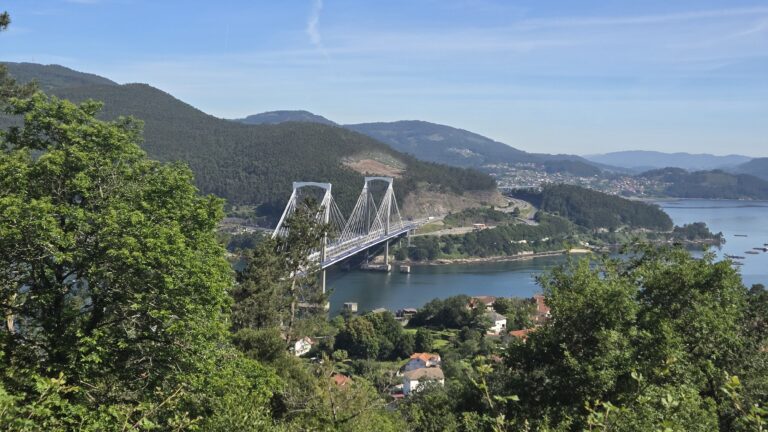
No flamenco. No olive groves. No endless summer. Galicia sits in the far northwestern corner of the Iberian Peninsula, bordered by Portugal to the south and the Atlantic to the west and north. Its closest cultural cousins are Ireland and Brittany, not Andalusia. The traditional instrument is the gaita, a bagpipe. The landscape is green, granite, and oceanic.
Many international residents describe Galicia as feeling fundamentally different from the Spain they expected. That is not a flaw. For the people who find their way here, it's the entire point.
The region covers four provinces: A Coruña, Lugo, Ourense, and Pontevedra, with a population of around 2.7 million. The main cities are Vigo, A Coruña, Santiago de Compostela, Ourense, and Pontevedra. Each offers a genuinely different experience, and choosing between them is one of the first real decisions you'll need to make.
Understanding what the region actually is before moving to Galicia saves months of adjustment and changes the quality of the decision itself.
Quick Facts About Galicia
| Population | 2.7 million |
| Largest City | Vigo (~295,000) |
| Capital | Santiago de Compostela |
| Official Languages | Spanish & Galician |
| Airports | Vigo (VGO), Santiago (SCQ), A Coruña (LCG) |
| Nearest Major Hub | Porto Airport (OPO) — under 1 hour from Vigo |
| Climate | Atlantic (mild, green, rainy) |
| Average Summer Temp (Vigo) | 22–28°C |
| Time Zone | CET (UTC+1), CEST (UTC+2) in summer |
| Cost of Living | Among the lowest in Western Europe |
| Internet | Spain ranks 2nd in EU for fiber-to-the-home coverage |
Why People Are Choosing Galicia Instead of Valencia, Málaga, or Barcelona
If you're seriously considering a move to Spain, you've almost certainly explored Valencia, Málaga, or Barcelona first.
They're well-connected, internationally recognized, and for many people, they're exactly the right choice.
But for others, the question is no longer “Which Spanish city is the most popular?” It's “Which place best supports the life I want to build?”
That's where Galicia enters the conversation.
Rather than competing on sunshine or size, Galicia offers something increasingly difficult to find in many of Spain's better-known destinations: a slower rhythm of life, strong local identity, easy access to nature, and cities that still feel connected to the communities around them rather than shaped primarily by international demand.
For many internationally minded professionals, entrepreneurs, families, and retirees, that combination is becoming more important than simply living somewhere with the biggest expat community.
Housing also plays a role, but not simply because it's less expensive. While cities like Valencia, Málaga, and Barcelona have experienced significant price growth over the past decade, Vigo and much of Galicia still offer opportunities to find well-located homes at prices that remain accessible by comparison.
More importantly, buyers and renters often have greater flexibility to prioritize lifestyle, space, and long-term suitability rather than compromising on every decision.
Ultimately, choosing Galicia isn't about finding a cheaper version of somewhere else.
It's about recognizing that your priorities have changed.
For people looking to build a life rather than simply enjoy the Spanish lifestyle for a season, Galicia offers a different proposition, one centered on quality of life, authenticity, and the freedom to create a home that reflects the next stage of their lives.
Moving to Galicia from the US, UK, or Canada
The specifics of the move depend significantly on where you're coming from.
From the United States: Non-EU citizens need a visa to establish legal residence in Spain. The most relevant options for the typical profile moving to Galicia are Spain's Digital Nomad Visa (for remote workers and founders with non-Spanish clients), the Non-Lucrative Visa (for retirees and those with passive income), and the Self-Employment Visa.
Eligible professionals may also qualify for Spain's Beckham regime, which applies a 24% tax rate on Spanish-source income up to certain thresholds for up to six years. One of the more compelling financial arguments for high-earning Americans making this move. US citizens continue filing with the IRS on worldwide income, but the Foreign Tax Credit and the US-Spain tax treaty reduce double-taxation exposure significantly. Our immigration and tax services page covers the main pathways in detail.
From the United Kingdom: Post-Brexit, British citizens no longer have automatic right of residence in Spain and follow the same visa pathways as other non-EU nationals. The Non-Lucrative Visa is the most common route for retirees and second-home buyers. Remote workers and founders typically go the Digital Nomad Visa route.
The income requirement of €2,849 per month filters for an established professional profile, which is increasingly where UK arrivals in Galicia sit. Post-London fatigue and the UK's housing pressure have made Galicia a serious option for a growing number of British families and professionals. Galicia has quietly become one of the more considered destinations for British nationals moving to Galicia from overcrowded southern hubs.
From Canada: Canada is one of the most strategically interesting markets for Galicia right now. The cost-of-living crisis in Vancouver and Toronto has created a very specific profile of person: mid-career professionals, internationally minded, and tired of a city that's become financially inaccessible, who map almost perfectly onto what moving to Galicia offers. The Digital Nomad Visa works for Canadian remote workers. The time zone overlap with Eastern North America makes it manageable for client-facing roles. And the quality-of-life trade is arguably more dramatic for Canadians than for almost any other nationality.
The Financial Reality of Building a Life in Galicia
One of Galicia's advantages isn't simply that it costs less to live here.
It's that your budget often buys more freedom to make decisions based on quality of life rather than compromise.
For internationally minded professionals, entrepreneurs, retirees, and families relocating with stable income, the question is rarely, “Can I afford Spain?” It's “Where in Spain can I build the life I'm looking for?”
In Vigo, many people find they can enjoy a comfortable lifestyle without the financial pressure that has become increasingly common in some of Spain's larger cities. Whether that means living in a central neighborhood, choosing a larger home, dining out regularly, or spending weekends exploring the Galician coast, the overall cost of living still allows many professionals, entrepreneurs, retirees, and families to prioritize lifestyle, space, and long-term quality of life rather than constant financial trade-offs.
Galicia also offers the infrastructure many international professionals expect. Spain has one of Europe's strongest fiber-optic networks, making reliable high-speed internet available not only in cities but also in many smaller towns and rural areas. For remote workers and business owners, working from Galicia has long since become a practical reality rather than a compromise.
From a legal perspective, Spain continues to offer attractive pathways for international professionals through options such as the Digital Nomad Visa and the Startup Law. Depending on your circumstances, tax incentives such as the Beckham regime may also be available, making professional advice an important part of any relocation strategy.
A realistic monthly budget for living well in Vigo
| Expense | Estimated Cost |
|---|---|
| One-bedroom apartment (center) | €700–€850 |
| Groceries | €200–€300 |
| Utilities | €80–€120 |
| Transport (monthly pass) | €36 |
| Dining out (2–3x per week) | €150–€250 |
| Health insurance (private) | €60–€150 |
| Total | €1,226–€1,706 |
As a general guide, many couples enjoy a comfortable lifestyle in Vigo with a monthly budget of approximately €1,800–€2,200, while families typically budget more depending on housing, schooling, and lifestyle choices.
These figures shouldn't be viewed as a promise of a “cheaper life.” Instead, they illustrate something more valuable: the opportunity to align your spending with the lifestyle you want to create.
For many people considering a move to Galicia, that's one of the region's greatest advantages.
City-by-City Guide: Where to Actually Live in Galicia
This is where most relocation content fails you. Every city gets a cheerful paragraph. Nobody tells you the real tradeoffs. Here they are, the honest version of what moving to Galicia actually means depending on where you choose to land.
Galicia City Comparison
| City | Population | Int'l Community | Airport Access | Year-Round Livability | Cost | Best For |
|---|---|---|---|---|---|---|
| Vigo | ~295,000 | Growing | High (Porto 1hr) | High | Medium | Most profiles |
| A Coruña | ~246,000 | Medium | Good | Medium | Medium-High | Urban professionals |
| Santiago | ~100,000 | Transient | Medium | Medium | Medium | Academics |
| Pontevedra | ~83,000 | Small | Low | High | Medium-Low | Quiet lifestyle |
| Ourense | ~105,000 | Small | Low | Low-Medium | Low | Budget-focused |
| Baiona Cangas Moaña | Under 20,000 | Very Small | Low | Seasonal | Medium | Summer stays |
All cities above are viable options when moving to Galicia, but the profiles vary significantly.
Santiago de Compostela
The spiritual and administrative capital of Galicia. A UNESCO World Heritage city with one of the most architecturally extraordinary historic centers in Europe. The cathedral, the Praza do Obradoiro, and the covered stone arcades, it's genuinely beautiful in a way photographs don't capture.
But Santiago lives and dies by the Camino. In summer, the old town is overwhelmed with pilgrims and tourists. The international community is largely transient: academics, pilgrims, and Erasmus students. If you're building something long-term, Santiago can feel more like a backdrop than a base.
A beautiful place to visit often. A more complicated place to put down roots when moving to Galicia long-term.
A Coruña
A genuinely cosmopolitan city built on a narrow Atlantic peninsula, with a historic center, solid university presence, and the iconic Glass Gallery facades overlooking the harbor.
The trade-off is wind and cost. A Coruña is exposed to the Atlantic directly in a way Vigo is not. Noticeably colder and more raw in winter. It's also slightly more expensive. Expats who have compared the two consistently describe Vigo as less windy, warmer, and more diverse. A Coruña is a legitimate option for people drawn to a northern maritime energy, but for most international families and professionals, Vigo's combination of climate, infrastructure, and affordability makes more practical sense.
Ourense
The inland capital, sitting in a river valley roughly an hour from the coast. It has a beautiful historic center, famous thermal springs, and a genuinely local character. It's also where you'll find Galicia's most extreme climate: summer temperatures regularly exceeding 35°C, making it one of the hottest cities in Spain during peak season and cold, damp winters with limited daylight.
The airport situation is difficult. You're looking at an hour to Santiago or Vigo for any international connection. The international community is small, professional infrastructure limited, and coworking options thin. Ourense is wonderful to visit. For most profiles reading this, it's not where you build.
Pontevedra
Often cited as one of the most livable cities in Spain, the recognition is deserved. Pontevedra famously pedestrianized its center decades ago. Granite arcades, river walks, excellent local restaurants, a calm and cultured pace. It genuinely feels human-scale in a way that most cities only claim to.
The limitation is size. 83,000 people means a smaller professional network and less economic activity. It's 25 minutes from Vigo by train or bus, which makes it a realistic base for people who prioritize quiet, but most people building something here end up gravitating toward Vigo anyway.
Baiona, Cangas, and Moaña
These coastal towns appear regularly in relocation searches because they look ideal on Instagram. Baiona is historic and beautiful: a medieval fortified town with a genuine harbor. Cangas and Moaña sit across the Ría from Vigo, connected by ferry, with Atlantic views and a quieter pace.
What the photographs don't show is September.
After summer, these towns go quiet in a way that surprises people who moved there expecting year-round community. Restaurants reduce hours or close. Social life contracts. The ferry that felt romantic in August becomes a logistical constraint in November. For a family, school, and healthcare infrastructure is thinner. For a remote professional, isolation sets in faster than expected.
Beautiful places for a summer rental. Not where most international residents want to be year-round.
Why Vigo Keeps Coming Up
If you've been researching seriously, you've noticed Vigo appearing again and again in the Facebook groups, in expat conversations, and in the relocation forums.
For most people moving to Galicia, Vigo is where the search ends.
There are concrete reasons for this.
Vigo is the largest municipality in Galicia, with around 295,000 people in the city proper and a metropolitan area of nearly 500,000. It has a port economy, a university, and excellent public healthcare at the Álvaro Cunqueiro Hospital: one of the most modern facilities in northern Spain. And the commercial and cultural infrastructure that makes daily life genuinely convenient.
The climate is the mildest in Galicia. Protected by the Ría de Vigo from the worst Atlantic exposure, the city gets more sun than A Coruña, less extreme heat than Ourense, and a year-round livability the smaller coastal towns can't sustain past September.
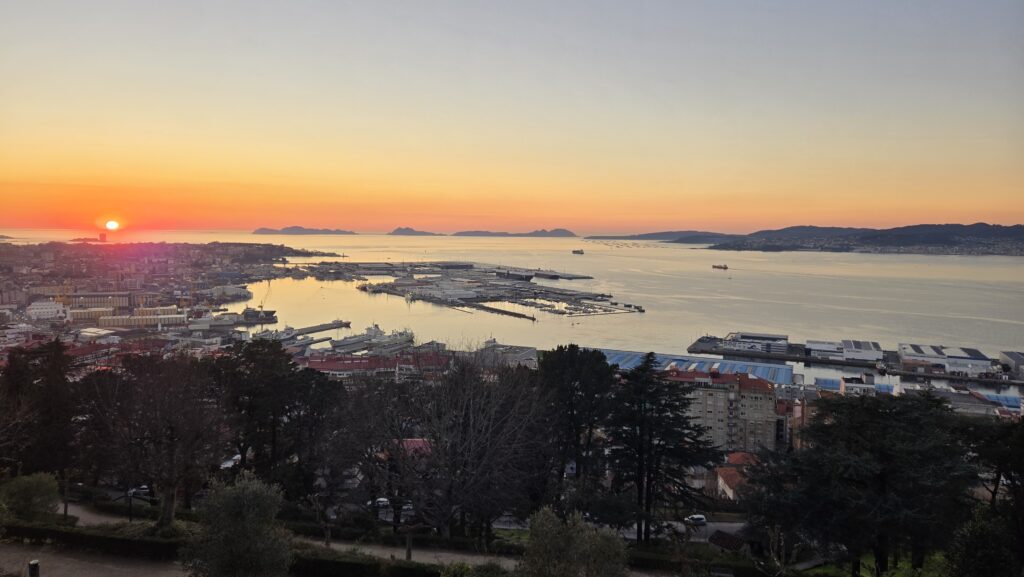
The neighborhood range is real. You can live in the urban core around Plaza de Compostela and walk to everything. You can choose the hillside quiet of O Castro with panoramic views of the Ría. You can find the maritime character of Bouzas, where fishing heritage and a local creative community coexist on cobblestone streets. You can go coastal in Alcabre or Canido, with beach access and the Cíes Islands visible from your window, while still being twenty minutes from the city center.
Education
For relocating families, Vigo offers a mix of public, concertado, private, and international education options, making it one of the easiest places in Galicia to establish children long-term. International school waitlists exist, so starting the research early matters.
The airport question answered properly
This is the objection that comes up most. Vigo's own airport connects well within Europe but is not a global hub. Here's what most guides miss: Vigo sits less than one hour from Porto Airport, which is one of Europe's fastest-growing international airports, connecting to over 134 destinations in 34 countries across 47 airlines. Porto surpassed 16.9 million passengers in 2025 and launched 21 new routes in 2026, including six intercontinental ones, with direct connections to New York, London, Amsterdam, Frankfurt, and beyond.
For most international residents, this solves the connectivity question entirely.
What Life Here Actually Feels Like
One of the first things people notice after moving to Galicia is that the two-hour lunch culture is not performative. It's structural. The city actually closes. People actually sit down. The meal is not something that happens around the work; it is part of the architecture of the day.
That might sound small. It isn't.
People who move here from London or Toronto or New York describe the same experience in their first months: a persistent low-level anxiety that something urgent is being missed. Then, slowly, the realization that nothing is. The urgency was the environment, not the work.
Walkability is real. You can live in Vigo without a car and lose nothing meaningful. Markets like Mercado do Progreso and Mercado de O Calvario mean food shopping is local, seasonal, and inexpensive. The seafood, like percebes, pulpo, and fresh fish from the Rías Baixas is not a tourist experience. It's Tuesday lunch.
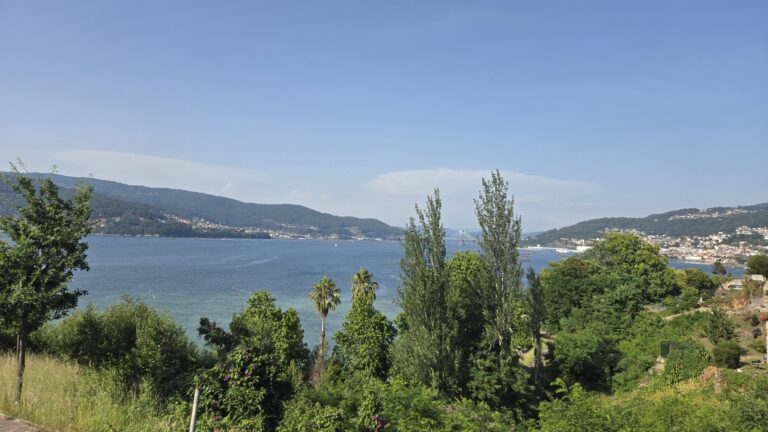
Nature is not a weekend activity you schedule. The Atlantic is always there. The Cíes Islands, one of the most protected and beautiful archipelagos in Europe are a ferry ride away. The Rías Baixas, the fjord-like inlets defining the coastline south of Vigo, are twenty minutes from the city center.
The Part Nobody Talks About: Building a Social Life in Galicia
This is where most relocation content stops and where the real decision often gets made.
In conversations with international residents already living in Galicia, the concerns that surface most aren't about visa timelines or property prices. The biggest recurring theme among people who have tried moving to Galicia is community.
Not finding expats. Finding people: a mix of local and international, with depth rather than just availability.
The Galician social character is worth understanding before you arrive. Galicians tend to be reserved on first contact, not unfriendly, but not immediately open in the way some other cultures are. The acquaintance phase takes longer here. Getting past it leads to something that many residents describe as the most genuinely warm social fabric they've experienced in any city.
The mistake most international arrivals make is settling into an expat bubble out of convenience. The same international crowd, the same bars, the rotation of people who are all slightly provisional about whether they're staying. It's easy to find. It's also the version of Galicia that leaves you feeling isolated despite not being alone.
The alternative takes more intentionality. Showing up consistently in the same places. Learning some Spanish and a few words of Galician go further than most people expect. Joining communities that mix rather than separate. Building relationships that have the patience to develop at the pace the culture actually moves.
That's what The Galicia Life community is built around, not another expat resource group but a curated space for internationally minded people who want to integrate into something real here rather than just pass through it.
Galicia Is Probably Not for You If…
Before moving to Galicia, this matters to say clearly because trust is built on honesty.
Moving to Galicia probably isn't the right move if you need sunshine 300 days a year. Galicia gets around 1,600–1,800 hours of annual sunshine, significantly less than Valencia or Málaga, and the Atlantic weather brings genuine grey stretches, particularly in winter. People who need warmth as a baseline quality of life tend to struggle here.
It's also not the right move if you want a large English-speaking social circle from day one. The international community is growing, but it's not large enough yet to exist independently. If you're not willing to make an effort with Spanish, the isolation compounds quickly.
If you thrive on constant stimulation, events, nightlife, and cultural programming at scale, Vigo offers a real city, but it is not Berlin or Barcelona. The city's intelligence runs quieter.
If direct long-haul flights are non-negotiable from your doorstep, the Porto solution helps enormously but adds a step.
And if you dislike rain as a categorical position, Galicia will test you. Not the rain of London: grey and ambient.
The Atlantic rain, which arrives horizontally, dramatically, and then often clears. Many people grow to love it.
Moving to Galicia Checklist
Before you decide:
- Visit in winter before moving to Galicia. The city reveals itself in the off-season in a way summer never shows you
- Spend time in at least two neighborhoods in Vigo across different days and times
- Talk to people who have actually done this, not just read about it
- Research your visa pathway based on your specific income structure and nationality
Once you've decided:
- Get your legal and tax structure confirmed before arriving. The order of operations matters
- Secure private health insurance (required for most visa applications)
- Open a Spanish bank account. This takes longer than expected and requires your NIE
- Register on the padrón (municipal census) in your neighborhood. This unlocks healthcare and services
- Start learning Spanish now, not after you arrive
After you arrive:
- Register with the local health center (centro de salud) for your area
- If you have children, begin school research early. Good international options have waitlists
- Build community deliberately and early. It's harder to retrofit later
- Explore neighborhoods on foot before committing to one area long-term
The Practical Questions Everyone Asks
How hard is the visa process? Manageable with the right support and genuinely complicated without it. The sequence matters; the wrong order creates delays that cascade. For most profiles, getting specialist help pays for itself in time and stress avoided.
Do I need to speak Spanish? You'll have a better life here if you do. Vigo's growing international community means arriving without Spanish is survivable professionally, but friction comes in daily administration, neighborhood relationships, and anything involving local bureaucracy. A language investment in the first six months pays significant returns.
What about healthcare? Galicia's system, run by Sergas, is highly regarded. Vigo's Álvaro Cunqueiro Hospital is a modern facility serving the broader metropolitan area. Those paying into Spanish Social Security as autónomos can access public healthcare. Most Digital Nomad Visa holders maintain private insurance as a visa requirement, which in Spain costs a fraction of equivalent private coverage in the US or UK.
Can I build a business here? Yes, and this is increasingly the most interesting answer Galicia has to offer. The gaps are real: premium hospitality, internationally minded services, creative and design businesses, and coworking infrastructure. The demand is forming faster than the supply. Our hospitality project development work exists for founders who want to build here and need someone who understands both the local terrain and the international standard.
Do I need a car in Vigo? In Vigo proper, no. Public transport and walkability cover most daily needs. If you plan to spend time in smaller coastal towns or rural areas, a car becomes more useful. The monthly public transport pass costs €36.
Is Galicia cheaper than Portugal? Yes, for comparable quality of life. Lisbon and Porto have seen significant price increases over the past several years. Vigo currently offers lower rents, comparable food costs, and equivalent Atlantic quality of life at a price point Lisbon no longer can.
What salary do I need to live comfortably in Galicia? The answer depends on where you choose to live and the lifestyle you're looking to create. As a general guide, a single person living in Vigo can enjoy a comfortable lifestyle on approximately €1,700–€2,000 per month, including rent. Couples typically budget around €2,400–€2,800, while families with children should expect higher monthly costs depending on housing, schooling, and day-to-day lifestyle choices.
For remote professionals, entrepreneurs, retirees, or anyone relocating with an established income from Northern Europe or North America, Galicia often offers something more valuable than simply a lower cost of living: the ability to enjoy more space, greater flexibility, and a lifestyle that prioritizes quality of life without many of the financial compromises common in larger European cities.
Planning Your Move to Galicia?
Relocating to another country involves far more than finding a property or completing paperwork. The decisions you make before you move—where to live, whether to rent or buy, how to structure your relocation, and how to plan your arrival—will shape your experience long after you've settled in.
That's where The Galicia Life comes in.
Based in Vigo, we help internationally minded professionals, entrepreneurs, families, and retirees navigate their move to Galicia with clarity and confidence. Through tailored relocation advice, house-hunting support, and local insight, we help you make informed decisions that align with the life you're looking to build.
Start with a Discovery Call
If you're planning to relocate to Galicia within the next 12 months and would like expert guidance tailored to your circumstances, book a Discovery Call.
During the session, we'll discuss your goals, timeline, preferred locations, housing strategy, and the key decisions that will shape your relocation. You'll leave with greater clarity on your next steps and a personalized roadmap for moving forward.
Book your Discovery Call and start planning your move with confidence.
Curious about life in Galicia beyond the guidebooks? Join The Galicia Life Community and connect with internationally minded people already building their lives here.
Explore The Galicia Life Community →
FAQ
Is moving to Galicia a good idea for foreigners?
Yes, particularly for internationally minded people who value quality of life, affordability, safety, and a slower but culturally rich environment. Moving to Galicia works best and feels most rewarding for people willing to integrate meaningfully rather than settle into an expat-only social circle.
What is the best city in Galicia for expats?
For most profiles. Families, remote professionals, entrepreneurs, and retirees: Vigo offers the most complete combination of infrastructure, climate, affordability, healthcare, and growing international community. It is the largest municipality in Galicia, with around 295,000 residents and a metropolitan area approaching 500,000.
Is moving to Galicia expensive?
Galicia is one of the most affordable regions in Western Europe for the quality of life it offers. A one-bedroom in Vigo city center runs €550–€750 per month. A single person can live comfortably on €1,500 per month, including rent, utilities, food, and transport.
What visa do I need to move to Galicia from the US or UK?
Most non-EU residents use Spain's Digital Nomad Visa (remote workers and founders), the Non-Lucrative Visa (retirees and those with passive income), or the Self-Employment Visa. The right pathway depends on your income structure and professional situation.
Does it rain all the time in Galicia?
No, but it rains more than in southern Spain. Galicia gets around 1,600–1,800 hours of annual sunshine, compared to 2,800–3,000 in Valencia or Málaga. The Atlantic weather is variable and can be dramatic, but summers are mild, green, and genuinely beautiful.
What is the weather like in Vigo?
Vigo has the mildest climate in Galicia. Average summer temperatures run 22–28°C. Winters are cool and wet but rarely cold; snow is extremely rare in the city itself. Spring and autumn are long, mild, and often the most pleasant seasons.
Is Galicia good for families?
Yes. Vigo offers low crime rates, a functioning public healthcare system, good schools including international options, walkable neighborhoods, and outdoor access. A combination that is hard to find at this price point anywhere in Western Europe.
Is Galicia a good place to retire?
Yes, particularly for retirees looking for a real city rather than a tourist enclave. Vigo has high-quality public and private healthcare, a culture built around meals and community, walkability, and property that still makes financial sense. For retirees, moving to Galicia on a Non-Lucrative Visa remains one of the most straightforward and affordable routes in Western Europe.
Can Americans move to Galicia?
Yes. American citizens can apply for Spain's Digital Nomad Visa, Non-Lucrative Visa, or Self-Employment Visa depending on their profile. The US-Spain tax treaty and Foreign Tax Credit help mitigate double-taxation concerns.
Can British citizens move to Galicia after Brexit?
Yes. Post-Brexit, British citizens follow the same visa pathways as other non-EU nationals. The Non-Lucrative Visa is most common for retirees; the Digital Nomad Visa for remote workers and founders.
Is Vigo better than Santiago de Compostela for living?
For most long-term residents, yes. Santiago is architecturally stunning but heavily shaped by pilgrimage tourism, making the social fabric more transient. Vigo offers more complete city infrastructure, milder climate, better airport access, and a growing international community oriented toward permanence.
Can I live in Galicia without speaking Spanish?
When moving to Galicia, you can survive without Spanish initially, particularly in professional settings where the international community is growing. But daily life, administration, relationships with neighbors, and anything involving local bureaucracy are meaningfully harder without Spanish. A few words of Galician help more than most people expect.
How much money do I need to move to Galicia?
Beyond your ongoing monthly budget (€1,500–€1,600 for a single person living comfortably), you should factor in initial setup costs: first month's rent plus deposit (typically two months), NIE and visa fees, health insurance, and an emergency buffer of €3,000–€5,000 for unexpected costs during the first few months. Planning this buffer carefully is one of the most underrated steps when moving to Galicia.
Does Galicia have good internet for remote work?
Yes. Spain ranks second in the EU for fiber-to-the-home coverage. Reliable gigabit connections are standard in Vigo and reach into rural areas across the region.
Is Galicia safe?
Galicia registers among the lowest crime rates in Spain and in Europe. Vigo, despite being the largest municipality in the region, is consistently described by residents as genuinely safe for families and individuals.
The Galicia Life is a community and relocation ecosystem based in Vigo, Spain. We work at the intersection of intentional living, cultural integration, hospitality, and relocation support for internationally minded people building real lives in Galicia.