By Patricia Cedeño.
There is a moment, usually somewhere around month four, when the excitement of moving somewhere new quietly runs out. The boxes are unpacked. The paperwork folder is thick. You know where to buy bread and which café has the good coffee. And underneath all of that, a much bigger question shows up uninvited.
Now what?
I remember mine clearly. I was sitting in my apartment in Vigo, residency card finally approved, close to family I hadn't actually seen in years, and I still felt like an outsider. That surprised me more than I expected. I'm Latina, from Venezuela, and my family has lived in Vigo for almost thirty years. On paper, I should have had a head start here. In practice, Spain turned out to be one of the most difficult countries I've ever had to adapt to, and shared language and shared roots didn't shortcut that process the way I assumed they would.
Six years later, I run a company that exists entirely because of what I learned in that gap between landing somewhere and actually living there. I've lived across three continents before Galicia ever entered the picture, so this wasn't my first relocation. It was, however, the one that finally taught me the difference between moving somewhere and staying somewhere on purpose.
This isn't a chronological story of my five years in Spain. It's a map of what actually changes, in order, when you commit to building a life abroad instead of just visiting one.
I've watched enough people move to Galicia now, through client work and through friendships, to know my experience wasn't unusual. The details differ. Someone comes from Toronto instead of Caracas, from a tech job instead of tourism and hospitality, with a family instead of alone. But the underlying sequence tends to repeat itself in a way that surprised me the first few times I noticed it.
There's a version of the story everyone tells before they move, full of weather and food and cost comparisons. And there's the quieter, less marketable version that only shows up once you're actually living inside the decision.
This article is the second version.
The Difference Between Arriving and Actually Settling
Everyone prepares for arrival. Flights, visas, a rental for the first few months, maybe a spreadsheet of neighborhoods. Almost nobody prepares for settling, because settling doesn't announce itself the way arrival does.
What arriving actually looks like
Arrival is logistics. It's the version of relocation you can plan on paper: the flight number, the temporary Airbnb, the first trip to the supermarket where you photograph the labels because you don't recognize half the products. It feels enormous while it's happening. In hindsight, it's the shortest part of the whole process.
What settling requires
Settling is slower and far less photogenic. It's learning which bakery closes for an hour at siesta and just building your day around it instead of being annoyed by it. It's understanding that a “quick errand” at the Spanish post office might take forty minutes, and that this isn't a flaw in the system; it's simply the system. Building a life abroad starts the moment you stop measuring the new place against the one you left and start learning it on its own terms.
For me, that meant learning Vigo as a city rather than comparing it, block by block, to everywhere I'd lived before, including the version of it I remembered from visiting family over the years.
I tell my clients this constantly during Discovery Consultations: the version of you who books the flight is not the same version of you who will need to actually live here. Plan for the second person, not the first.
There's also a specific kind of disorientation that shows up once the adrenaline of the move fades and ordinary life starts again, except now it's ordinary life inside a system you're still decoding, even one that speaks your own language. Grocery shopping stops being an adventure and becomes a task you'd like to do without thinking.
The novelty that carried you through the first few weeks quietly evaporates, and what's left underneath it is either genuine interest in the place or nothing at all. That's usually the honest test of whether building a life abroad in this specific place makes sense for you, not the excitement of the first month, but whether you're still curious about it once the excitement wears off.
Residency Papers Don't Give You Belonging
I got my residency approved without much difficulty. On paper, I had done everything right, and I had family history here that most newcomers don't get to lean on. And I still felt like a visitor in my own apartment for longer than I expected.
This is the part of building a life abroad that almost nobody talks about honestly, because it's uncomfortable. Legal status and emotional belonging are not the same process, and they don't move at the same speed. You can be fully documented, fully legal, fully “allowed” to be somewhere, culturally close to it on paper, and still feel like you're standing slightly outside of it, watching a life happen instead of living inside one.
Extranjería gives you a card. It does not give you a community, a rhythm, or a sense that this place actually knows you back. That only comes from time, repetition, and a willingness to be a beginner again, even at things you assumed would come easily.
I think this is where a lot of relocations quietly fail, not because the paperwork went wrong, but because people expected the paperwork, or in my case shared language and family ties, to solve a problem that was never legal or cultural to begin with. Belonging is a separate project. It needs its own plan.
The clients I work with who adjust fastest are rarely the ones with the most paperwork sorted in advance. They're the ones who arrive expecting belonging to take real effort, the same way you'd expect a new job or a new relationship to take effort, rather than assuming it will simply accumulate on its own once enough time has passed. Building a life abroad rewards people who treat integration as an active project rather than a passive side effect of living somewhere long enough.
Finding a Home Before You Understand the City
Here is something I say often, because I've watched some version of it play out with clients I've worked with in Galicia: you'll often sign your first lease before you understand the city well enough to know if it's the right one.
That's not a failure of research. It's just the order of operations when you're building a life abroad. You cannot fully understand a neighborhood's rhythm, noise, light, or walkability from a listing photo and a video call. You learn it by living near it, which means your first home is often a placeholder, not a final decision, and that's completely fine as long as you go in knowing that.
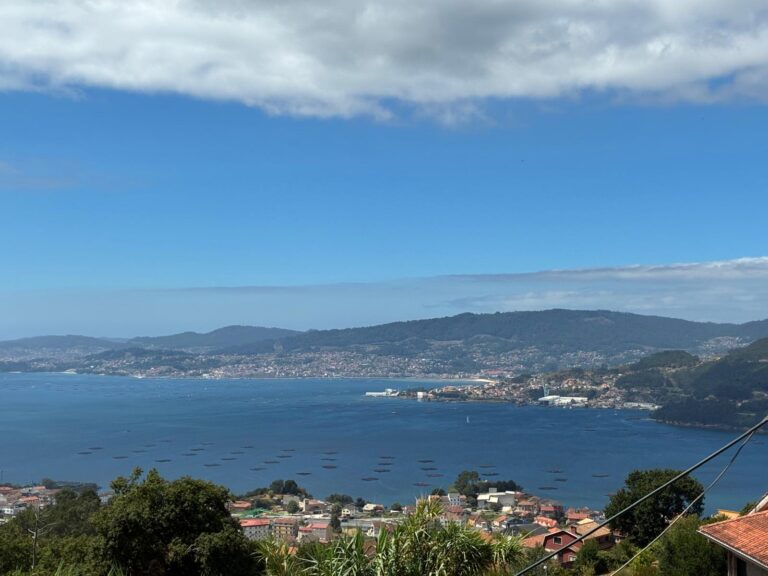
I ended up downtown, and I genuinely like it there. What actually mattered most to me, more than square footage or even the neighborhood's reputation, was having a sea view. I don't mind the noise that comes with living centrally, because even in a city the size of Vigo, there are still quiet stretches during the day, the hour before the shops open, the early afternoon lull, the streets right after a rain shower.
Building a life abroad taught me that “quiet” doesn't have to mean “outside the city.” Sometimes it just means learning when a city goes quiet.
This is exactly why housing search is one of the first things I built into TGL as a direct service rather than something I outsource. Not because finding an apartment is complicated on paper, but because finding the right one requires local, lived knowledge that no listing site gives you.
The rental market here has also shifted meaningfully in the last couple of years. What used to be a straightforward, budget-friendly search in Vigo now requires more strategy and, often, more speed, as demand from both local and international renters has pushed prices upward in the neighborhoods people actually want to live in. That's part of why I now work primarily with clients who are decision-ready rather than still comparing five cities. Building a life abroad in a market like this one benefits far more from clarity than from casting a wide, undecided net.
Thinking seriously about Galicia?
The conversation doesn't end with this article. Join The Galicia Life Community to connect with people already living here, ask the questions that don't fit neatly into a relocation guide, and get local recommendations from people who've already made the moves you're considering.
Building a Professional Life From Zero
Moving your body somewhere is one project. Moving your income, your professional identity, and your sense of purpose is an entirely different one, and it usually takes longer.
Becoming autónoma
I didn't come to Spain, leaving a job behind. I'd been running an online business for years before I relocated, the kind of work that could technically be done from anywhere, which is part of why the move felt possible in the first place.
Becoming autónoma wasn't about translating unfamiliar language; being a native Spanish speaker meant the words themselves were never the barrier. What actually took time was decoding the logic behind the system: how quarterly taxes work, what counts as a deductible expense, and which obligations apply to someone running an already established business versus someone starting fresh in Spain.
To be clear, none of this makes me a tax or legal expert, and I'm not going to pretend otherwise. Anyone seriously relocating a business into Spain should be talking to a specialist about their specific structure, not relying on someone else's blog post.
What I can speak to honestly is the identity side of it. Building a life abroad, for me, meant rebuilding my professional confidence from the ground up, inside a bureaucratic system that didn't care how long I'd already been running a successful business somewhere else.
Learning the local systems
Every country has its own operating logic: how healthcare works, how banks communicate, how contracts are worded, how disputes are handled, and what's considered normal versus what's considered a red flag. None of this is written down anywhere convenient. You learn it through friction, usually your own.
I made mistakes. I signed things I didn't fully understand in the first year. I called the wrong offices more than once. Every one of those mistakes became something I now build into how TGL supports clients, because I'd rather someone learn from my confusion than repeat it.
What I didn't expect was how much this process would eventually become useful to other people. Every founder or remote professional I've since worked with has asked some version of the same question, what actually happens to a career or a business once you relocate.
Some are moving with a company that stays fully abroad. Others are building something new here from scratch. Either way, building a life abroad professionally means accepting a temporary dip in confidence and competence, simply because the systems around you are unfamiliar, and giving yourself permission to be a beginner again without treating it as a step backward.
The Relationships That Actually Sustain You
There's a specific kind of loneliness that shows up around the one-year mark abroad, and it has nothing to do with how many people you know. You can have acquaintances, a group chat, plans most weekends, and family nearby even, and still feel like nobody actually knows you yet, not the way people back home did.
Building a life abroad means accepting that deep relationships take longer to form, even in your own language and even with family history in the place, and that this isn't a personal failure; it's just physics. Trust takes repetition. Repetition takes time. Time is the one thing you can't shortcut, no matter how social or intentional you are.
What changed things for me wasn't joining more events. It was slowing down and choosing fewer, deeper connections, both with other internationals navigating their own version of disorientation and with locals who were patient enough to include me in ordinary life instead of just polite friendliness. The friendships that stuck were the ones built over repeated ordinary moments, not the ones built over a single big night out.
This is exactly the gap I built The Galicia Life Community to close for other people, so they don't have to spend two years figuring it out alone the way I did.
I also noticed something else during that stretch, which is that the international friendships often moved faster than the local ones, and both mattered for different reasons. Other internationals understood the disorientation immediately, without explanation. Local friendships took longer to build but gave me something the international ones couldn't, an actual sense of place, of understanding how Galicia works from the inside rather than observing it from the outside. Building a life abroad well seems to require both, not one at the expense of the other.
Why I Built The Galicia Life
Every service TGL offers today exists because I needed it, and it didn't exist yet in the form I wished it had. The housing search support, the integration guidance, the coordination with lawyers and gestores, and the Discovery Consultation itself, all of it was built backward from my own six years of trial, error, and slow correction.
I didn't set out to build a relocation company. I set out to solve my own disorientation, and somewhere in that process I realized it wasn't unique to me. By the time I started shaping TGL into something more structured, I'd already lived in Vigo long enough to see the same questions repeat themselves across very different people, a retired couple from the UK, a founder from the US, a family relocating from Brazil, all arriving with different reasons and remarkably similar blind spots.
Every internationally minded person building a life abroad in Galicia hits some version of the same walls: the paperwork that assumes local knowledge, the housing search that requires context you don't have yet, the professional identity that needs rebuilding, and the friendships that take longer than expected.
That pattern is what convinced me this wasn't just my own story.
Ready to Explore Whether Galicia Is Right for You?
If you're weighing a move to Galicia in the year ahead and want to think through what your specific runway actually looks like, a Clarity Consultation is where that conversation happens. We look at your situation, your work and income, your family setup if that's part of the picture, and your timeline, and determine what the right next steps look like for you.
If Galicia has gone from “maybe someday” to “could I actually do this?”, the Your Move to Galicia Planner is designed to help you work through what that move could look like for you. It brings together your money picture, potential relocation route, priorities, trade-offs, and timeline so you can move beyond researching Galicia and start making decisions based on your own circumstances.
Grab the Your Move to Galicia Planner →
If housing is the piece you're already thinking about, this is worth reading next: Finding Housing in Spain: Why the Visa Is Often the Easy Part.
Frequently Asked Questions
How long does it actually take to feel settled after relocating abroad?
There's no universal timeline. In my experience, the biggest shift often comes after the first year, once the initial logistics are behind you and daily life starts to feel familiar rather than foreign.
What's the biggest mistake people make when building a life abroad?
Underestimating how long professional and social rebuilding takes. People plan the move itself in detail and then assume the rest will sort itself out quickly. It usually doesn't, and that's normal.
Do you need professional help to become autónoma in Spain?
It helps enormously, even if you're a native Spanish speaker. The language isn't usually the hardest part; the logic of the system is. Working with someone who understands both makes a significant difference, and for anything involving business structure or tax strategy, a qualified professional should always be part of the process.
Is Galicia a good place to actually build a life, not just visit?
For the right person, yes. It rewards people who value quality of life over speed and community over constant novelty. It's not the right fit for everyone, and that's a genuinely useful thing to figure out before you commit, not after.
The Galicia Life is a community and relocation ecosystem based in Vigo, Spain, working at the intersection of intentional living, cultural integration, and relocation support for internationally minded people building real lives in Galicia.