By Patricia Cedeño.
You found the property.
The light is right. The terrace faces the ría. The photos are the kind that have you rearranging furniture in your head before you've sent the enquiry. And the price, even after you've run the numbers twice, feels reasonable for what you're getting.
So why does something still feel unsettled?
Because you've been shopping for a house, and the decision in front of you is much bigger than one house. Buying property in Galicia isn't a single decision. It's a chain of them: where you want to live, which neighborhood suits the way you'll actually use the place, and what the property has to do for you over the next ten years. The property is simply what's left at the end of that chain.
That's the idea I want to spend this article on. The property is not the decision. It's the consequence of the decisions that come before it.
In case Galicia is new to you: it's the green northwest corner of Spain, tucked above Portugal, with the Atlantic on one side and granite hills on the other. Vigo is its biggest city, close to 300,000 people, a working port on a deep ría with the Cíes Islands sitting out in front of it. For a buyer with real choices, that mix of city, coast, and countryside is exactly what makes buying property in Galicia so interesting and so easy to get wrong from a distance.
The Move Comes Before the Property
Here's the sequence that tends to work: the move first, then the neighborhood, then the property.
It sounds obvious, and it's the order almost nobody follows. A specific property has a way of making the decision for you. Once you've pictured your mornings on that terrace, the questions that should have come first start to feel like obstacles instead of information. Buying property in Galicia works best when each step tells you what to look for in the next one, and the sequence is the difference between a purchase you chose and one that happened to you.
So before you open another listing, it's worth settling a few things. How does your week actually look here? Do you need to be close to an airport, a hospital, a school, or a place to work? Do you want to walk to a café or drive to a bakery? Will this be your home for twelve months of the year, or the place you spend the summers and the winters you can choose? Is it a home, a second home, or something that also has to work as an asset or as a hospitality project?
Every answer removes half the map.
At this level, you're not simply buying square meters. You're buying how the property will work for you over the next decade. A top-floor apartment with extraordinary light and no lift might be exactly right for one buyer and completely wrong for another. A sea view might be central to the purchase for one person and irrelevant to the next. The important question isn't whether the property has the feature. It's whether the feature matters to the life you're buying it for.
Location Matters More Than the Listing Suggests
Two streets ten minutes apart can have very different futures. A portal will show you the price, the photos, and the square meters. It won't show you where a neighborhood is heading.
In Vigo, that matters more than it might seem. Parts of the city are being restored, regenerated, and reimagined, with new hospitality, new architecture, and a different kind of resident moving in. Other parts are quietly staying exactly as they are, which is precisely why some people want them. Neither is better. But when you're buying property in Galicia, whether a street is on its way up, holding steady or about to change character is part of what you're paying for.
Then there's access. How quickly can you reach the airport, the hospital, the motorway, or the train? How does that change between January and August? These are details a listing doesn't mention, because they belong to the location and not the property, and yet they shape your daily life as much as the kitchen does.
That's a big part of why buying property in Galicia is a location decision before it's a property decision. The honest version of location advice is this: the right property in the wrong place is still the wrong purchase.
What This Level of Purchase Looks Like in Galicia
One of the things that surprises international buyers about buying property in Galicia is how many different kinds of homes exist at this level and how little they resemble each other.
You could be looking at a restored heritage apartment in the center of Vigo or a contemporary city apartment with a terrace. A hillside home with views over the ría. A coastal family house with a plot, looking toward the Cíes Islands. Or a restored stone farmhouse with a slate roof and land, an hour from the coast.
These aren't versions of the same purchase. This level doesn't buy you a better version of one thing in Galicia. It opens several completely different lives, with different upkeep, different rules about what you can change, and different logic if you ever sell or let the property. Buying property in Galicia at this level starts with knowing which of those lives is yours, because the listing for each of them looks equally beautiful.
What You Can't See in the Listing
The photographs show you the property. The paperwork shows you what you're actually buying, and when you're buying property in Galicia, most of it never appears in the advert.
Start with the nota simple, an extract from the Land Registry that shows who legally owns a property and whether it carries mortgages, debts, or other charges. When you're buying property in Galicia, it's one of the first documents worth asking for. The listing says “ready to sign.” The nota simple can say something else entirely.
Galicia adds its own texture. Houses here often pass down through families, which can mean several owners, a sibling living in Toronto, or a cousin who hasn't agreed to sell. Registry and cadastre records can also differ from what's actually on the ground, so it's worth confirming they match. Depending on the property, you'll want to ask about its habitability and energy certificates as well.
Then there's the building. Ask to see the minutes of the community meetings, the actas. They can tell you what works are planned, who's arguing with whom, and whether a special assessment for the facade or the lift is on its way. Buildings of a certain age can also be subject to periodic technical inspection requirements, which vary by municipality, so ask what applies and what the latest inspection found.
You can study prices for months and never once look at the minutes. It's often the minutes that matter.
The Questions That Matter at This Level
Once you know where you're looking and what kind of property fits, a different set of questions starts to matter when you're buying property in Galicia. They're the questions that become important once you've found something worth buying.
Will the view still be there?
A view is one of the most valuable things a property can offer and one of the easiest to lose. What the city's urban plan allows to be built in front of you, what the neighboring plots could become, and what protections apply: none of it shows up in a photograph taken on a clear day. If the view is central to the purchase, it deserves the same scrutiny as the roof. Buying property in Galicia for the view means buying the right to keep it, or at least knowing how safe it is.
Is this the right property at this price?
Whether a property is worth its asking price is a question about that street, that building, and that finish, not about the city average. Comparable sales, the quality of a renovation, and what's included in the price all move the answer. A home can be beautiful and still be priced for a different version of the market than the one you're buying in, especially if you're arriving from a city where everything is measured differently. Buying property in Galicia with another city's numbers in your head is how a fair price can look obvious and a wrong one can look fair.
How easily could you sell or let it later?
A property that suits you exactly may suit relatively few other buyers, and that's not a reason to walk away. It's a reason to know it going in. Some homes hold broad appeal for years. Others depend on a particular kind of buyer showing up. Understanding which one you're looking at is part of buying property in Galicia with your eyes open.
What can you change?
Heritage protection in an old town, coastal legislation near the sea, and land classification in the countryside: each can limit what you're allowed to build, extend, or turn into something else. Whether and how they apply depends on the exact location, which is why the plan you have for the property needs checking against the property before you commit.
What is the renovation really?
Design photographs show finishes. They don't show the structure, the licenses, the thermal performance, or the quality of the work. In an Atlantic climate, where humidity, granite, and old timber all have opinions, the difference between a beautiful renovation and a well-executed one is something you'll feel every winter.
Before you fall in love with a property
Before you start shopping for a property, you need to know what you're actually shopping for. If you're considering buying in Galicia, it's worth working through the bigger picture first: where you want to live, how you want a normal week to feel, what you want your budget to make possible, what you're willing to give up, and what still needs to be figured out. All of it shapes which property actually makes sense for you.
The Your Move to Galicia Planner is built for exactly that stage. It's a decision tool for working through your own move before you start falling for individual properties.
Vigo: Five Neighbourhoods, Five Different Purchases
If you're thinking about buying property in Galicia and you have a city in mind, it's probably Vigo. It's the region's largest city, with the port, the ría and a food scene that keeps getting better. It's also where the difference between a listing and a decision is easiest to see, because within about fifteen minutes of each other, Vigo holds completely different kinds of homes.
Plaza de Compostela and the city centre
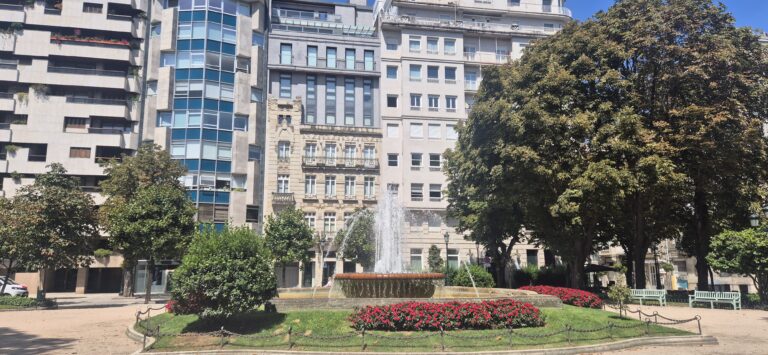
Nineteenth century granite buildings, specialty coffee downstairs, the part of Vigo where inventory tends to be tightest. When something good comes up, it can move quietly. Buying property in Galicia's most elegant streets increasingly means buying heritage restoration, and the questions that come with it are the ones from earlier: what was actually restored, what is licensed, what the community fees look like, what's included in the finish.
The old town and Barrio do Cura
Casco Vello has cobblestones, character and, in places, heritage protection that can limit what you're allowed to change. The Barrio do Cura regeneration project is aimed at reshaping the link between the old town and the sea, which is exciting if you're buying with a long horizon and worth understanding properly if you're buying for next year. Buying just before a neighbourhood changes can be smart. Buying without knowing it's about to change is just luck.
O Castro
The hillside above the centre, wrapped around the fortress park, with views over the ría and apartments with terraces. You're paying for the view and the quiet, so the question is whether they last, and how you'll get up there with a car and a week's shopping. The view is the listing's best photograph. Whether it's protected is a different document.
Bouzas
A maritime village inside the city, with stone fishermen's houses, local creatives and its own pace. Restoration potential is exactly what draws people, and exactly where budgets drift. Structural surprises, licences and shared boundaries with neighbouring houses decide whether a charming ruin becomes a home or a much more complicated project than it first appeared.
Alcabre and Canido
Beaches, sea views toward the Cíes Islands, larger family homes and frontline properties. Properties near the coast can be subject to restrictions under Spain's coastal legislation on what you're allowed to build, extend or change. Whether and how they apply depends on exactly where the property sits, which is not something a photo of a terrace can tell you.
Five neighbourhoods, five different kinds of purchase, five different sets of questions. Vigo's neighbourhoods aren't interchangeable, even when they look equally attractive on a property portal. Anyone buying property in Galicia's biggest city is really choosing a neighbourhood first and a property second.
Rural Galicia: When the Land Is Part of the Purchase
Then there's the other Galicia: the stone farmhouse with the slate roof, the meadow, the view of nothing but green. It photographs beautifully, and I understand the pull, especially if you're picturing a hospitality project or a home with land.
Galicia is a region of small parcels. A house might sit on one plot, the garden on another, the orchard across the lane on a third, and each can have a different owner, a different registry entry and a different classification. Whether land counts as urban or rustic can determine what you're allowed to build, extend or turn into guest accommodation. Then come the practical questions: access rights, water source, drainage, and boundaries nobody has walked in thirty years.
If you're buying property in Galicia with a rural project in mind, viability has to be checked before you fall in love, not after. Buying property in Galicia's countryside is a different sport from buying an apartment in Vigo, and it rewards the buyer who has already asked the unglamorous questions.
Buying From Abroad
Many of the people I talk to are still abroad when they start looking. Buying property in Galicia from another country changes the experience more than they expect. Viewings get squeezed into a four day trip. Pressure builds because you can't easily come back. And you see the property in whichever season you happen to visit, and Galicia in July doesn't look like Galicia in February.
The value of local judgment isn't knowing where the nice houses are. It's understanding what you can't see from the listing:
- what is changing around the property
- whether a view is likely to remain
- what the building and its community are really like
- what renovation quality means in Galicia
- how the property fits the way you intend to use it
- which professionals need to be involved
- what deserves scrutiny before emotion takes over
From a distance, that judgment has to be on the ground for you. Someone who can walk the property in the rain, go back at ten at night to hear the street, return to the building without you and talk to a neighbour. Someone who can also help coordinate the practical side, like who can sign on your behalf if you can't be in Spain on the day, which your lawyer would formalise through the right power of attorney.
I keep coming back to one idea for anyone buying property in Galicia from a distance: the first year tests your enthusiasm, but the third year tests the place. Buy the version you can imagine living in, not the one you enjoyed visiting.
Negotiating From a Position of Knowledge
Negotiation in Spain can be more relational than what you may be used to. A lot happens by phone, in person, in Spanish and, among locals, sometimes in Galician. Rapport carries weight. If you're a foreign buyer making an offer from another continent, you may be sending signals you never intended to send, about how motivated you are or how well you know the local market.
There's also the structure. It's common for a purchase to include a reservation or preliminary contract and a deposit before the final deed, though the exact structure varies from one transaction to the next. The terms of that document decide what happens if either side backs out, so they're worth understanding fully before you sign.
Knowledge changes the negotiation. Knowing how similar homes on that street have actually moved, when a seller is likely to be flexible, and whether “another buyer is coming on Thursday” is real. Negotiating while buying property in Galicia is less about pushing hard and more about knowing where the room is.
Coordinating the Professional Side
A purchase at this level rarely sits neatly inside one profession. Depending on the property and your circumstances, it can involve legal, tax, immigration, financial and other specialist considerations. The Galicia Life coordinates with trusted professionals in its network so those pieces can be addressed as part of the wider purchase, while you have one clear point of contact throughout the process.
That matters more than it sounds. Buying property in Galicia can involve a lawyer, a notary, a bank, a tax specialist and the seller's side, each with their own timelines and their own language. Without someone holding the whole picture, you end up translating between them. With one, the right person is asked the right question at the right moment.
Rules and figures change, so the specifics of taxes, fees and residency are always confirmed with the relevant specialist for your situation. The Agencia Tributaria is the place to start for current tax information in Spain.
What Working With The Galicia Life Looks Like
Property search is one part of relocation, which is why we don't start with a list of properties.
We start by understanding what you're looking for, how you want to live, your timeline and what matters most in the purchase. From there, we can help narrow the search, identify suitable properties, coordinate viewings and local professionals, and support the process through to acquisition.
The goal isn't simply to find you a house in Galicia. It's to help you make a purchase that makes sense for the life, the business or the investment you're moving here to build. Buying property in Galicia with that kind of support means the location, the price, the paperwork and the purpose all get considered together, instead of one at a time.
The Property Should Be the Answer
The strongest purchases usually share one thing: the buyer knew why they were buying before they found the property. The house, the apartment, the farmhouse became the answer to a question they'd already worked out.
If you're at the stage where you've found something you love, or you're about to start looking, the most useful thing you can do is step back and check that the decisions before it are settled. Buying property in Galicia rewards that patience. And if they aren't settled yet, that's not a setback. It's the most valuable part of the process, and the part that makes buying property in Galicia feel right long after the keys are yours.
Still unsure whether Galicia belongs on your shortlist?
If you're weighing buying property in Galicia and want to make sense of your own situation, from location to timing to the questions no listing answers, a Clarity Consultation is where that conversation happens. And if you already know Galicia is the place and you're ready to start searching, that's where we begin too. If the answer for you is somewhere else in Spain, I'll tell you that as well.
Explore a Clarity Consultation →
What should you look at when buying property in Galicia besides the property itself?
The location, the neighborhood's direction, access to the places you'll use every week, what can be built or changed around you, the condition and finances of the building, and the paperwork behind the listing. These often affect the outcome as much as the property does.
Is buying property in Galicia a good investment?
It depends on the property, the location, and what you want from it. Some buyers are looking for a home, others for a second home or an asset that also earns, and each calls for different questions. Whether it's the right decision is something to work through against your own objectives, not something a listing can answer.
Can you buy property in Galicia if you don't live in Spain?
Non-residents are generally able to buy property in Spain. Buyers commonly need a NIE (a Spanish foreign identification number), and a Spanish bank account is often practical, but requirements can vary, so confirm them with the relevant specialist. Buying a home doesn't on its own give you residency, so residency questions are worth taking to an immigration specialist.
How does buying property in Vigo differ from buying property in Galicia's countryside?
In Vigo, the questions center on the neighborhood, the building, and what the city's plans allow around you. In the countryside, they center on land classification, boundaries, access, water, and what the property is permitted to become. Both reward careful checking in different places.
How long does buying property in Galicia take?
It depends on the property, the seller, the financing, and the paperwork. A straightforward purchase and one with inheritance or registry complications can run on very different timelines, which is one more reason to have the documents checked early.
Who coordinates the lawyers, notaries, and specialists when you're buying property in Galicia?
You can manage it yourself, but it means being the go-between for several professionals working in a language and a system that may not be yours. The Galicia Life coordinates with trusted professionals in its network so you have one clear point of contact throughout.
The Galicia Life is a community and relocation ecosystem based in Vigo, Spain, working at the intersection of intentional living, cultural integration, and relocation support for internationally minded people building real lives in Galicia.