By Patricia Cedeño.
Alicante averages around 340 millimeters of rain in a year, according to AEMET's climate averages. Vigo, depending on the weather station and the decade you measure, records several times that.
It is the first comparison people reach for when they weigh Galicia or Alicante, and it is also the least useful one. A rain gauge cannot tell you what you will do with your mornings.
What the weather does, in Galicia or Alicante alike, is set the rhythm of a year. And rhythm, far more than rain or sunshine, is what you are really choosing.
This article puts the two coasts side by side on the questions that decide whether a move holds up: light, money, access, work, belonging, and what a February morning looks like. Whether you are relocating with a family, retiring, working remotely, renting for now, buying a home or building a business, the real Galicia or Alicante question is which region supports the life and opportunities you want to build. Galicia gets the same scrutiny as Alicante, including the places where it asks more of you.
Galicia or Alicante: Two Coasts, Two Different Years
Alicante is built around its light. The city sits on the Costa Blanca with roughly 3,000 hours of sun in a typical year, and the rain that does arrive tends to come in short, heavy bursts, mostly in autumn and spring, rather than as a steady background.
The result is a long outdoor season. Terraces stay open late, the beach is a daily option for months, and a good part of social life happens outside.
Summers are the other half of that story. Heat and humidity can turn the middle of the day into something you plan around, and the busiest weeks bring the crowds that any major tourist coast tends to carry.
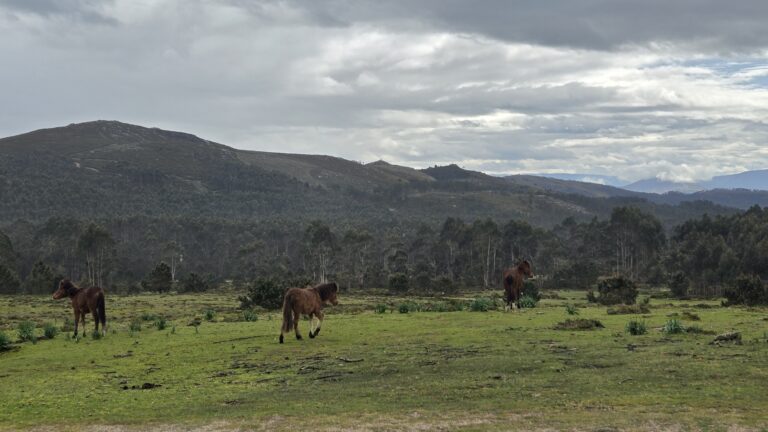
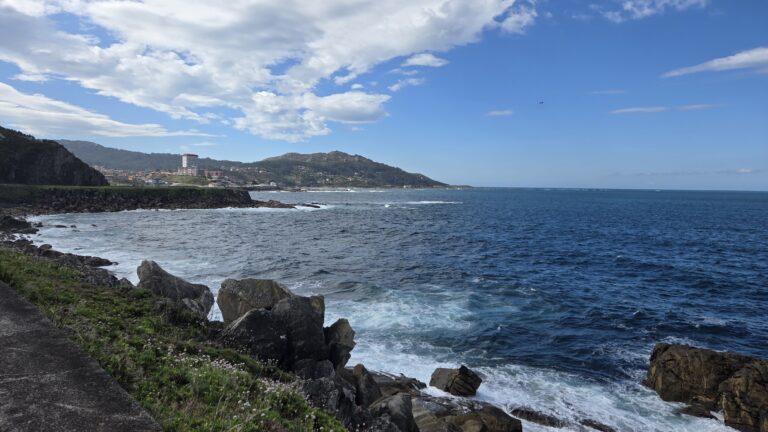
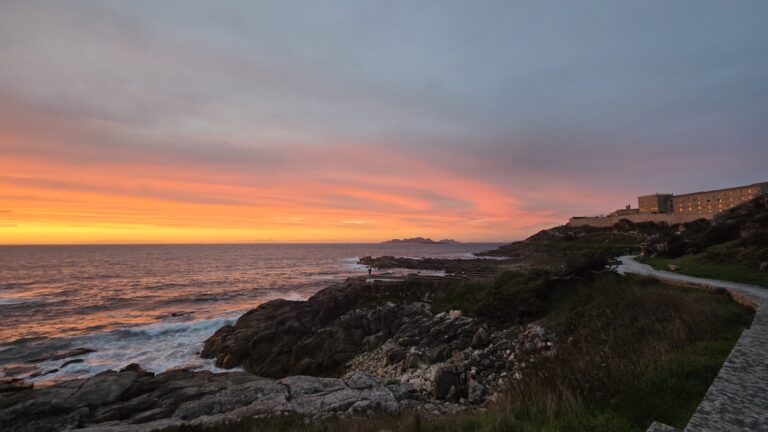
Vigo runs on a different logic. It sits on the Atlantic, at the mouth of a ría, with a mild, humid, and changeable climate. Summers tend to be gentler, with the Cíes Islands and the Rías Baixas beaches a short trip away. Winters tend to be soft rather than cold but wetter and greyer.
That grey is the honest cost of the green. It is also what gives the hills around the ría their color and the region its seafood, its stone, and its habit of gathering indoors. If you need dependable winter sun to feel well, Alicante answers that more directly than Galicia can.
Homes matter more here than on the Mediterranean coast. Many older buildings can be damp or hard to heat, so insulation, orientation, and heating type deserve close attention on any property you consider.
Galicia's year is also organized around the sea and the land: seafood seasons, harvests, local festivals, and the rhythm of the tides. Alicante's calendar is built around beaches, fiestas, and the long outdoor season. The Mediterranean one is visible from the first week, while Galicia's tends to reveal itself gradually. Northern Portugal is not far either, a second country for weekends without a flight.
So the first dividing line in the Galicia or Alicante debate is simple. Alicante offers a long, bright season you can build daily life around. Galicia offers a milder summer and a winter you have to be prepared for.
What Your Money Gets You, Whether You Rent or Buy
This is where the Galicia or Alicante comparison tends to surprise people. If you are renting, Diario de Alicante, citing Europa Press, puts rents in Alicante city at about €13.9 per square meter per month in October 2026, while idealista's October 2026 report has Vigo at about €12.1. On a home of 100 square meters, that is a difference of roughly €180 a month.
If you are buying, idealista's June 2026 report put asking prices in Alicante city at about €2,575 per square meter. In idealista's October 2026 figures, Vigo came in at almost exactly the same number.
These figures come from different months and sources, so read them as a ballpark. The pattern holds anyway: neither city is the budget option, and in both the best locations sit well above the city average. Rents in Vigo have run a little lower, while prices to buy look similar.
Your situation decides which number matters. Many families and retirees rent first to get to know a neighborhood, a school, or a pace of life before committing to anything, and for them monthly rent and the quality of what it covers are what count. If you are buying, whether a home, a second home, or an investment, the question shifts to the street, the building, and who you expect to live there. Either way, the right comparison is the one that matches your plan.
What differs is what the money is attached to. Alicante's stock leans toward apartments in coastal blocks, with the beach acting as your garden. Around Vigo, a similar budget can open up different kinds of homes, from renovated city flats to granite houses with land in the surrounding parishes, although what is available, to rent or to buy, depends heavily on the area and the moment.
So cost will not settle the Galicia or Alicante decision for you. What you want your days to feel like will.
Staying Connected: Flights, Trains, and Visitors
Access is worth looking at carefully, whichever way you expect to travel: flights home, trips to see family, visits from friends, or the occasional work trip.
Alicante's airport handled about 20 million passengers in 2025, and Aena's own figures show that roughly nine in ten of them travelled on international flights.
Vigo's airport closed 2025 with about 1.1 million passengers, with around 53,000 of them on international flights.
Those numbers describe two different kinds of airport. Alicante is a large international gateway, with a big network of direct international routes. Vigo's airport is smaller and has been mostly domestic, and new routes to other domestic and international destinations are opening there.
Vigo also sits inside a wider network. The fast train reaches Madrid in about four hours, which brings Madrid's international connections within a train ride. Santiago de Compostela's airport is about an hour away by road depending on traffic, and Porto's is roughly two hours by road.
Access matters for more than holidays. If you travel for work, serve international clients, plan regular trips home or want children, parents, and friends to visit easily, the time it takes to reach them becomes part of your routine.
Routes change from year to year, so check current schedules for the journeys you expect to make most often.
When I talk with clients comparing the two, the question is rarely whether they can reach Galicia. It is how they will stay connected to the people and places they already have and how easily.
Work, Time Zones, and Everyday Life
If your income depends on a laptop, a calendar, and a stable connection, the Galicia or Alicante question looks different. If you are a founder or business owner, it looks different again. Both regions sit in the same time zone, so your overlap with London, New York, or Toronto is identical in either place, and so is your overlap with international clients and teams. What changes is everything around the working day.
In Alicante, the working day tends to end into a long bright evening for much of the year, which makes it easy to separate work from the rest of your life. In Galicia, the evening light is generous in summer and short in winter, so the separation has to come from routine: a walk along the ría, a market run, a table booked at the same hour each week.
Neither setup is superior for a remote professional. They reward different temperaments. If you do your best work when the outside world is quiet and a little grey, Galicia can feel like a natural fit. If you do your best work when you can step into sunlight between calls, Alicante makes that effortless.
Everyday life sits underneath all of this. Vigo is a working port city rather than a resort, which means its markets, shops, and services tend to follow the rhythm of the people who live there rather than a tourist season. It has a real urban core, a food culture built on the ría and a coastline that stays part of ordinary life.
If work is not part of your plan, because you are retiring or moving with children, the same questions take another shape. How close are healthcare, a good market, a school, and a place to walk every day? Vigo tends to keep much of that within the city, and the Alicante coast has its own versions, so it is worth mapping the neighborhood, not just the region.
For entrepreneurs, the question is also where a business can take root. Alicante offers an established international setting, with a visitor economy that has grown around its airport. Vigo offers a working port city with its own industries and a hospitality scene that international operators are only starting to notice. If you are considering a hospitality project or a business that depends on local suppliers, partners, and people, that local depth can matter as much as the climate.
The practical advice is to look at your real week, not your ideal one. Which hours are meetings, which are deep work, and what does your body need at the end of them?
A February Morning in Each
Picture the same morning in the middle of February.
In Alicante, it is quite possible to start the day with coffee on a terrace, in a light jacket, with the sea in view and the working day still ahead of you. The sun does a lot of the emotional work on your behalf.
In Vigo, the same morning may begin with rain on the windows and a fleece over your shoulders. You work, and at some point the weather breaks and you go out because the break is short and you learn to take it. The hills are an intense green. The market is busy. Lunch is something warm.
Neither morning is better. They ask different things of you. The Alicante one asks very little and rewards you for showing up. The Galician one asks you to build habits around the weather, and some of the people we work with end up valuing the habits more than the weather itself.
Belonging in Galicia or Alicante Looks Different
The Costa Blanca has a long history of international residents, and the airport data above hints at the scale of that connection. In practice, that can mean English language services, social groups and neighbours from your own country within your first week. For some people that is exactly the soft landing they want. For others it becomes a bubble they did not intend to live in.
Vigo and the rest of Galicia have international communities of their own, and they are growing. They are made of locals and newcomers together, so friendships tend to cross the line between the two rather than sit on one side of it. You do not need to speak Spanish right away to settle in, and you do not need Galician to live here, although learning Spanish at your own pace will widen what you get from daily life. Relationships with neighbours, shopkeepers and the bar around the corner can become real in a way that is harder to engineer elsewhere.
Neither version is superior. The real Galicia or Alicante question here is whether you would rather join a large, established international community or a growing one where locals and newcomers share the same spaces.
Galicia or Alicante: Who Each Place Tends to Suit
Alicante tends to suit you if
- Winter sun and a long outdoor season are essential to how you feel
- Direct flights to your home country matter more than almost anything else
- You want a social circle that already exists in English
- You picture beach and apartment living, or a base for something that benefits from large numbers of international visitors
Galicia tends to suit you if
- You prefer a milder summer and a greener landscape
- A working city with a strong food culture sounds more appealing than a resort coast, whether you are building a home, a business or a hospitality project
- You like the idea of a community where locals and international residents mix, and you are happy to learn Spanish at your own pace
- You would rather plan around the weather than rely on it
These are tendencies, not rules. Whether you are relocating with a family, retiring, renting for now, buying a home or building a business, your work, health, finances and plans can shift the Galicia or Alicante answer in either direction, which is why the same comparison can end differently for two people with similar tastes.
Leaning toward the Mediterranean?
If your Galicia or Alicante comparison has pointed you toward Alicante or another part of Spain, it helps to have specialist information on the practical side of the move. We have selected a guide that walks through the main considerations of relocating to Spain, from choosing a route to planning the practical side of the move.
Affiliate link. We may earn a commission at no extra cost to you.
The Spain You Can Picture Living In
The Galicia or Alicante choice often hides a simpler one. There is a difference between the Spain you enjoy visiting and the Spain you can imagine living in. Two weeks of sunshine on the Costa Blanca and two weeks of seafood in Vigo can both feel like proof of something.
The first year tests your enthusiasm. The third tests the place.
So before you decide, picture your third winter rather than your first summer. Do you see yourself in the bright, busy version, with people from elsewhere nearby and a direct flight home? Or in the grey, green, rooted one, where you know the vendor and the vendor knows you?
If the answer keeps pointing toward the Atlantic, Galicia deserves a closer look, whether you are renting for a first year, choosing a home, starting a new chapter in retirement or building a business. If it points toward the sun, Alicante is a legitimate answer, and you are better off knowing that now.
Still unsure whether Galicia belongs on your shortlist?
If you are weighing Galicia or Alicante, or any other part of Spain, a Clarity Consultation is where we look at what you are actually planning: a move for you or your family, a new chapter in retirement, a first year of renting, a home or an investment, a business or hospitality project, or a way of working that travels with you.
We look at your situation, your timeline and what you need the place to support, and work out which region genuinely fits. If the answer is somewhere else in Spain, I will tell you that too.
Is Galicia cheaper than Alicante?
It depends. When you compare Galicia or Alicante on price, idealista's 2026 reports put asking prices to buy in Alicante city and in Vigo at roughly the same level, while rents in Vigo have recently run a little lower per square meter. The month, the neighborhood, and the type of property all matter. The area you choose within each region will move the numbers more than the region itself.
Is Galicia or Alicante better for retirees?
For retirees weighing Galicia or Alicante, it depends on what matters most. Warm winters favor Alicante, while milder summers, green landscapes, and a local, year-round city life favor Galicia. Healthcare access, language comfort, how you will stay connected, and how often you want family to visit are worth weighing for either one.
Is Galicia or Alicante better for starting a business?
It depends on the business. Alicante has an established international setting and large visitor flows, while Galicia offers a working regional economy with growing interest in hospitality, food, and place-based projects. The right answer depends on your customers, partners, and how much local knowledge you need. A conversation about your specific plan is worth more than a general ranking.
How much does it rain in Vigo compared with Alicante?
In the Galicia or Alicante comparison, Alicante averages roughly 340 millimeters a year according to AEMET, while Vigo's annual figures are commonly cited between about 1,300 and 1,900 millimeters depending on the station and the period. The pattern differs too: short, heavy bursts in Alicante, longer wet spells through autumn and winter in Galicia.
Can I live in Galicia without speaking Spanish?
Yes, although your experience will depend on where you live and the situations you need to navigate. English can help in international settings, but Spanish will make everyday interactions, paperwork, and building local relationships considerably easier. You can learn progressively, but it is worth making it part of your relocation plan.
How well connected is Vigo?
Vigo's airport handled about 1.1 million passengers in 2025, mostly on domestic routes, and new domestic and international routes are opening there. The fast train takes about four hours to Madrid, and the airports at Santiago de Compostela and Porto are about one and two hours away by road, so check current routes for the journeys you expect to make.
Does The Galicia Life help with moves to Alicante?
Our focus is Galicia, especially Vigo and the Rias Baixas. If the Galicia or Alicante comparison leads you elsewhere in Spain, we will say so and point you toward specialists who can support you there.
The Galicia Life is a community and relocation ecosystem based in Vigo, Spain, working at the intersection of intentional living, cultural integration, and relocation support for internationally minded people building real lives in Galicia.