By Patricia Cedeño.
You've probably already said it out loud. Somewhere between a visa forum at midnight, a housing tab you keep promising yourself you'll close, and a friend's photos from Seville, you landed on it: “Okay. Spain.”
And for about a day, that felt like an answer.
You might have started with Spain. Then maybe Madrid, Barcelona, Málaga, or Valencia. And then, somewhere along the way, a name you couldn't quite place started showing up: Galicia, the green northwest corner of the country. Maybe it was the Atlantic, the greenery, the slower rhythm, or simply that you were looking for something that didn't feel like the Spain you'd already seen.
Which brings you to the question that doesn't fit neatly into a search bar. Where to move in Spain, exactly? Because “Spain” is a rainy Atlantic coast, a high plateau that bakes in August, two island groups, and a Mediterranean shoreline where the same sea gives you completely different lives depending on which town you pick.
If your browser history is now a pile of contradictory answers, that isn't indecision. It means you've reached the real starting line. Choosing the country is the easy step. Deciding where to move in Spain is the one that shapes your mornings, your friendships, your rent, and how often you can get home.
Here's a pattern I see again and again. Someone writes to tell me they've decided on Spain. A few messages later, the sentence that actually matters arrives: “I just don't know where.” This article is for that second message, and it's also an honest way to find out whether Galicia belongs on your shortlist or not.
The Spain You Visit Is Not the Spain You Live In
Spain has 17 autonomous communities, and that's not trivia. It's the reason your decision is bigger than it looks. Each community runs its own healthcare system, and several have a second official language alongside Spanish, which will matter the day you enroll a child in school or sit across from a landlord.
Then there's money. In March 2026, rent in Madrid averaged €21.69 per square meter per month, while Galicia averaged €10.43, according to Fotocasa's rental index. Same country, same currency, and one line of your budget that roughly doubles depending on where you land.
But the biggest gap isn't on a map. It's between the Spain you visited and the Spain you would live in. The one you visited came with a two-week holiday in July, a rental with a view, and no inbox waiting. The one you would live in comes with February, a landlord, a school run, and a Wednesday with nothing planned.
So here's the idea I'd keep from this whole article: don't choose the version of Spain you enjoy visiting. Choose the version you can imagine living in. Visiting tests your appetite. Living tests your routine. The first year tests your enthusiasm, and the third year tests the place.
There are two classic ways to get this wrong. The first is choosing the city everyone has heard of, because it's the one your friends can picture when you tell them. The second is choosing the cheapest option on a spreadsheet and discovering in month four that you saved money and lost the thing you moved for. Both start from the same shortcut: treating where to move in Spain as a question about a name or a price, when it's really a question about which life fits.
That's why I'd flip the order that relocation research usually follows. You don't pick the country and sort out the details afterward. You work out the details of your own life first, and they point you toward a region. Spain is simply what happens to be around it. That's the difference between researching Spain and actually deciding where to move in Spain.
The Nine Things That Should Decide Where to Move in Spain
You don't need a scorecard, and the nine questions below don't all sound alike on purpose. Some are sensory, some are practical, and some are uncomfortable. They're all versions of one test: could you picture yourself living there in month 36? Two or three will usually do most of the deciding. Pay attention to the ones you find yourself defending, worrying about, or unwilling to compromise on. Those are the factors that should carry the most weight.
Climate: The Light at 5 p.m. in January
Close your eyes and picture 5 p.m. in January. Is the light gold on a terrace, or is it grey on a window, with the heating on and something warm on the stove? Notice which one made you exhale.
That feeling has numbers behind it. Málaga gets around 535 mm of rain a year. Madrid collects more than 2,600 hours of sunshine a year, while the Atlantic north sits at the other end of the scale: Bilbao, for example, gets approximately 1,600 hours.
If you're arriving from Vancouver, Seattle, or the UK, the Atlantic side of Spain may feel like an old friend. If you're leaving grey winters precisely to find sun, it could feel like you packed the weather in your luggage. Neither reaction is wrong, but your body will vote by month three, and where to move in Spain often starts with that vote.
Lifestyle and Pace: Two Sundays
It's Sunday, 1:40 p.m. In one Spanish city, every terrace is full, the noise is glorious, and lunch will stretch until five. In another, the shutters are down, a church bell carries across three streets, and the only person outside is walking a dog.
Same country. Same day. Which one did you just want to be inside?
Spain doesn't have one rhythm. Some cities run late and loud, with dinner at 9:30 and full bars on a Wednesday. Others fold up around 8. Beach towns hum in August and echo in February. So the useful question isn't “big city or small?” It's which Sunday you want to have fifty times a year. Work backwards from that, and where to move in Spain starts to narrow itself.
Career or Business: The Decision to Make First
Answer this one early, because where to move in Spain gets much easier once it's settled. It splits three ways:
- You work remotely for a company abroad. Your region matters less for your income and more for your internet, your time zone overlap, and how easily you can reach an airport.
- You run your own business. You may want to be near clients, investors, or a talent pool, which pulls toward Madrid, Barcelona, and a few other hubs.
- You hope to find work inside Spain. The local job market and your Spanish will do most of the deciding.
You've probably noticed that Spain topped the 2026 Digital Nomad Visa Index, which explains why your feed is full of visa advice. But a visa answers whether you can live here, not where. And the route you choose can change how your income is treated for tax purposes, so that part belongs with a qualified professional. The Galicia Life doesn't give immigration or tax advice, and this is exactly where you shouldn't take it from anyone who isn't licensed to give it.
One practical note from the business side: check fiber coverage at the street level, not the regional level. A map can say “covered” while the building you fell in love with says otherwise.
Family: The Questions That Don't Fit a Spreadsheet
Your child's first best friend will be made in one of these places. Your parents' next visit will start from one of them too.
If children are part of the move, where to move in Spain stops being only your decision. International and bilingual schools cluster in some cities and barely exist in others. The language of instruction may include a regional language. Healthcare is administered by the region. And the distance to grandparents quietly becomes a line item in your emotional budget.
Then there's the smaller question that families I speak with keep coming back to: can a ten-year-old walk to school or to a friend's house on their own? You can't put a number on that, but you can feel it after a week in a neighborhood.
Housing: The Numbers and the Reality
Numbers first, because every answer to where to move in Spain eventually meets a rent payment. According to enalquiler's July 2026 figures, average monthly rent in provincial capitals runs about:
- €3,219 in Barcelona
- €2,567 in Madrid
- €1,779 in Málaga
- €1,764 in Valencia
- €1,120 in Vigo
Now the reality. Those are averages of listings, so they don't tell you the size or the quality of what you'd get, or how hard it is to find. Vigo's average rose 3.9% over the past year, and in a market where good places can go quickly, “cheaper on paper” isn't the same as “easier to find.” If buying is part of your plan, renting for a while first is worth considering, because it lets you learn the neighborhoods before you commit money to one.
The more useful question isn't simply whether Vigo is cheaper than Madrid. It's what your housing budget actually lets your everyday life look like. Inside any region, neighborhoods behave like different cities: a ten-minute walk can change the noise, the light, and the rent. That's why the decision about where to move in Spain should end with a neighborhood, not just a region name.
Thinking about Galicia as one of your options?
If you're trying to understand whether Galicia could actually work for you and not just look good in photos, the free Galicia Relocation Guide walks you through the lifestyle, the pace, the regions, and the realities of living here, including the parts that don't make the brochure.
Community: Who Do You Become There?
You're not only choosing friends. You're choosing which version of you gets a social life.
In a city with a big international scene, you may stay fluent in English, make friends within a week, and meet people who arrived the same month you did. In a smaller place, you may learn the language faster, get known by your third visit to the market, and become “the person from the third floor.” Neither is better. One is a soft landing, and the other is a deeper one.
If your idea of a good evening is more than another round of drinks, look at what exists beyond nightlife: language exchanges, a cultural calendar, and a vendor who remembers what you buy. Where to move in Spain is partly a question about who you'll get to be there and who will know you when you are.
International Connectivity: The Bill
Every region sends you a bill. This is where it often arrives.
So ask it plainly: when your mother turns 70, how many connections stand between you and the party? Madrid and Barcelona have deep long-haul networks. Málaga and Valencia have busy links across Europe. Smaller airports often mean connecting through Madrid or driving to another airport entirely. A quiet region can cost you flights, and a busy hub can cost you quiet. Neither is free.
Put this on the list of things that decide where to move in Spain, even though it never shows up in a photo.
Long-Term Goals: A Letter From Month 36
Write yourself a short note from three years in the future, dated February. Where are you? Who called this week? What did you stop doing, and what did you finally start? Is the person writing it glad about where they landed?
Is this a two-year experiment or a base for the next twenty? The answer changes the region. And moving twice costs money, time, and a surprising amount of morale, so choose for who you'll be in year three, not month three. If buying property, schooling, or retirement healthcare sit on your horizon, they may pull you toward certain regions earlier than you'd expect.
If you can picture that letter without flinching, keep the region on your list. Novelty carries you through the first few months. What carries you through year three is your routine, your people, and whether the practical parts of life run smoothly. That's the version of where to move in Spain worth planning around.
What Happens When You Run Galicia Through All Nine
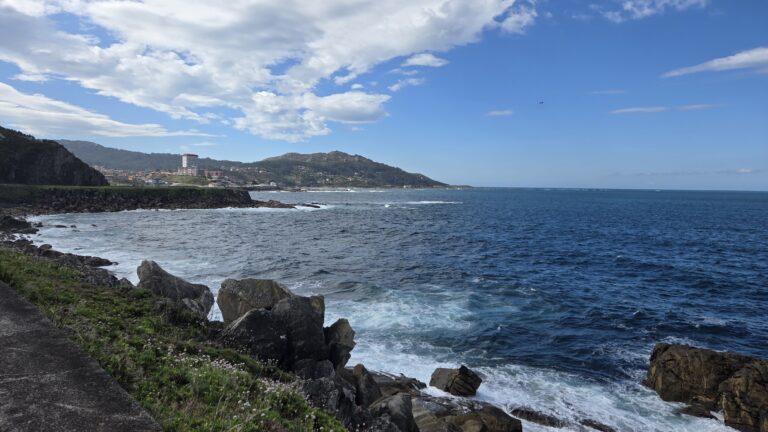
Galicia is one answer to where to move in Spain, not the answer. So here's the same test, applied honestly. Galicia sits in the northwest corner of the country, facing the Atlantic just above Portugal, and Vigo is its most populated city. It's a working port with a ría, granite streets, and green hills close enough to reach on a weekday.
Climate: Atlantic, Not Mediterranean
Vigo gets about 1,500 mm of rain a year, close to three times Málaga's total. The seasons are distinct: December is the wettest month and July the driest, and August highs average about 25°C. Its climate has even been compared to the Pacific Northwest, which tells you why it stays so green.
If reliable Mediterranean light is nonnegotiable, this is the question where Galicia may stop being your answer to where to move in Spain. That's a useful thing to find out before a lease, not after.
Pace: Slower, but Not Isolated
Slower here doesn't mean remote. Vigo is a real city, with a port, a university, hospitals, and restaurants and services close at hand, so you're not driving two hours for a decent coffee. What changes is the rhythm. The sea and the hills can sit inside your week instead of being a weekend project, and the day can organize itself around light and weather more than around a commute.
If the quiet Sunday from earlier was the one that made you exhale, this is roughly that Sunday, with a city still within reach when you want one.
Work: Room for Remote Workers and Founders
If you can carry your work with you or build something of your own, Galicia changes how you answer where to move in Spain, and the evidence is in the projects quietly forming around it. Anceu Coliving, in the hills outside Pontevedra, is building a base for international creatives in a village of just a few dozen residents. iSlow Coliving runs a family-friendly summer experience on the Costa da Morte for remote working parents.
None of this makes Galicia a corporate hub. If you need a large local job market or a headquarters district, other regions have a real advantage, and you should weigh it.
Housing: City, Coast, and Inland
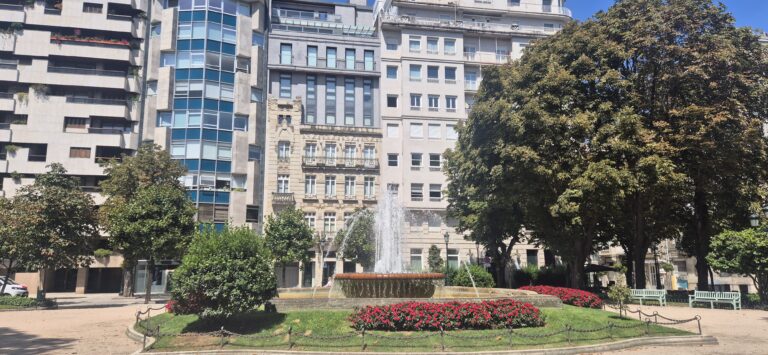
Galicia's housing question has three answers, not one, which is why where to move in Spain can turn into three different lives inside a single region. In the city, you'll find renovated granite buildings around Plaza de Compostela and hillside apartments around O Castro. On the coast, Alcabre and Canido face the beaches, while Bouzas keeps the feel of a fishing village inside the city limits. Inland, the stone farmhouses and villages that dot the hills offer a different relationship with land and quiet altogether.
That range matters because the regional average we saw earlier, roughly half of Madrid's per square meter, hides very different lives depending on which of the three you choose. It also means the option you want may take patience to find.
Connectivity: The Real Cost
This is where Galicia is honest about what it asks of you. Vigo's airport handled 1,114,810 passengers in 2025, up 5.3%, but in 2023 roughly 97% of its commercial passengers flew domestic routes. By train, Madrid is around four hours away, while the fastest flight takes just over an hour.
In practice, many people connect through Madrid or drive to Santiago or Porto. If you fly long haul every six weeks, that cost is real, and it belongs in your decision about where to move in Spain before you fall for the ría.
Community: Smaller and Growing
The international scene here is smaller than in Barcelona or Málaga, and there's less of a ready-made English-speaking bubble waiting for you. That can be a lot to sign up for, or it can be exactly the point when you're deciding where to move in Spain.
It's also gaining international visibility. According to the regional tourism cluster's report on 2025, international visitors now account for around 30% of tourism demand in Galicia, with visitors from the UK up 14.6% and from the US up 10.4%. That is a tourism figure, not a measure of international residents, but it does show that Galicia's profile beyond Spain is growing.
Long-Term Life: A Place to Establish, Not to “Do Spain”
For anyone deciding where to move in Spain for the long haul, some regions are easiest to visit, and others reward the people who arrive to stay. Galicia tends toward the second group. It's less about ticking Spain off a list and more about establishing something, whether that's a routine, a project, a home, or a circle of people who know your name.
The people I see settle in well here usually arrive with a specific reason, like a pace they want to protect or a project they want room to build. “Cheaper than Barcelona” rarely carries anyone through their first winter.
So who might find Galicia a good answer to where to move in Spain? If you picture a walkable Atlantic city, a rhythm that slows down without switching off, and you can work from anywhere or build something of your own, Galicia may belong on your shortlist. If you need reliable sun in February, a large international scene, or nonstop direct flights, it may not, and I'd rather tell you that here than after you sign a lease.
Considering somewhere beyond Galicia?
If your shortlist is pointing toward another part of Spain, our Spain-wide partner resources can help you explore the practical side of residency, taxes, and timing before you make your next decision.
How to Narrow Down Where to Move in Spain Without Guessing
Start with a shortlist of two or three regions, not ten. It's the most practical way to make where to move in Spain feel manageable. Hold each one up against the two or three questions that made your stomach react, and be honest about where each one falls short.
If two regions tie, let the question you reacted to most strongly break the tie. Where to move in Spain rarely comes down to a total score. It comes down to the one thing you refuse to give up.
Then test the version of the year you'd rather skip. If grey skies wear you down, visit in February. If heat does, go in August. Talk to someone who has lived through a full year there, not someone who arrived last spring, and rent short-term before signing anything long. You're not visiting anymore. You're rehearsing.
And notice what happens in your head. When you catch yourself defending one region to an imaginary skeptic, that's usually your answer to where to move in Spain.
Still unsure whether Galicia belongs on your shortlist?
If you've narrowed down your options but aren't sure whether Galicia actually fits how you want to live, a Clarity Consultation gives us a chance to look at the decision through a lens built around Galicia: your priorities, your timeline, the kind of place you're looking for, and the practical questions you still need to answer.
And if the right answer turns out to be somewhere else in Spain, I'll tell you that too.
How do I decide where to move in Spain?
Start from your own life, not the map. Work out which two or three of the nine factors matter most to you, such as climate, work, family, or how close you need to be to an airport. Then shortlist two or three regions that fit those and test them in the season that would be hardest for you.
Should I choose the place where I loved my holiday?
Treat it as a signal, not a decision. A holiday is a highlight reel, and living includes the other months. When you weigh where to move in Spain, ask whether the place still works in February, on a workday, with errands to run.
Is it better to choose a big city or a smaller one in Spain?
It depends on what you want from your evenings and your friendships. Big cities offer more work, more flights, and larger international scenes. Smaller cities often offer walkability, lower rents, and a stronger chance of being recognized at your local café, though usually with fewer direct connections. When you're deciding where to move in Spain, size matters less than the fit between the place and your daily routine.
Does the climate really matter that much?
For many people it does, because you live in it for all twelve months. A region that felt perfect on a July holiday can feel very different in January. Look at rainfall, sunshine hours, and summer heat for the places on your shortlist, and be honest about what you can enjoy or tolerate. When you weigh where to move in Spain, treat climate as a daily factor, not a bonus.
Can I change regions after I move to Spain?
Yes, people do. But a second move means a new lease, new local registrations, and possibly new schools and doctors, so where to move in Spain deserves careful thought the first time. Check any administrative steps with a qualified professional, since they depend on your situation.
Is Galicia a good option for someone coming from the US, UK, or Canada?
It can be, depending on what you're looking for. Galicia can be a strong answer to where to move in Spain for some people and a poor one for others. An Atlantic climate can feel familiar to people from the UK or the Pacific Northwest, and rents are lower than in Madrid or Barcelona. The cost is a smaller international scene and fewer direct flights, so it suits some people much more than others.
The Galicia Life is a community and relocation ecosystem based in Vigo, Spain, working at the intersection of intentional living, cultural integration, and relocation support for internationally minded people building real lives in Galicia.