By Patricia Cedeño.
If you've been researching Spain seriously, you've probably noticed something.
You start with Lisbon. Then Valencia. Maybe Porto if you want something smaller and less obvious. You read the forums, run the numbers, visit one of them, and come back still not entirely sure.
And somehow, after weeks or months of comparing, Vigo keeps appearing in places you weren't expecting.
This post is about why that keeps happening and why the Vigo vs Lisbon, Valencia, and Porto comparison increasingly ends somewhere people weren't expecting.
The Numbers Tell a Bigger Story
For years, the appeal of cities like Lisbon and Valencia rested on a combination of lifestyle and affordability. They offered an international environment, excellent climate, and a cost of living that felt refreshingly accessible compared to Northern Europe or North America.
That equation has changed.
Over the past decade, growing international demand has transformed many of Southern Europe's most popular destinations. Housing costs have risen significantly, competition has intensified, and finding the right property, whether renting or buying often requires greater flexibility than many newcomers expect.
Galicia has followed a different path.
While Vigo has become increasingly attractive to international professionals and families, it has largely avoided the pace of change experienced in cities such as Lisbon, Barcelona, Málaga, or Valencia. As a result, newcomers can often prioritize factors such as location, space, and long-term lifestyle rather than making every housing decision around availability or budget.
Today, a well-located one-bedroom apartment in central Vigo typically ranges between €700 and €850 per month. Although prices have increased in recent years, they remain considerably lower than in many of Southern Europe's most established relocation destinations.
But the real difference isn't simply financial.
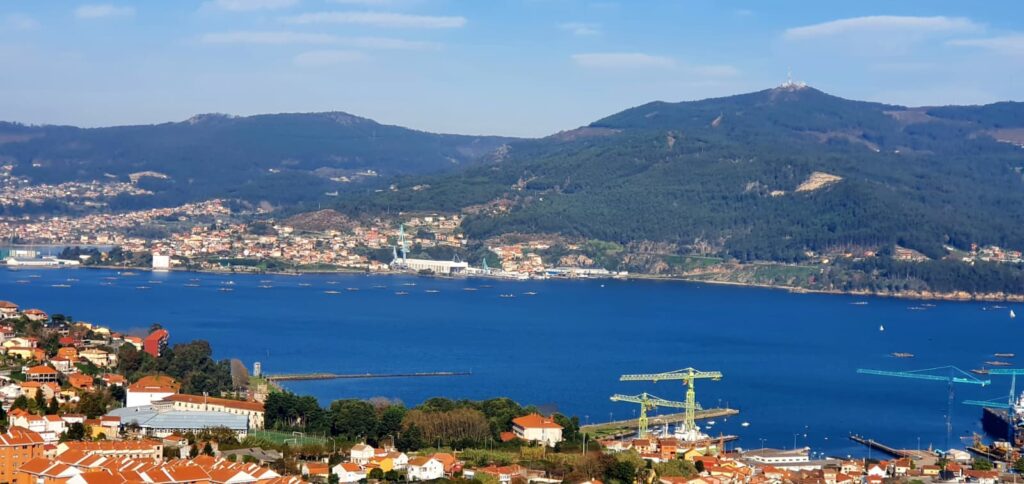
Vigo is Spain's largest fishing port, the economic center of Galicia, and home to a metropolitan population of almost half a million people. It combines the infrastructure and services of a major city with immediate access to beaches, nature, and a pace of life that many international movers find increasingly difficult to achieve elsewhere.
For many people, that's the comparison that matters.
Not which city is cheapest.
But which city offers the best long-term balance between opportunity, lifestyle, and quality of life.
City Comparison at a Glance
| City | Cost of Living | Int'l Community | Climate | Rent 1-bed Center | Best For |
|---|---|---|---|---|---|
| Vigo | Lower | Growing | Atlantic | €700–€850 | Balanced lifestyle |
| Lisbon | High | Very Large | Atlantic | €1,200–€2,000 | International networking |
| Porto | Medium-High | Growing | Atlantic | €700–€1000 | Smaller-city feel |
| Valencia | Medium-High | Large | Mediterranean | €800–€1000 | Sun seekers |
Still deciding whether Galicia is the right fit? Our complete guide to relocating to Galicia explores the practical, financial, and lifestyle considerations that matter most before making the move, including current living costs, housing, visas, and choosing the right area to call home.
Why the Shift Is Happening Now
The quality-of-life arbitrage has existed for years. What's changed is who is paying attention to it.
The profile of a person considering this move has matured. Spain's Digital Nomad Visa income threshold now sits at €2,849 per month, a deliberate filter that has moved the conversation from backpackers testing a theory to senior professionals making a considered decision. These are people who have already lived somewhere that seemed like the answer and found out it wasn't.
They're not looking for the cheapest option. They're looking for the best ratio of quality to cost at a level of infrastructure that doesn't compromise their work or their life. When they run that calculation properly, when the Vigo vs Lisbon or Vigo vs Valencia numbers sit side by side, Vigo comes up in a way those cities no longer consistently do.
Spain continues to rank among the world's leading destinations for digital nomads, bringing more sophisticated researchers into the conversation. These are people comparing quality of life, long-term affordability, tax structures, infrastructure, and daily experience rather than simply looking for the next popular destination. Those are often the people who end up discovering Vigo and who, once they do, rarely find a reason to keep looking elsewhere. The entrepreneurs moving to Galicia piece goes deeper into why this profile keeps landing here specifically.
Vigo still occupies a rare position. Developed enough to support an international life, but early enough that many of the advantages people once discovered in Lisbon or Porto haven't yet been priced away. Unlike many cities competing for international attention, Vigo is still being discovered rather than marketed. For many international residents, Vigo becomes the starting point of their Galicia story, and for many people, Vigo becomes the gateway to Galicia rather than simply another Spanish city.
What Everyday Life in Vigo Actually Feels Like
The biggest difference between Vigo and many of Europe's larger relocation destinations isn't something you'll find in a cost-of-living comparison.
It's how ordinary life unfolds.
In Vigo, many daily errands happen on foot. Picking up fresh produce at the local market, stopping for coffee on your way to work, meeting friends for lunch, or walking along the waterfront after work are simply part of the rhythm of the city rather than activities that require planning around traffic or long commutes.
For many international professionals, that's one of the biggest adjustments. Life feels less fragmented because essential parts of the city remain connected. Beaches, hiking trails, restaurants, cultural venues, and the city center are rarely more than a short drive or often a walk away.
Nature also becomes part of everyday life rather than something reserved for weekends. Whether it's an evening walk on Samil Beach, hiking in the surrounding hills, or taking the ferry to the Cíes Islands during the summer, access to the outdoors feels integrated into the week instead of competing with it.
Families often notice something similar. Vigo remains a city where children can enjoy a greater degree of independence than in many larger metropolitan areas, with neighborhoods that encourage walking, public spaces that are actively used, and a pace of life that many parents find easier to navigate.
Professionals and entrepreneurs describe a different kind of change. The pace of work may remain demanding, but daily life often feels less dominated by commuting, competition for space, or the pressure that comes with living in much larger international cities.
That shift doesn't necessarily make life slower; it simply creates more room for the things people moved for in the first place.
Ultimately, this is what many relocation comparisons overlook.
Choosing Vigo isn't simply a financial decision. For many people, it's a decision about how they want their everyday life to feel over the next five, ten, or twenty years.
Where You Actually Land: Neighbourhood Positioning
“One of the things that surprises people doing the Vigo vs Lisbon or Vigo vs Porto research is the neighborhood range. This is not a one-neighborhood city with one type of resident.
As with any city, neighborhood fit depends on your lifestyle, budget, and priorities. The best area for a remote founder is rarely the same as the best area for a family with young children. Here's an honest breakdown.
Plaza de Compostela & Rosalía de Castro — The Urban Core: The center of Vigo's culinary and design shift. Renovated granite buildings, specialty coffee, and the city's best restaurants are within walking distance. The profile: high-earning remote professionals who want to step out of their building directly into the city. Vigo's most expensive square meter and still significantly cheaper than comparable neighborhoods in Lisbon or Porto.
O Castro — The Hillside Sanctuary: Privacy, panoramic views of the Ría, five minutes down into the center when you want it. The profile: founders and families who want the residential feel without sacrificing urban access. The neighborhood that surprises people most when they first visit.
Bouzas — The Maritime Village Inside the City: Cobblestone streets, fishing heritage, and a tight community of local creatives. Lower price point than the center, higher character. Artists, digital creators, and entrepreneurs who want texture rather than polish.
Alcabre & Canido — The Coastal Enclaves: Beach access, Cíes Islands on clear days, and a lifestyle closer to what the Atlantic coastal cities were selling without the overcrowding or the price tag. The profile: families and remote builders who want a morning by the water and an afternoon at the desk.
The Real Friction Points
Choosing Vigo over Lisbon or Valencia is not cost arbitrage with no tradeoffs. The Vigo vs Lisbon comparison looks clean on a spreadsheet, though the friction points are real and worth naming.
Language lands differently here than in Lisbon or Valencia. Vigo has a smaller English-speaking expat layer, which means daily life administration, neighbors, the market, and the landlord require Spanish more quickly. For people willing to invest in that, it accelerates integration in a way that larger expat communities don't. For people who aren't, it compounds.
The international community is growing but not yet self-sustaining. You cannot arrive in Vigo and immediately find a ready-made social ecosystem the way you might in Lisbon's Príncipe Real or Valencia's Ruzafa. What exists here is more intentional, more genuinely mixed between local and international, and, in the long run, more meaningful, but it requires showing up to build it.
Direct flight options are the most cited objection. Vigo's airport connects well within Europe, and Porto Airport under an hour away adds 134 destinations in 34 countries. For most profiles it solves the question entirely. For people whose work requires frequent long-haul travel, it's worth mapping your specific routes before deciding.
The weather is Atlantic, variable, sometimes dramatic, and not the endless-sun Mediterranean experience. It's also what keeps Vigo green, mild in summer, and genuinely beautiful in a way the southern cities aren't. But it asks something of you in terms of a relationship with grey days.
These are not reasons not to come. They're reasons to come knowing what you're choosing.
Beyond Comparing Cities
Most people begin their relocation journey by comparing destinations.
They create spreadsheets, read cost-of-living reports, compare rental prices, research visa options, and watch countless YouTube videos trying to determine which city is the “best” choice.
It's a sensible place to start. But it's rarely where the decision is ultimately made.
The longer you explore your options, the more the questions begin to change. Instead of asking which city is cheaper or more popular, you start asking whether you can genuinely imagine building a life there.
Will your daily routine feel sustainable?
Will the pace suit you?
Can you picture yourself still enjoying that lifestyle five or ten years from now?
That's where comparisons between Vigo, Lisbon, Porto, or Valencia become less about rankings and more about alignment.
Each of these cities offers something valuable. Lisbon has the energy of a global capital. Porto combines history with an increasingly international atmosphere. Valencia offers Mediterranean living and year-round sunshine.
Vigo offers something different: a city with a strong local identity, direct access to nature, and a pace of life that allows many people to build a fulfilling life without feeling that every aspect of it is a compromise.
There isn't a universally “best” destination. There is only the destination that best supports the life you're trying to create.
If this article has helped clarify one thing, it should be this: choosing where to live is about far more than comparing housing costs or climate. It's about understanding what kind of everyday life you're choosing and making that decision with intention.
Curious About Life in Vigo Beyond the Research Phase?
If you're planning to relocate within the next 12 months and want personalized guidance before making important decisions, a Discovery Call is the best place to start.
Together, we'll discuss your relocation goals, preferred locations, housing strategy, timeline, and the practical considerations that will shape your move. You'll leave with greater clarity, a realistic action plan, and a better understanding of whether Galicia and, more specifically, Vigo and the Rías Baixas is the right fit for your next chapter.
And if you're still researching, comparing destinations, or simply want a more authentic perspective on life in Galicia, join The Galicia Life Community.
Inside, you'll find internationally minded professionals, entrepreneurs, families, and creatives sharing local recommendations, practical advice, and honest conversations about what it's really like to build a life here. It's a place to ask questions, connect with people on a similar journey, and gain insights that rarely make it into relocation guides.
Still comparing cities and exploring your options?
→ Read The Complete Guide to Moving to Galicia
Is Vigo cheaper than Lisbon?
In most cases, yes. While both cities have experienced rising housing costs, Vigo remains considerably more affordable across rent, dining, and many everyday expenses. A one-bedroom apartment in Vigo's city centre typically costs €700–€850 per month, compared with approximately €1,200–€2,000 in central Lisbon.
For many international professionals, entrepreneurs, and retirees, the difference isn't simply about spending less. It's about having greater flexibility when choosing where to live, how much space you need, and the lifestyle you want to enjoy. While Lisbon offers the scale and energy of a European capital, Vigo often appeals to those looking for a different balance between city life, nature, and long-term quality of life.
Is Vigo better than Porto for expats?
It depends on your profile. Porto has a slightly larger and more established international community, but rent prices in Vigo are 41.5% lower than in Porto for equivalent areas. When people run the Vigo vs Lisbon and Vigo vs Porto comparison properly factoring in the Digital Nomad Visa, Startup Law tax benefits, and long-term affordability, Vigo tends to come out ahead.
Is Vigo a good city for remote work?
Yes. Spain ranks second in the EU for fiber-to-the-home coverage, and Vigo has reliable gigabit connections across most neighborhoods. The city has a growing number of coworking spaces, walkable infrastructure, and a pace of life that most remote professionals describe as genuinely conducive to focused work.
Can I live in Vigo without a car?
In the city itself, yes. Public transport, walkability, and a €36 monthly transport pass cover most daily needs. If you plan to spend significant time in smaller coastal towns or rural Galicia, a car becomes more useful but for city life specifically, it's not necessary.
Is Vigo a good place to retire?
Yes, and increasingly overlooked as a retirement destination compared to the more marketed options. Vigo offers high-quality public and private healthcare through the Álvaro Cunqueiro Hospital, a walkable city center, excellent food culture, mild Atlantic climate, and property prices that remain significantly lower than comparable cities in Portugal or southern Spain. The Non-Lucrative Visa is the most common pathway for non-EU retirees, and the cost of living makes a retirement income stretch considerably further than in Lisbon or Valencia.
Is Vigo good for families relocating from abroad?
Yes. Vigo has a functioning public school system, several private and concertado options, and a small but growing number of international education choices. Crime rates are among the lowest in Spain. The city is walkable, has good green spaces and outdoor access, and the pace of daily life gives children significantly more independence than most large European cities do. Healthcare through Sergas is accessible and well-regarded. Families consistently cite the combination of safety, affordability, and quality of life as the main reasons they chose Vigo over Lisbon, Valencia, or Porto.
How does Vigo compare to Valencia for families?
Valencia offers more sunshine and a larger established expat community, which can ease the initial transition. Vigo offers lower costs; a safer environment by crime statistics; milder summer temperatures; and Atlantic access. Families who prioritize long-term financial sustainability and integration into a genuinely local community tend to find Vigo the stronger choice. Families who prioritize a large English-speaking social circle from day one and year-round sun tend to prefer Valencia.
The Galicia Life is a community and relocation ecosystem based in Vigo, Spain, working at the intersection of intentional living, cultural integration, and relocation support for internationally minded people building real lives in Galicia.