By Patricia Cedeño.
On a map, Galicia and Asturias look almost like the same region. Both sit on Spain's Atlantic north coast. Both are green year-round. Both share a rainy Atlantic climate, a deep food culture, a strong regional identity, and a distance from the sun-and-beach Spain that most international arrivals were sold in the last decade. If your only reference for Spain is Madrid, Barcelona, or the Costa del Sol, Galicia and Asturias will look, at first glance, like variations on the same theme.
They are not.
Spend enough time in both regions and the differences become difficult to ignore. Galicia or Asturias is not a small decision, and the two are not interchangeable. They share a coastline and a climate, but they offer meaningfully different ways of living, and the profile of person who thrives in one is often not the same profile who thrives in the other.
This article is for the person who has narrowed their Spanish shortlist to the Atlantic north, is now weighing Galicia or Asturias, and wants an honest comparison from someone who lives in one of them and works closely with someone who works in the other. Whether you're planning to rent, buy, retire, raise a family, or build a business, the differences below matter in different ways.
The short version: both regions are excellent. The longer version is that they answer very different questions.
What Galicia and Asturias Actually Share
Before the divergences, the honest similarities.
Both are firmly inside what Spanish property analysts have started calling Green Spain: the northern arc that also includes Cantabria and parts of the Basque country. The similarities are real, which is exactly why the two are so easy to confuse from abroad.
Both have an Atlantic climate closer in feel to Ireland or Brittany than to Andalusia. Summers are long and mild rather than punishing. Spring and autumn stretch generously. Winters are damp rather than freezing.
Both are built around a serious food culture that hasn't been diluted by tourism. In both regions, ordinary weekday lunches take longer than dinners in most other European cities. Sundays are actually quiet in a way that surprises arrivals from London or New York.
Both have strong regional identities, distinct musical traditions, and cultural traditions that predate modern Spain. The sense of being somewhere with its own long-standing character, rather than a generic international destination, is present in both.
Both are dramatically greener than the parts of Spain that dominate the international imagination. The landscape reads more as maritime northern Europe than as Mediterranean.
Both are still relatively early in their international relocation cycle, which means the experience remains much more local than in Spain's most established international destinations.
These similarities are why the two regions get grouped together and often confused in the international relocation conversation. They're real. They matter. And they explain why once someone has narrowed their Spain search to Green Spain, the question quickly becomes Galicia or Asturias rather than Green Spain or somewhere else.
But those similarities are only the first layer. Underneath them, the two regions diverge in ways that shape daily life significantly.
Where Galicia or Asturias Diverges: The Comparisons That Actually Matter
Here is the honest comparison across the dimensions that shape a real relocation.
Scale and geography
Galicia is significantly larger. Four provinces (A Coruña, Lugo, Ourense, and Pontevedra), a population of around 2.7 million, more than 1,500 kilometers of coastline, and a landscape that runs from Atlantic rías in the west to inland canyon country in the east.
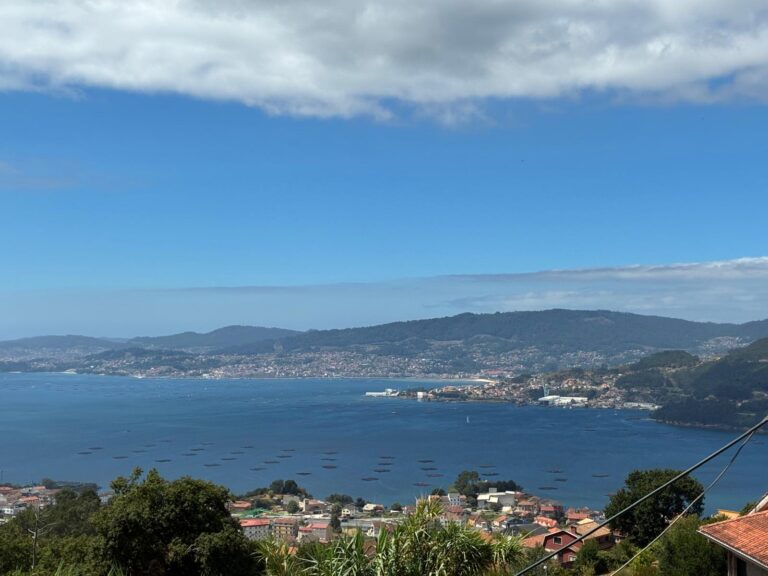
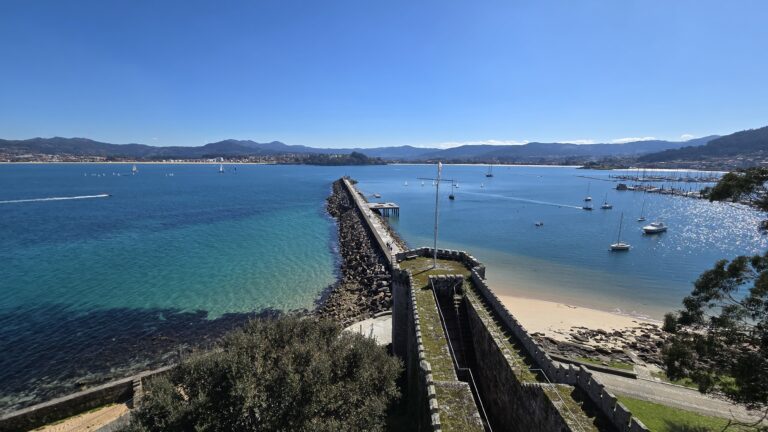
Asturias is a single province with a population of around one million. It's smaller, more compact, and dominated by one dramatic geographical fact: the Picos de Europa mountains rise steeply within thirty or forty kilometers of the coast. The visual signature of Asturias is the mountains behind the sea. The visual signature of Galicia is the rías, the fjord-like inlets that fold the coastline into a hundred small bays and estuaries.
If your imagination of the north is dramatic vertical geography, Asturias delivers more of it than Galicia. If your imagination is a long, complicated coastline with hundreds of small beaches and coves, Galicia has the edge.
Cities and urban texture
Both regions are anchored by real cities, and this matters because the “north coast” is often described in international relocation content as if it were entirely rural. It isn't.
Galicia has three cities that meaningfully sustain international relocation: Vigo (around 290,000 people, working port city, largest in the region), A Coruña (around 245,000, cosmopolitan Atlantic hub), and Santiago de Compostela (around 100,000, political capital and university town). All three function as year-round working cities with genuine cultural depth.
Asturias has two: Oviedo (around 220,000, historic capital) and Gijón (around 270,000, coastal port city). Avilés (around 80,000) sits between them as a third node. The urban center of gravity in Asturias is more concentrated than in Galicia, and the three cities sit within a much shorter drive of each other.
Galicia gives you more choice between distinct urban identities, and each of its cities is genuinely different from the others. Asturias offers a tighter, more integrated urban corridor where you can live in one city and easily access the others. This is one of the sharpest and most underrated differences between the two regions, and it shapes daily life more than the landscape difference does.
International connectivity
This is where the differences start becoming decisive for certain kinds of international newcomers.
Galicia has three airports (Vigo, A Coruña, Santiago), all primarily domestic and short-haul European, plus real proximity to Porto's international airport, ninety minutes south by direct road, which adds year-round intercontinental flights to New York, Boston, Toronto, and a wider European map.
Asturias has one airport (Asturias Airport near Avilés), primarily domestic and European, plus a two-hour drive to Bilbao, which has more international routes but is still smaller than Porto in intercontinental terms.
For a professional who needs frequent transatlantic access, the combination of Vigo Airport and Porto Airport is materially more convenient than Asturias's single-airport setup plus the longer drive to Bilbao. For a resident whose international travel is a few times a year rather than monthly, both regions are workable.
Cost of living and housing market
Both regions are more affordable than Madrid, Barcelona, or the traditional coastal international markets, and both feel meaningfully cheaper than the average European city an internationally minded arrival is likely coming from. Between the two, Asturias trends slightly more affordable, particularly in property, though the gap has narrowed as both regions have attracted more international attention.
For orientation, Vigo apartment prices currently average around €2,845 per square meter. What matters more than the exact figure is that rental markets in both regions have tightened over the past two years, and preparing your housing search from abroad now matters more than it did five years ago in either region. This is true whether you plan to rent long term while you get to know the city or buy on arrival.
Language and daily culture
Galicia has its own co-official language: Galician (galego). It appears on every street sign, in every official document, in school environments, and in daily life alongside Castilian Spanish. Integrating deeply in Galicia over time involves at least a working understanding of Galician, though Spanish alone will get you very far in practical terms.
Asturias has its own regional language too, Asturian (bable), but it doesn't have co-official status, and its daily presence is significantly lighter than Galician's in Galicia. In Asturias, Castilian Spanish is closer to being the single working language of daily life.
For internationally minded people who find learning one language challenging enough, Asturias offers a slightly more linear language environment. For people who are drawn to the idea of integrating into a bilingual regional culture, Galicia offers something distinctive.
Food and culinary identity
Both regions are serious about food, and both have culinary traditions that reward exploration.
Galicia's food identity is dominated by the Atlantic. Seafood, shellfish, and fish are central. Pulpo á feira (octopus with paprika), pementos de padrón, empanada, and the Albariño wines of the Rías Baixas define the culinary map. Wine culture is significant, with the Rías Baixas producing some of Spain's most respected whites and Ribeira Sacra emerging as a serious red wine region.
Asturias is more mountainous in its culinary identity even where it meets the sea. Fabada asturiana (bean stew), cachopo (stuffed veal), Cabrales blue cheese, and sidra (natural cider) define the food map. Cider culture is central in a way that has no equivalent in Galicia. If you've ever seen someone pour cider from arm's length in a Spanish restaurant, they were almost certainly serving Asturian sidra.
Both food cultures are excellent. They're just answering different questions. Galicia's kitchen is Atlantic and coastal. Asturias's kitchen is Atlantic and mountainous. If you find yourself dreaming about seafood, Galicia is speaking your language. If you find yourself dreaming about mountain-influenced comfort food and cider bars, Asturias is calling.
Still deciding between Galicia and Asturias?
If you're weighing the two regions seriously, the next step is not more generic Spain research. It's getting specific about what matters to you, from housing and connectivity to schools, work, community, and the kind of place you want around you.
Join The Galicia Life Community
Who Galicia Tends to Suit
After several years of watching international arrivals move through the Galicia or Asturias decision, some patterns show up consistently. These aren't rules, but they're useful lenses. The categories below are the same ones used in the Asturias section below, so the two can be compared line by line.
Landscape preference. Galicia tends to suit people drawn to the sea more than the mountains. The rías, the beaches, the Atlantic horizon, the sailing culture, and the sense of living somewhere fundamentally coastal, even inside a city.
Regional scale. Galicia offers a larger canvas. Four provinces, multiple distinct sub-regions, and enough variety to keep the region interesting after a decade of weekends.
Urban structure. Galicia gives you three distinct year-round cities, each with its own character. If you want genuine choice between urban identities, this is where Galicia wins clearly.
International connectivity. The Vigo plus Porto arrangement gives you a functional two-airport region for global travel, which matters if your work or family situation involves regular transatlantic movement.
Language environment. Galicia is genuinely bilingual, with Galician alongside Spanish woven through daily life. If that idea enriches rather than intimidates you, it's a signal.
Food culture. Atlantic seafood, Rías Baixas Albariño, Ribeira Sacra reds, and a coastal-first culinary identity. Galicia's kitchen is what you want if the sea is where your imagination goes when you think about a great meal.
International scene. Small but present, with pockets of internationally minded residents building around Vigo, A Coruña, and Santiago. Not a ready-made expat enclave, but not a totally solo start either.
If Vigo is where you're leaning, the Retirement Lifestyle in Vigo and Digital Nomads in Vigo pieces go deeper on the profiles that tend to land well here.
Who Asturias Tends to Suit
Using the same categories, in the same order.
Landscape preference. Asturias tends to suit people drawn to mountains at least as much as the sea. The Picos de Europa, within thirty or forty kilometers of the coast, is one of the most distinctive geographical features anywhere in Europe.
Regional scale. Asturias offers a compact, well-defined region. If Galicia sometimes feels like a small country, Asturias feels like a place you know the whole of within a year.
Urban structure. Asturias gives you a tighter urban corridor. Oviedo, Gijón, and Avilés sit within a short drive of each other and function almost as a single connected urban system rather than three separate cities.
International connectivity. Asturias Airport handles domestic and European routes, with Bilbao two hours away for a wider international map. Workable for a resident who travels internationally a handful of times a year rather than monthly.
Language environment. Asturias offers a slightly more linear language environment. Castilian Spanish is closer to being the single working language of daily life, with Asturian present but less prominent than Galician is in Galicia.
Food culture. Fabada, cachopo, Cabrales blue cheese, and the ritual of sidra pouring. Mountain-influenced comfort food and cider culture in a way that has no direct Galician equivalent. Asturias's kitchen is where you want to be if hearty, mountain-flavored food is what makes you happy.
International scene. Even smaller than Galicia's, which is either a feature or a friction point depending on the profile. If minimal international saturation is the appeal, Asturias delivers it more fully than any other region on this coast.
If Asturias is starting to look like the better fit, I work closely with Leap Key, a relocation specialist based in Asturias. They can help with the local side of the move if you decide to take your search in that direction.
Two Very Different Versions of Northern Spain
After comparing the two, there isn't really a winner. There are two very different versions of northern Spain.
Galicia gives you a bigger geographical and urban canvas, stronger international connectivity, and a more distinctly bilingual cultural experience.
Asturias gives you compactness, dramatic mountain access, a simpler language environment, and a particularly strong mountain-and-sea identity.
The interesting part is that neither description tells you which one you'll prefer.
That becomes much clearer when you stop looking at the regions as destinations and start imagining the practical details of living there: where you'd spend your weekends, how often you'd travel, what kind of community you'd want around you, and how much city you actually want in your life.
Galicia and Asturias may share a coastline. They don't offer the same experience of living on it.
If you would like to talk through your own version of this decision, whether Galicia specifically or the Galicia or Asturias question more broadly, a Relocation Clarity Consultation is where that conversation happens. We look at your priorities, your family situation if relevant, your work setup, and your realistic constraints, and work out which side of the map makes the most sense for your circumstances.
Book a Relocation Clarity Consultation
For the full picture of what life in Galicia specifically involves, the Complete Guide to Moving to Galicia covers neighborhoods, costs, healthcare, schools, and what the first months actually feel like.
If Asturias is the direction you're leaning, Leap Key are the people I'd trust with that conversation. Send them a note directly, or let me know and I can make the introduction.
Which is better for internationally minded newcomers, Galicia or Asturias?
Neither is objectively better. Both are excellent by the standards internationally minded people usually apply, whether they plan to rent long term, buy a primary home, or invest in a property. Galicia offers a larger canvas, more urban choice, and stronger international connectivity via Porto's airport. Asturias offers dramatic mountain-and-sea geography, a more compact regional feel, and a slightly simpler single-language environment. The right answer depends on which version of northern Spain fits your life.
Is Galicia or Asturias more expensive to live in?
Both regions are significantly more affordable than Madrid, Barcelona, or the traditional coastal international markets. Between the two, Asturias trends slightly more affordable overall, particularly in the property market, though the gap has narrowed as both regions have attracted more international attention. Rental markets in both regions have tightened over the past two years, so specific city comparisons matter more than regional averages.
Is the climate in Galicia and Asturias really the same?
Very similar, but not identical. Both share an Atlantic climate with mild summers and damp winters, closer in feel to Ireland or Brittany than to southern Spain. Asturias's winter can feel marginally cooler and wetter because of the mountains. Galicia's Rías Baixas coast has a milder microclimate protected by the geography of the inlets. In practical daily terms, if you're comfortable with one, you'll be comfortable with the other.
How international is Asturias compared with Galicia?
Both regions are early in their international arc compared with Málaga, Alicante, or the Balearics. Between the two, Galicia has slightly more international infrastructure right now, particularly in Vigo and A Coruña, and slightly better airport connectivity via Porto. Asturias is even earlier in that arc, which is a feature for people who want minimal international saturation and a friction point for people who want a ready-made international scene.
Should I visit both Galicia and Asturias before deciding?
Yes, if your timeline allows. The two regions look similar in photographs and describe similarly in text. They feel different in person, particularly in the balance between sea and mountain landscape, the urban texture of the main cities, and the daily rhythm of the food and cider cultures. If you're serious about the Galicia or Asturias decision, spending three to five days in each within the same trip is the highest-value use of pre-arrival research time.
The Galicia Life is a community and relocation ecosystem based in Vigo, Spain, working at the intersection of intentional living, cultural integration, and relocation support for internationally minded people building real lives in Galicia.