By Patricia Cedeño.
Ten years ago, an internationally minded buyer starting a property search in Spain almost always began in the same few places.
Madrid or Barcelona for a European base. The Costa del Sol for a second home or retirement.
Mallorca, Ibiza, or the Costa Blanca for summer, sun, or a certain kind of rental yield. The shortlist was short, well established, and legible.
Today, that same buyer is starting somewhere very different, and the interesting part isn't where they end up. It's why.
Nothing about buying property in Spain has fundamentally broken. Madrid is still Madrid. The Costa del Sol is still doing exactly what it's always done. What's changed is the set of questions the buyer is asking before they open a single property listing. Once those questions change, the shortlist changes with them, quietly, one buyer at a time, and rarely in ways captured by headline transaction data.
The most useful way to understand what's happening isn't to start with the map. It starts with the buyer.
What's Actually Changed in the Last Decade
The forces behind this shift aren't unique to Spain, and they aren't recent. They've compounded to the point where they're finally showing up in how serious buyers behave.
Remote work broke an assumption, not just a location. The usual story is that remote work changed where professionals could live. The more consequential thing it did was quieter. It broke one of the foundational assumptions behind international property buying: that the office should determine the map. Once that assumption stops being load-bearing, “buy near the airport that gets you to work” collapses as an organizing principle, and geography becomes something you choose for its own reasons.
Regulation stopped rewarding the old business case. Successive waves of tourist rental licensing rules, community-level restrictions on holiday accommodation, and rising taxation on non-resident buyers forced buyers to answer a question they hadn't had to answer clearly before: is this a home or a business dressed up as one? Some of the most established markets are exactly where that question is now hardest to duck.
Climate stopped being scenery. For twenty years, climate was something you factored in for the current summer, not the next decade. That's shifted. Mid-career buyers with a ten- or twenty-year horizon are reading temperature and water-stress data the way they used to read school catchment maps. Regions once dismissed as “too rainy” like Galicia, Asturias, Cantabria, and the Basque coast are now being re-examined as insurance policies against the way southern Europe is warming.
Lifestyle expectations converged, then gradually split. Buyers in London, Toronto, New York, and Los Angeles increasingly want the same things: walkability, third places, community, food culture, and air that doesn't feel like a compromise. What's less obvious is that the international destinations most resembling their home cities have started to feel like a lateral move. The buyer looking for a different life is now, by definition, looking for a different kind of city.
Global capital took over the trophy tier. Institutional buyers and well-capitalized hospitality groups now dominate the top of the market in Marbella, Palma, Ibiza, and central Madrid or Barcelona. That's not a problem for those markets; they're built for it. What it means for the independent international buyer is that competing on lifestyle, taste, or concept rather than balance sheet has become harder in the trophy tier every year. That buyer isn't priced out. They've been outbid on a different game than the one they thought they were playing.
None of these forces are Spain-specific. Together, they've gradually rewritten the questions a serious buyer walks into a Spanish property search with.
What the Old Playbook Was Actually Solving For
The classic shortlist made sense because it optimized for a specific set of things.
Liquidity, primarily. The traditional international markets had deep resale channels, predictable buyer profiles, and English-speaking legal and estate agent infrastructure. If you needed to exit, you could exit.
Airport access. Direct flights from your home city to Madrid, Barcelona, Málaga, or Palma made ownership frictionless. A well-connected airport was, for many buyers, the single most important line item on the checklist.
Rental yield in a predictable market. Coastal and island markets had proven tourism demand and established short-let ecosystems that let you model a purchase like a fractional business.
Familiarity. Established markets had established communities of buyers from the same source countries, professional services in your language, and social infrastructure that felt continuous with home.
None of these were bad things to optimize for. They still aren't. They're just no longer the only things and, for a growing profile of buyers buying property in Spain today, no longer the most important ones.
Meet the New International Buyer
Before the questions can be understood properly, the person asking them has to be.
The new international buyer isn't defined by nationality, age, or bank statement. They're defined by a set of characteristics that keep showing up across otherwise different profiles.
They tend to already have a successful career or the end of one. They aren't buying to chase status, and they aren't buying to prove anything. The purchase isn't the point.
They aren't chasing cheap property. Affordability matters, but so does everything else, and they've learned to be suspicious of a search that starts and ends with price per square meter.
They can often work remotely or semi-remotely, or they're already retired, or they've built enough optionality into their working life that geography is no longer downstream of a physical office. That single piece of freedom reshapes everything else.
They think in decades rather than in holidays. The question isn't whether they'll love it for a fortnight in July. It's whether they'll still want to be here when they're seventy, when their children are choosing schools, or when the second half of their life catches up with them.
Increasingly, they value belonging at least as much as status. A neighborhood where the baker knows their name matters more to them than an address that impresses at a dinner party. They've usually spent enough years chasing the second thing to understand what it actually costs.
Increasingly, too, the property itself is no longer the end goal. It's the vehicle for building a different kind of life, with everything that implies about work, community, climate, healthcare, food, culture, and continuity.
This buyer doesn't fit neatly into the demographic categories real estate marketing was built around. Yet they increasingly explain many of the shifts we're seeing across the market.
The Questions Now Shaping Buying Property in Spain
When this buyer starts a search, the questions look different. Not necessarily better, but different, and if the questions have changed, the shortlist can't stay the same.
How does the place actually work in November? Twenty years ago, most international buyers accepted that a second home would be seasonal. Today, an increasing share expect to spend months at a time there, work remotely from it, or eventually retire into it. Everyday life matters as much as holiday life. A town that empties in October is a different proposition than a working city that keeps going year-round, and buyers who used to accept the first are looking for the second.
What's my exposure to climate over a ten-year horizon? Summer heat, water stress, and wildfire risk are being factored into geography in a way they simply weren't five years ago. Buyers holding a property for a decade or more are treating climate exposure the way they used to treat neighborhood safety data: as a search filter, not a background fact. Northern regions read differently when the question is what the next decade will feel like.
What does the regulatory picture look like for what I actually want to do here? For second-home buyers with any short-let intent, and for hospitality entrepreneurs of any scale, the regulatory maturity of a specific municipality now matters as much as the property itself. Markets with strict tourist rental caps are a different bet than markets where regulation is still evolving. Buyers who used to focus on the deal are now focusing on the framework the deal has to live inside.
Is this a place I can actually integrate into? For primary and semi-permanent buyers, this is the quietly decisive question. A large international community can be a feature or a trap, depending on what you're looking for. Buyers who want continuity with home gravitate to established international markets. Buyers who want something meaningfully different are looking somewhere else, often somewhere with a smaller international scene, precisely because they want the daily texture of the place to be local rather than a lateral version of what they left.
Is there room for me to build something, not just buy something? This is the question hospitality entrepreneurs and creative professionals ask, and it's the one the trophy markets increasingly can't answer well. Room to shape a concept, a business, a piece of what a place is becoming, is now a location-selection criterion in its own right. In saturated markets, that room has closed. In emerging ones, it's still open and closing at a rate that's making early bets valuable.
Once those five questions are on the table, the classic shortlist stops being self-evident. Once buyers begin asking different questions, different places begin appearing on the map.
The Rise of the Secondary City
For decades, choosing a secondary city often implied compromise. You couldn't afford the capital, or you couldn't get a visa for it, or you were priced out of the coastline everyone wanted. The secondary market was where you settled.
Today, for the buyer described above, the calculation has inverted. Choosing a secondary city no longer means settling for less. It means deliberately choosing places that haven't been shaped, and in some cases distorted, around international demand.
This isn't only a Spanish story. In the UK, the post-London recalibration has been visible for years, with professionals rebuilding around Bristol, Edinburgh, and smaller market towns with genuine culture. In the US, the durable outflow from Los Angeles and New York into mid-sized cities like Asheville, Providence, and Boise is well-documented. In Portugal, the maturation of Lisbon has pushed buyers into Porto, the Alentejo, and the Silver Coast. Across Europe, mid-sized cities with year-round life, functioning healthcare, walkability, and international connectivity within a reasonable radius are absorbing exactly the profile that used to head straight to the capital.
Inside Spain, this has translated into serious international interest in a broader map. Málaga has re-emerged as a working city rather than only a beach gateway. Valencia's international share has grown steadily. Bilbao and San Sebastián have long attracted buyers who value what the north offers over what the south promises. And most recently, and most quietly, the northwest has entered the conversation.
Spain's property analysts have started calling this broader northern arc Green Spain: Galicia, Asturias, Cantabria, and parts of the Basque coast. The drivers cited, cooler climates, lower density, relative affordability, and a lifestyle distinct from the Mediterranean model are exactly the ones the new buyer's questions surface.
Transaction growth in Galicia, La Rioja, Navarra, and Castilla-La Mancha suggests the same pattern reaching inland and northwestern markets. Foreign buyer share in these regions is still a fraction of what Alicante or Málaga see. That's the point. This isn't a story about saturation. It's a story about internationally mobile buyers with genuine choice increasingly choosing differently.
The macro numbers still tilt the way they always have. Spain's Association of Registrars reports foreign buyers accounted for around 13.8% of registered home purchases nationally on a rolling twelve-month basis through late 2025. Alicante province is close to half. Málaga sits at roughly 43%. The Balearics land in the mid-thirties. Those markets are healthy, deep, and still absorbing enormous international capital. What's changed is that they're no longer the whole story.
If this broader shift resonates with the questions you're asking, the specifics of your own move are what separate a good idea from a good move.
Join The Galicia Life Community to compare notes with people already navigating this shift, exchange local intelligence on what's actually available versus what's marketed, and understand where the interesting opportunities are before they're widely priced in.
Where Different Kinds of Buyers Are Landing Now
The shift doesn't look identical for every buyer profile, and each of the four groups actively rethinking their search is doing it for its own reasons.
Primary home buyers are the profile that changed the most. Once hybrid work removed the daily commute constraint, the question became “which functioning year-round city with reasonable connectivity” instead of “which international enclave.” That opens up secondary cities across Spain, and the trade is straightforward: give up some flight frequency and some of the ready-made international social scene and gain space, walkability, and prices that leave a meaningful budget for living in the home rather than paying for it.
Second home buyers are increasingly abandoning the “buy in July, rent the rest of the year” model. What's replacing it is closer to how families in the UK or northeastern US think about a cottage or lake house: somewhere used for its own sake, in a location pleasant year-round rather than only in summer. That pushes second-home searches toward coastal towns in the north and northwest, small inland villages, and places with genuine off-season life.
Investors with a longer horizon are looking at the tier below the trophy markets, where price discovery hasn't fully caught up with fundamentals. The catch is real: liquidity is thinner, exit horizons are longer, and resale channels aren't yet as deep. That risk is manageable with a genuine long horizon; it isn't manageable with a two-year flip mindset.
Hospitality entrepreneurs may be the profile with the sharpest opportunity right now. Cushman & Wakefield recorded €2.53 billion in hotel investment in Spain during the first half of 2026, up 36% year over year. Industry analysis is explicit that growth is now spreading along Spain's coast, with the fastest shifts happening outside the established names. For an independent operator building a concept-led hotel or design-forward guesthouse, the trophy markets have been picked over. The interesting projects, the ones that end up in the design-hospitality press five years after they open, are being built somewhere quieter, where the entry cost is lower and the story is still available to tell.
One Region That Keeps Surfacing
One region consistently surfaces once those questions change: Galicia.
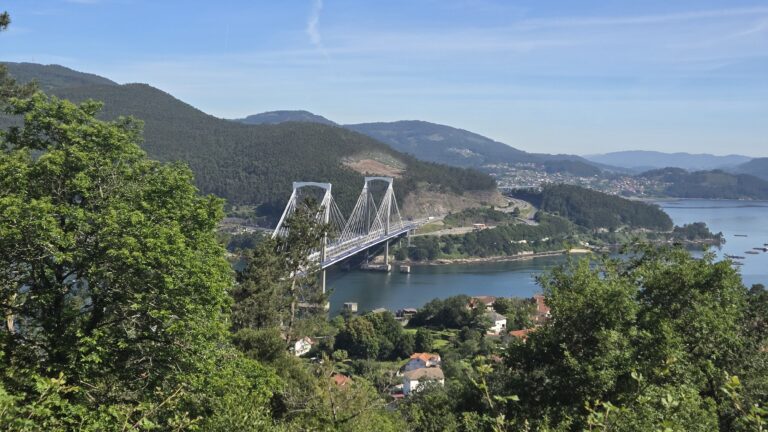
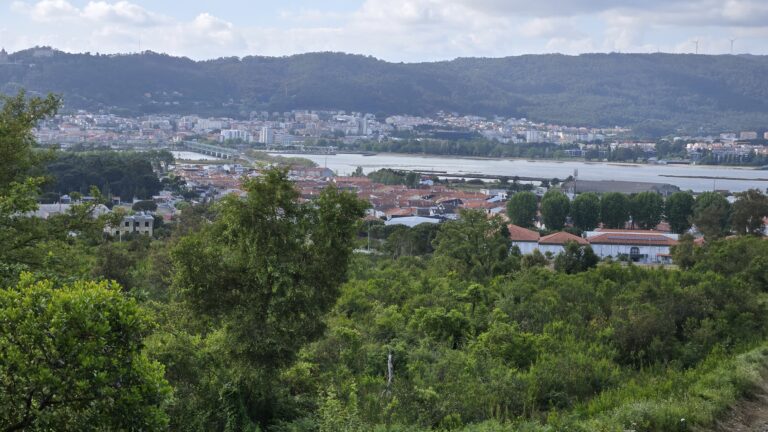
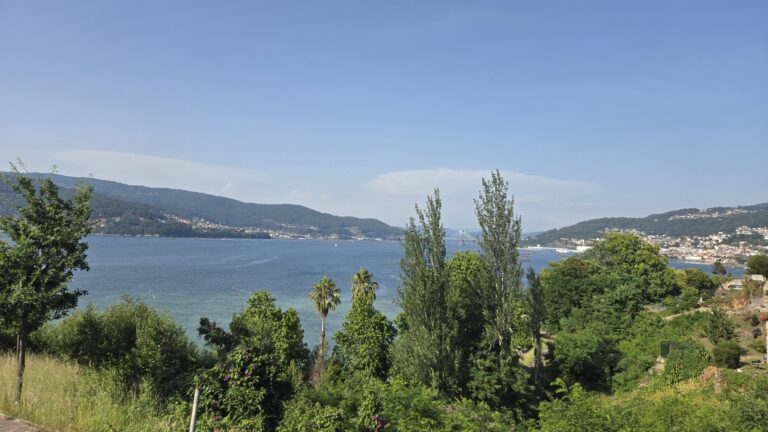
A fully autonomous community in Spain's Atlantic northwest, with a population of around 2.7 million spread across a working economy anchored by the port cities of Vigo and A Coruña, the political capital Santiago de Compostela, a strong agri-food sector, and a hospitality scene not yet built around international volume. Its own language, its own culinary tradition, an Atlantic climate closer to Ireland or Brittany than to Andalusia, and coastal geography, the Rías Baixas and the Costa da Morte, that's attracted a specific kind of traveler for decades without ever becoming a mass-market destination.
For a buyer whose questions now include “how does this place work in November,” “What's my ten-year climate exposure?” “Is this somewhere I can actually integrate into?” and “Is there room to build something rather than join something?” Galicia answers all four with unusual honesty. Year-round working cities. A climate that reads as an asset rather than a warming risk. Real proximity to Porto's international airport for transatlantic connectivity. Prices that reflect an earlier stage of international interest. Enough tourism to make a hospitality concept viable, without the market being dominated by it.
Galicia isn't compelling because it competes with Madrid or the Costa del Sol on their terms. It's compelling because it answers a different set of questions.
None of that makes Galicia the right answer for every buyer. It makes it a logical answer for a specific one and one that isn't yet obvious.
The Trade-Offs Nobody Names in a Sales Deck
Any honest article about this shift has to sit with the other side of it.
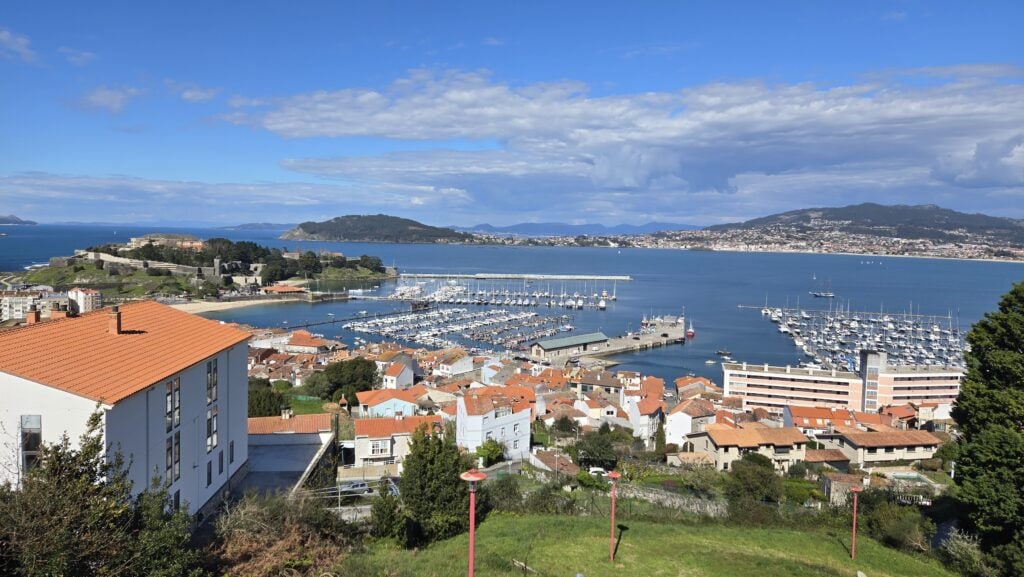
The regions catching this wave aren't insulated from the international effect. Rental supply pressure has already reached the northwest, with A Coruña seeing a significant drop in long-term rental availability in early 2026 as more properties shifted toward short-term accommodation. Vigo is experiencing its own version of the same. Property listings in the most photogenic coastal towns are attracting international interest; they weren't three years ago. Nothing about that trajectory is unusual. It's the same pattern every emerging international market has followed.
The friction points around buying property in Spain outside the trophy markets are also real. English-first infrastructure is limited outside the international scenes in Madrid, Barcelona, Málaga, and parts of Valencia. Legal, banking, and administrative processes here run in Spanish, with Galician woven through daily life in the northwest. Direct international flights from secondary Spanish cities remain more limited than from the primary hubs, though the Porto workaround is genuinely usable. Liquidity in emerging markets is thinner. Local networks and professional partners matter more, precisely because there are fewer of them.
What's still open is which version of this arc the region ends up living. Buyers arriving now are, whether they realize it or not, part of shaping it. The ones who add to a place rather than simply extracting from it tend to be the ones whose bets look best a decade in.
When the Question Itself Is What Changed
Here's what I've come to believe watching internationally minded buyers move through this decision.
The most useful thing I can offer anyone starting a Spanish property search right now isn't a shortlist. It's a question. What are you actually optimizing for? Not the answer you'd have given five years ago, and not the one that fits the shortlist you already have. The one that fits the person you actually are today, with the life you're actually building.
The reason buying property in Spain looks different depending on who you ask isn't that the market has fragmented. It's that the buyer has. A decade ago, most international searches converged on the same shortlist because most international buyers were solving for a similar set of things. That's no longer true. When the questions differ, the shortlist has to.
A decade ago, buyers inherited a shortlist. Increasingly, they're building their own. The most valuable question isn't “where is everyone buying?” It's “which place best matches the life I'm actually trying to build?”
Every property decision comes with a different combination of purpose, timeline, financing, and family circumstance. A Discovery Consultation is where those specifics get worked through with someone who actually lives in the region and can separate what's real from what's marketing.
For the full picture of what building a life in Galicia actually involves, the Complete Guide to Moving to Galicia is the natural next step.
If you're weighing timing, the best time to relocate to Galicia piece goes into the housing and administrative windows in more depth.
And if the profile you recognize is the retiree or the remote professional making a long move, the retirement lifestyle in Vigo and digital nomads in Vigo pieces go deeper on those specific angles.
Is buying property in Spain still a good decision in 2026?
The structural drivers behind foreign demand, ECB rate cuts, a housing supply deficit, sustained international interest, and quality-of-life migration are still in place. Whether buying property in Spain makes sense in a particular case depends heavily on the buyer's purpose and the exact location. The macro picture is broadly supportive; individual decisions still need individual analysis.
Which regions in Spain are attracting the most new international buyer interest right now?
Alicante, Málaga, and the Balearics remain by far the largest by volume and share of foreign buyers. The interesting movement is in secondary markets: Green Spain (Galicia, Asturias, Cantabria, the Basque coast) is showing growing international interest, and inland regions such as La Rioja, Navarra, and Castilla-La Mancha are attracting value-seeking buyers who've moved past the traditional coastal shortlist.
Are property prices in secondary Spanish cities really cheaper than in Madrid or Barcelona?
Directionally, yes, and often significantly so, especially in the northwest and inland regions. But price alone isn't why buyers with genuine choice are moving there. The more durable driver is that the questions those buyers are asking (climate resilience, year-round livability, room to build something) are answered better in some secondary markets than in the trophy ones.
Is now the right time to invest in Spanish hospitality outside the established markets?
Hotel investment volume in Spain grew 36% year over year in the first half of 2026, with growth increasingly spreading to secondary coastal destinations. For an independent operator building a concept-led project rather than acquiring a trophy asset, secondary markets in Green Spain and elsewhere offer materially lower entry costs and a runway that trophy markets no longer have.
What's the biggest risk of buying in an emerging Spanish market rather than an established one?
Liquidity and exit. Established markets have deep, well-tested resale channels and predictable buyer profiles. Emerging markets don't yet, which affects both how quickly you can sell and who's likely to buy when you do. Manageable with a longer horizon; not manageable with a short one.
The Galicia Life is a community and relocation ecosystem based in Vigo, Spain, working at the intersection of intentional living, cultural integration, and relocation support for internationally minded people building real lives in Galicia.